

In recent years, we have witnessed that water pollution has become a more serious issue as global urbanisation, industrialisation, and climate change escalate, putting tremendous strain on water quality management. There are a number of drawbacks to conventional water quality monitoring techniques, which mostly depend on manual sampling and sporadic laboratory analysis.
The following goal emphasises both water availability and the critical importance of water quality. As global urbanisation, industrialisation, and climate change increase, water pollution has grown in severity, placing a great deal of pressure on water quality management. Conventional methods of monitoring water quality, which mostly rely on manual sampling and intermittent laboratory analysis, have several shortcomings.
Yet, as we enter the era of digital transformation, the management of the water environment is changing due to artificial intelligence (AI), which opens up new possibilities for better water quality monitoring, forecasting, and intelligent control. The revolutionary power of AI is highlighted in this analysis, especially through hybrid modelling frameworks that combine AI with technologies such as Unmanned Monitoring Platforms (UMP), Remote Sensing (RS), and the Internet of Things (IoT).
In this article, we reveal how AI has revolutionised water quality management using smart sensors and IoT capabilities.
AI for Water Environment Management-Overview
AI’s unmatched powers are radically changing the paradigm of managing and monitoring the water environment. The worldwide water management market for AI is expected to expand from 7.54 billion US dollars to 53.85 billion US dollars between 2024 and 2032, at an annual growth rate of 27.85%.
Its ability to interpret complicated, high-dimensional aquatic environment data efficiently is its main advantage. This makes it possible to perform dynamic analysis in almost real time, accurately identify anomalous pollution occurrences such as unexpected leaks or algal blooms, and forecast future trends in water quality using previous data and environmental conditions.
Key Takeaways
- AI for water quality management helps monitor water conditions, detect anomalies, and identify potential contamination risks more efficiently.
- AI-driven analytics can support real-time decision-making, optimise treatment processes, and improve the accuracy of water quality assessments.
- Integrating AI into water management can strengthen regulatory compliance, reduce operational costs, and support a safer, more reliable water supply.
How to Utilise AI for Water Quality Management

In the section below, we discuss different AI applications that can be employed for water quality management.
Application of AI in Real-Time Water Quality Monitoring
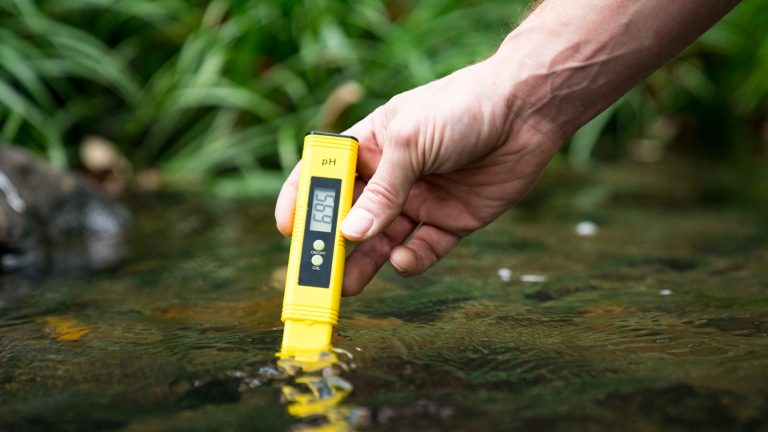
You may know that low timeliness and inadequate spatiotemporal resolution are intrinsic limitations of traditional water quality monitoring techniques, which depend on manual sampling and laboratory analysis. IoT-based sensors now enable continuous monitoring of several physical, chemical, and biological water quality parameters thanks to recent technical breakthroughs. They transmit data in real time to allow more responsive and data-driven water management.
The accuracy and dependability of monitoring results are challenged by the fact that sensor data is still susceptible to environmental disruptions, changing hydrological conditions, and technical problems like drift, malfunction, and data loss, especially in complex environments such as underwater or outdoor settings.
A promising answer to these problems is the integration of AI, especially ML algorithms.
By carrying out real-time calibration, error correction, anomaly detection, and denoising, AI algorithms can intelligently analyse raw sensor data, greatly enhancing data quality and monitoring accuracy.
AI for Fault Diagnosis
Furthermore, self-calibration, data compensation, and automatic sensor problem diagnosis are made possible by AI’s potent pattern recognition capabilities, which improve the stability and resilience of monitoring systems.
By deploying AI models at sensor terminals, localised intelligent data analysis is made possible, which lowers transmission delays, speeds up response times, and gives sensors the capacity to adjust to changes in their surroundings and optimise on their own.
In addition to significantly increasing the precision, intelligence, and real-time performance of water quality monitoring, this cooperative integration of AI, sensors, and IoT also successfully compensates for the intrinsic limits of sensors in challenging circumstances.
In order to provide low-cost, real-time remote data collection, these systems usually integrate IoT platforms with several sensors and combine RS or image data. High accuracy, real-time monitoring, minimal deployment costs, and good environmental adaptability are some of its major features.
AI Paired with RS and Unmanned Monitoring
Even if the accuracy of real-time monitoring has increased due to the integration of AI with in-situ sensors, traditional monitoring stations still have issues with deployment flexibility and spatial coverage. In water quality monitoring, the use of RS technology and UMP provides more operational flexibility and wider spatial viewpoints.
When it comes to providing large-scale, near-synchronous observations of surface water bodies, RS technology is very useful for evaluating the general state of big water basins. AI algorithms make it possible to analyse RS imagery effectively, extract surface water information precisely, and quickly identify problems with water quality, such as pollution and algal blooms.
The spatial flexibility and accessibility of monitoring are greatly increased by unmanned systems, such as Unmanned Aerial Systems (UAS), Unmanned Surface Vehicles (USV), and Unmanned Underwater Vehicles (UUV).
These devices can reach places that are challenging to reach using conventional techniques, such as isolated bodies of water, dangerous pollution zones, or locations damaged by natural disasters.
Multi-Source Data Fusion and Intelligent Analysis
Even though cutting-edge technologies like RS and UMP have significantly increased the frequency and spatial coverage of water quality data collection, using a single data source or a straightforward data overlay is far from adequate for converting this wealth of data into precise evaluations and efficient decision-making.
The combination of multi-source data fusion and intelligent analysis has emerged as a crucial strategy for removing bottlenecks and raising the intelligence level of water quality monitoring systems, given the intricate and constantly evolving water environment and the enormous, diverse data it produces.
Multi-source data fusion, as used in water quality monitoring, is the methodical integration of data from various sources to produce a more thorough, accurate, and dependable understanding of water quality conditions than any one source alone.
These data sources may include meteorological data, high-precision laboratory analytical data, wide-area RS imaging data, high temporal resolution in-situ sensor data, etc.
The constraints of individual data sources can be successfully addressed by combining various complementary data sources.
AI in Water Quality Prediction
By entering previous water quality data, AI can forecast future changes in water quality. It works especially effectively with time-series water quality data. AI technology has significantly improved the speed at which information about water quality is obtained.
AI models can build real-time modelling and prediction systems that provide quick evaluations of present and future water quality conditions, whereas conventional real-time monitoring depends on physical sensors.
This tool’s near-real-time modelling and prediction findings are essential for prompt reactions to changes in water quality and early warnings of pollution events.
AI has gradually been used to investigate pollutants that are challenging to quantify online, like emerging contaminants, in addition to traditional water quality metrics.
How Tigernix Smart Water Asset Software Uses AI for Intelligent Water Quality Management
Now you can enhance water quality management with Tigernix Smart Water Asset Software, which is built to help water utilities monitor critical assets and improve treatment reliability. Powered by Industry 4.0 capabilities, our software platform combines AI-driven insights, real-time monitoring, IoT connectivity, predictive maintenance, and intelligent analytics.
With the Tigernix solution in place, water facilities can identify potential issues earlier, optimise maintenance, reduce downtime, improve operational visibility, control costs, and make data-driven decisions for more efficient water management.
Call for a free demo.
Tigernix-Water Quality Guaranteed via AI
FAQs About AI for Real-Time Water Quality Management
AI for water quality management employs artificial intelligence to monitor quality measures, assess water data, identify contaminants, and facilitate quicker, data-driven treatment decisions.
AI examines previous data and real-time sensor readings to spot anomalous changes, spot possible contamination, anticipate quality problems, and quickly notify operators.
AI helps increase the precision of monitoring, identify contamination sooner, streamline treatment procedures, save operating expenses, assist with regulatory compliance, and better safeguard water resources.
Common technologies include IoT sensors, machine learning, predictive analytics, cloud computing, automated monitoring systems, and digital platforms that analyse water quality data.