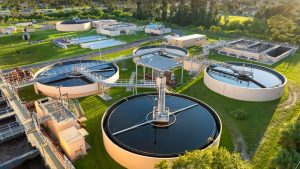

You may have heard that pond evaporation has long been a method for treating wastewater. The plan is to leave a pond of concentrated residual waste for treatment by depositing wastewater in sizable open ponds and letting the water evaporate due to wind and solar radiation.
In this article, we examine everything about evaporation ponds in the wastewater treatment industry and their uses.
Evaporation Ponds: An Overview
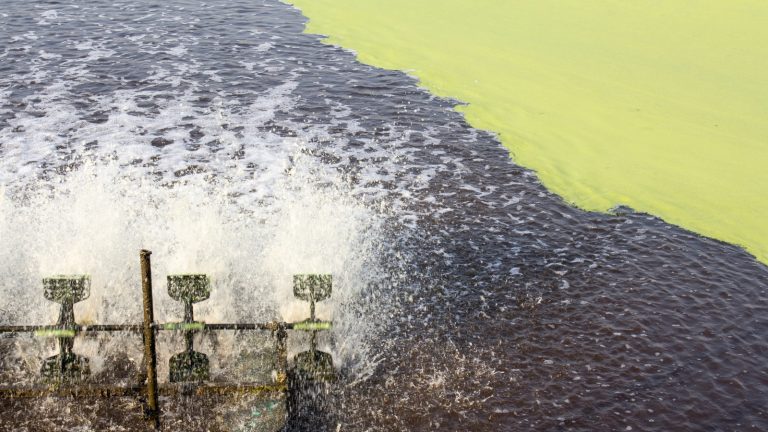
Evaporation ponds are artificial ponds with enormous surface areas that may hold potentially dangerous waste, as was previously described. Their goal is to use ‘natural’ evaporation to lower the water content of various solutions.
Since no effluent is released directly into the environment, evaporation ponds can be highly helpful in achieving zero liquid discharge in salt rejection and other effluents of mineral composition.
Such treatment reduces the amount of waste that needs to be treated, which lowers expenses while increasing the concentration of materials that can be used for commercial purposes.
Key Takeaways
- Evaporation ponds help reduce wastewater volume by using natural evaporation to concentrate dissolved solids.
- Properly designed and managed ponds can support effective wastewater handling and reduce disposal requirements.
- Regular monitoring is essential to maintain pond performance, manage environmental risks, and ensure compliance with applicable standards.
What Makes Evaporation Ponds Important?
In rural places, vegetable effluent from olive oil has traditionally been treated using evaporation ponds.
Despite taking up a lot of space, ponds are nevertheless reasonably priced because of their rural position. However, they can also be used to treat wastewater from mining operations and landfill leachates.
Why Evaporation Ponds Are Needed
Wastewater treatment facilities frequently use evaporation ponds to separate hazardous material at contaminated sites so that it may be handled and stored securely.
In the modern world, evaporation ponds are frequently built and used for other purposes, such as protecting the environment and preventing the contamination of groundwater or adjacent bodies of water by hazardous pesticides, fertilisers, salts, and organic waste.
Ponds continue to be crucial components of agricultural operations, helping to both evaporate precipitation that may fall on contaminated lands and mitigate some of the issues brought on by contemporary industrialisation.
Although the use of carefully positioned evaporation ponds aids in the preservation of natural watersheds, the smell that organic waste produces can occasionally make their use troublesome.
For contemporary wastewater treatment facilities situated close to cities, odour abatement is an essential component of evaporation pond design. When developing and utilising evaporation ponds, location is just one issue that needs to be taken into account.
Another important component is climate, and in many places, the long-term impact on the environment, particularly animals, has become a modern issue.
It is evident that sunny, dry locations with little wet season are ideal for evaporation ponds. In certain situations, natural precipitation can fill a pond faster than natural evaporation.
Features of Evaporation Ponds
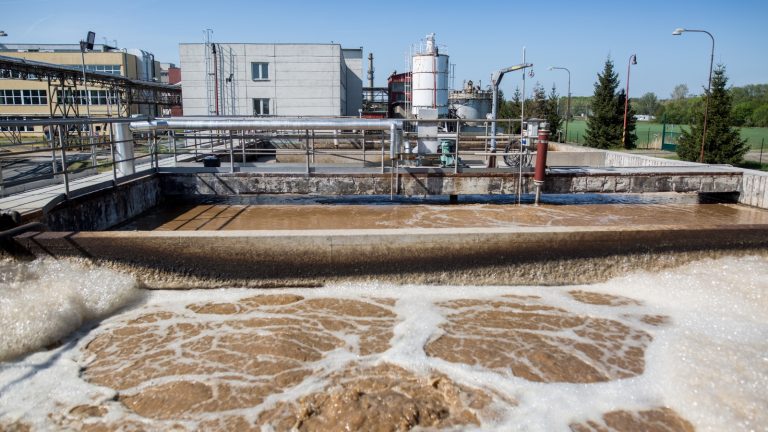
Particularly in countries with warm, dry climates, high evaporation rates, and inexpensive land, evaporation ponds might be a useful alternative for disposing of industrial waste.
Evaporation ponds can be sealed to lower the possibility of groundwater contamination.
Evaporation ponds work best in relatively dry, warm climates with high evaporation rates, level terrain, and inexpensive land.
Effluents are concentrated using evaporation ponds. They therefore employ evaporation to lower the volume of effluent, which could lead to the production of salt.
Industrial wastewater can be treated with evaporation ponds, where it is placed in sizable ponds and gradually evaporates with the aid of sunlight. In many nations throughout the world, they are a typical method of managing saline water.
Challenges of Evaporation Ponds
Despite their benefits, evaporation ponds may present a number of ecological and environmental hazards. For instance, any wastewater overflow from the evaporation ponds could seriously harm the environment by contaminating the soil and groundwater.
Additionally, because evaporation ponds are open water surfaces, they attract animals and birds, which may increase the mortality of those species if the effluent quality is poor and beyond acceptable limits.
However, when evaporation ponds store water with a high organic content and are near neighbouring municipalities, they may also cause additional operational issues, particularly those pertaining to odour generation.
Certain methods (scrubbers, washing towers, regenerative thermal oxidation, or activated carbon filters) can be used in these circumstances to reduce odours, but their costs should be considered.
However, it is typical for evaporation ponds to fill up far more than they evaporate during the wet season. In order to solve this issue, a water mist system (forced evaporation) that increases the rate of evaporation to 20 times that of natural evaporation must be used in conjunction with appropriate pond design.
How Tigernix Smart Wastewater Asset Software Optimises Evaporation Ponds
If you are looking to optimise evaporation ponds in industrial wastewater treatment, the journey begins with Tigernix Smart Wastewater Asset Software. Powered by Industry 4.0 capabilities, our software solution simply enables real-time asset monitoring, IoT connectivity, predictive maintenance, automation, and intelligent analytics all under one dashboard.
With our solution, your wastewater facilities can enhance pond management, monitor equipment performance, decrease downtime, optimise maintenance, keep operational costs under control, extend asset lifecycles, and make data-driven decisions for more efficient wastewater treatment operations.
Call for a free demo.
Tigernix- Optimise Wastewater Treatment with Industry 4.0 Power
FAQs About Evaporation Ponds in Industrial Wastewater Treatment
Evaporation ponds are constructed, shallow basins that, especially in warm, dry areas, harness natural evaporation to concentrate dissolved solids and minimise wastewater volume.
Industrial wastewater is kept in bordered ponds, where wind and sunlight encourage evaporation. While dissolved pollutants and sediments stay concentrated, water evaporates as vapour.
Evaporation ponds can lower wastewater volumes, promote zero-liquid-discharge schemes, require comparatively simple operation, and offer a workable treatment alternative when land availability and climate allow.
Major limitations include the need for a lot of acreage, reliance on the climate, possible odour problems, the possibility of groundwater contamination, and concentrated leftover solids that need to be properly managed and disposed of.