

Every industry produces a variety of wastewater forms. Certain components are typical for the corresponding wastewater in each category. Oils and fats may be common in cleaning water, but a high nitrogen level is common in agricultural effluent.
This is where the industrial world can identify the best treatment solution more easily when wastewater is properly categorised.
In this article, we explore the main types of industrial wastewater and their characteristics.
Understanding Industrial Wastewater
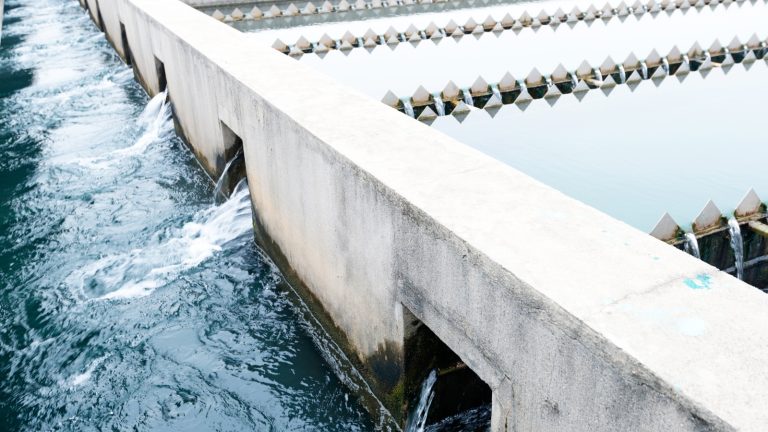
The majority of industrial businesses, including food and beverage, clothing and shoe, and electronic manufacturing, as well as heavy production sites like mining, oil and gas, and chemical manufacturing, produce industrial wastewater, which is an aqueous waste and by-product.
Water is utilised in every industry’s commercial product production process, either for cleansing purposes or as part of the process itself. The water is regarded as wastewater once it has been used.
One industry that generates a lot of effluent is metal finishing. Significant volumes of heavy metal-containing sludge are being produced by metal finishers, seriously endangering human and animal health as well as the environment. For this reason, the metal finishing business is subject to stringent industrial wastewater treatment rules.
These businesses only make up a small portion of the numerous industries that generate industrial wastewater, which must be treated before being released into the environment.
Any organic and inorganic pollutants in the water used in industrial operations must be controlled in order to adhere to current regulations and discharge restrictions.
Before industrial wastewater can be safely released back into land and water habitats or used again in plant operations, organic debris, metals, and other suspended solids must be eliminated.
Key Takeaways
- Industrial wastewater treatment helps remove contaminants and protect water quality before discharge or reuse.
- Effective treatment processes can improve regulatory compliance, reduce environmental impact, and support efficient water management.
- Proper monitoring and maintenance help maintain consistent treatment performance and optimise operational efficiency.
What are the Main Types of Industrial Wastewater?
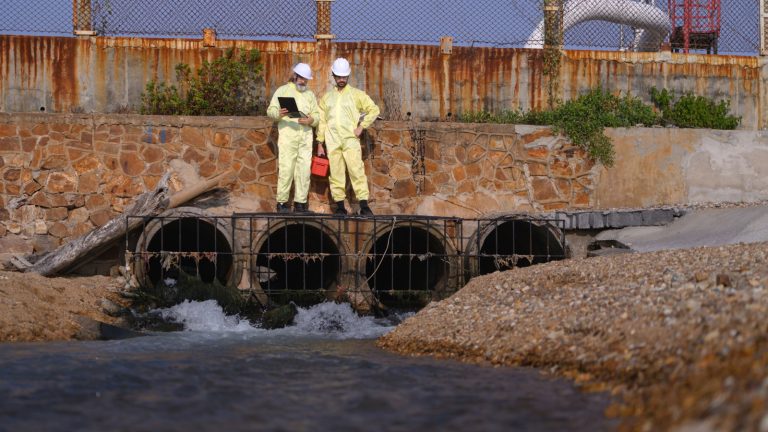
In the section below, we discuss the main types of effluent, from cooling water and production water to sanitary wastewater and all.
Cooling Water
The primary component of industrial wastewater is cooling water. It is created in a self-contained cycle during cooling processes. However, to add fresh water to the cycle, organisations must discard a portion of the cooling water.
Companies may typically release cooling water directly into the environment because it is rarely contaminated.
But there is a chance of thermal pollution. The thermal energy from the industrial process is absorbed by cooling water. The habitats that require a cool environment may suffer if businesses release the hot cooling water into the environment.
This is why, when releasing cooling water directly, businesses need to be mindful of its temperature.
Production Water
Production water is industrial wastewater that is generated during the manufacturing process.
This could be condensate water from wood processing or water that is also transported during the production of oil and gas. Food processing facilities also use production water.
As a result, there are wide variations in the dissolved materials and their concentration in the production water. Therefore, it is the responsibility of every business to thoroughly analyse the production wastewater in order to identify the most effective wastewater treatment technique.
Cleaning Wastewater
Industrial cleaning wastewater is created in all organisations where cleanliness is important. These include food processing businesses like distilleries, breweries, and slaughterhouses, as well as medical facilities and pharmaceutical firms.
As a result, industrial cleaning effluent can contain a wide range of substances, from medication residues to animal fats and blood.
Businesses must select specific industrial wastewater treatment systems based on their requirements.
Wastewater from Agriculture
The majority of agricultural wastewater is slurry, which is typically created by raising cows and pigs. Wastewater from cleaning stables is another.
This industrial wastewater has an especially high nitrogen load. Farmers must lower the nitrogen concentration to the point where they do not overwhelm the soils because they are required to spread their manure on the fields.
The best course of action in this situation is to treat wastewater to the recommended nitrogen concentration.
Sanitary Wastewater
Every organisation’s staff produce sanitary wastewater. It is created in kitchens, restrooms, sanitary facilities, and toilets.
It is simple to treat biologically because it can be dark water. Washing hands can also contaminate the wastewater with oils, grease, and soap residues, depending on the trade.
Therefore, treating it along with the cleaning wastewater is frequently beneficial.
What is the Process for Treating Industrial Wastewater?
As industrial wastewater is frequently highly contaminated, it needs to be treated using a variety of techniques, which is why it is divided into three categories: primary treatment, secondary treatment, and tertiary treatment.
Let’s examine these industrial wastewater treatment methods in detail in the section below:-
Primary Treatment
The process of eliminating solid particles from industrial wastewater is known as primary wastewater treatment. This process entails the sedimentation of solid waste in the water, which causes the materials to either settle on the bottom or float to the top.
This is carried out after the water’s major impurities have been filtered out. Water and impurities are separated from the wastewater by several tanks and filters.
After that, the leftover sludge is put into a digester for additional processing. Larger particles are often broken up by mechanical equipment in the main wastewater treatment process.
Secondary Treatment
In order to eliminate the soluble organic matter and additional suspended solids that evade primary treatment, secondary wastewater treatment is carried out.
This method makes advantage of naturally existing biological processes, such as the frequently employed anaerobic microbes. Oxidation is used in secondary wastewater treatment to further cleanse wastewater.
There are three ways to accomplish this:
Biofiltration: To make sure that more sediments are eliminated from the industrial wastewater, biofiltration uses sand filters, contact filters, trickling filters, or ceramic membranes.
Aeration: Another secondary treatment technique is aeration. Wastewater and a microbe solution are combined in this technique.
Oxidation: Oxidation ponds make use of lagoons and other naturally occurring bodies of water. This body retains wastewater for two to three weeks, allowing it to pass through for a while.
Tertiary Treatment
- Chemical processing
- Filtration using ceramic membranes
- Sand filters
- Carbon that is activated
How Tigernix Smart Wastewater Asset Software Optimises Industrial Wastewater Treatment
If your wastewater facility is looking for modern ways to manage diverse industrial wastewater treatment processes, it is time to partner with Tigernix Smart Wastewater Asset Software. Since it is powered by Industry 4.0 capabilities, the Tigernix solution simply enables real-time asset monitoring, IoT connectivity, predictive maintenance, automation, and intelligent analytics across treatment operations, all under one dashboard.
With our solution in place, wastewater facilities can enhance equipment reliability, stay away from downtime, improve maintenance, control operational costs, boost treatment efficiency, extend asset lifecycles, and make data-driven decisions for smarter wastewater management.
Call for a free demo now.
Tigernix- Wastewater Treatment Under Digital Control
FAQs About the Types of Industrial Wastewater Treatment
The main types include physical, chemical, biological, membrane, and advanced treatment processes, chosen based on contaminants, wastewater characteristics, legal restrictions, and planned water reuse.
Physical treatment eliminates suspended solids and bigger particles prior to other wastewater treatment procedures using screening, sedimentation, filtration, flotation, and other separation techniques.
Biological treatment utilises microorganisms, typically through activated sludge, biofilters, or other biological treatment systems, to degrade organic pollutants and toxins in wastewater.
Chemical treatment uses procedures such as flocculation, neutralisation, oxidation, coagulation, and disinfection to eliminate impurities, modify water characteristics, and enhance effluent quality.