

Did you know that every key component of contemporary water purification procedures, such as sedimentation in water treatment, is essential for both industrial and municipal water treatment?. It is a basic procedure that ensures cleaner, safer water for both communities and industrialists, as it simply removes suspended particles from water through gravity settling.
This is why water treatment experts, plant operators, and anybody else involved in water quality management must have a thorough understanding of the complexities of sedimentation.
In this article, we explore how industrial sedimentation occurs to optimise clarification in water treatment.
What is Sedimentation?
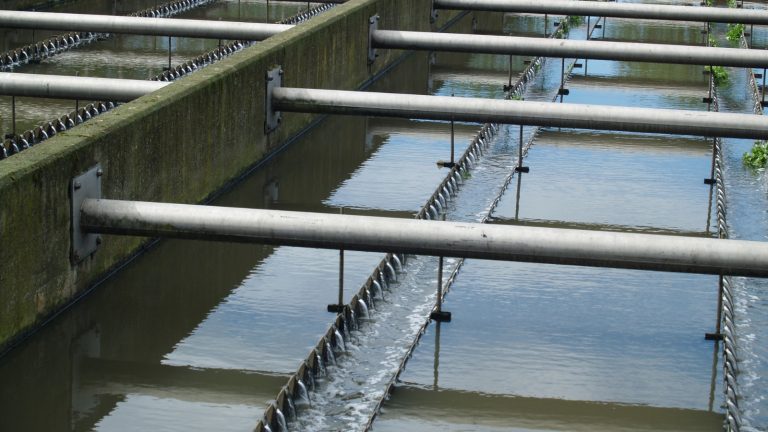
Sedimentation is the process of using gravity to separate suspended particulates from a liquid in water and wastewater treatment. Sediment is created when solids and particles settle after falling out of liquid suspension.
This procedure, which is also referred to as settling, is frequently employed in the treatment of water and wastewater.
From fine grit (>1,000 nm) to colloids (1-1,000 nm), suspended particles in a liquid can take many forms. It might take seconds to minutes for a solid, such as fine sand or silt, to separate from a liquid solution.
On the other hand, it may take weeks or even years for colloids and fine silts to spontaneously come out of suspension.
Naturally, industrial water facilities and governments cannot wait for solids to naturally settle for years or even hours. As a result, chemicals and clarifiers are used to speed up and improve the efficiency of sedimentation.
This way, it is possible to continuously recover clean water and get rid of the solids that have been extracted from the water by using chemicals and clarifiers. There are two compounds that are frequently used to help with sedimentation water treatment, and those are coagulants and polymer flocculants.
Clarifiers, also known as sedimentation tanks, continually remove sediments accumulated by sedimentation using mechanical methods. Thickeners, horizontal flow tanks, radial flow clarifiers, inclined plate tanks, solids contact clarifiers, ballasted sedimentation, etc., are some examples of these clarifiers.
However, for sedimentation without mechanical improvement, we can see that settling ponds, basins, and lagoons are also utilised.
Key Takeaways
- Industrial sedimentation helps separate suspended solids from liquids during water and wastewater treatment processes.
- Effective sedimentation can improve water quality, reduce treatment loads, and support efficient resource management.
- Proper system design, monitoring, and maintenance help maintain consistent sedimentation performance and treatment efficiency.
When Sedimentation Should Be Used
It is important to be aware that not all water treatment applications can or should employ sedimentation. Understanding your wastewater’s properties is crucial to figuring out whether the treatment procedure is working. Additionally, you must specify the purpose of your water treatment.
Different removal techniques, such as dissolved air flotation, are needed for solids that are buoyant and have a density lower than the fluid they are in.
Sedimentation may also be one of several necessary phases in the water treatment process. Municipalities might want to create drinkable water, for instance.
Thus, the procedure will be used to eliminate solids prior to subsequent treatments like reverse osmosis and UV. In contrast, aggregate manufacturers might just need to remove solids in order to discharge or reuse their water.
Concept of Sedimentation
Understanding sedimentation theory is crucial when using sedimentation as a water treatment method. In short, an object will sink if it is dropped into a fluid and its density is higher than that of the fluid.
For this reason, a low-density colloid will settle more slowly than sand particles. The settling velocity, denoted by V, is the rate at which the object lowers.
It is crucial to remember that calculations such as Stokes Law make the assumption that the suspended particles are solid and spherical. On the other hand, suspended solids vary in size and density and typically have asymmetrical forms.
Additionally, the direction and speed of a moving fluid (flow velocity) affect suspended solids. To account for these variables, the facilities can modify the formula and incorporate form factors.
Main Types of Sedimentation Processes
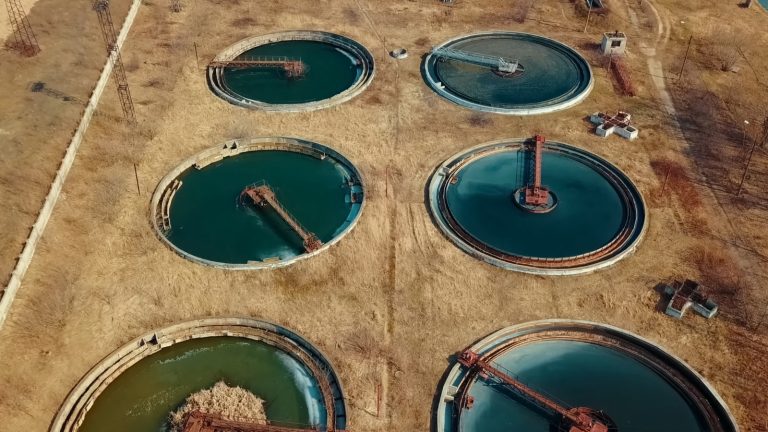
Depending on the size, density, and physical characteristics of the materials, there are four sedimentation processes. These processes often fall into two categories: unfettered and restricted settling.
Free Settling
This is also known as ‘Discrete particle settling’. The term ‘discrete settling’ describes the sedimentation of particles in a fluid with a low concentration of suspended solids—roughly less than 1% v/v.
Particles in this process settle on their own without much interaction with one another.
The Flocculent Settling
Flocculent settling occurs when particles flocculate or coalesce during the settling process.
Particles gain bulk and settle more quickly when they flocculate or coalesce. When the particle concentration is above 1% v/v, this is typically seen.
Zone Settling or Hindered
When the solids concentration rises to around 8% v/v, they become sufficiently close to affect the settling of nearby particles. The velocity fields of the fluid displaced by other particles overlap as a result of this closeness, which prevents settling.
This method demonstrates how the particles settle as a mass or zone and keep their location in relation to one another.
Compression Settling
When particle density is so great that they are always in contact with one another, compression settling takes place.
As a result, a sludge blanket is created in which the weight of the upper layers is supported by the lower particle layers. In this method, water is forced out of the pores between the particles when they are squeezed by gravity.
How Tigernix Water Treatment Asset Solution Optimises Different Sedimentation Processes
Now your water treatment plant can optimise different sedimentation processes with Tigernix Water Treatment Asset Solution. Our software platform simply helps water treatment facilities take full control of critical equipment with greater efficiency.
Since it is powered by Industry 4.0 capabilities, the Tigernix platform enables real-time asset monitoring, IoT connectivity, predictive maintenance, automation, and intelligent analytics all under one digital canopy. Your water or wastewater facility can enhance sedimentation performance, eliminate equipment downtime, optimise maintenance, extend asset life, control operational costs, and support more reliable water treatment operations easily.
Call for a free demo.
Tigernix- Where Water Processes Are Digitalised
FAQs About Industrial Sedimentation
Industrial sedimentation is a method of treating water and wastewater that improves water quality prior to further treatment steps by using gravity to separate suspended solids from liquids.
Sedimentation eliminates suspended particles, lessens the strain on downstream treatment systems, increases treatment effectiveness, and assists businesses in managing wastewater while adhering to necessary discharge regulations.
Industrial sedimentation permits the entry of wastewater into settling tanks, where dispersed particles eventually settle due to gravity, creating sludge that may be gathered and eliminated.
Common equipment comprises, depending on treatment capacity and particular industrial needs, settling tanks, clarifiers, sedimentation basins, sludge collectors, scrapers, and lamella clarifiers.