

Modern buildings are facing a major challenge, which is how to stay comfortable while reducing energy use. Studies show that buildings consume nearly 40% of global energy, with HVAC systems accounting for a large share. At the same time, research indicates that improving ventilation can increase productivity by up to 11% and reduce illness-related absences by 30%. This is where natural exhaust ventilation becomes a powerful solution.
If the builders use airflow driven by nature instead of machines, buildings can achieve better comfort, healthier environments, and lower operational costs. In this article, we explore how to design and implement effective systems.
We will look into
- What Is Natural Exhaust Ventilation and Why Does It Matter?
- How Does the Stack Effect Create Natural Exhaust Flow?
- What Are Australian BCA/NCC Requirements for Natural Ventilation?
- How to Calculate Exhaust Opening Sizes for Adequate Ventilation?
- Where Should Exhaust Openings Be Located for Maximum Effectiveness?
- How Does Cross-Ventilation Work with Natural Exhaust Systems?
- What Design Strategies Optimise Combined Stack and Cross-Ventilation?
- What Are Common Mistakes That Undermine Natural Exhaust Performance?
- How Can CFD Modelling Optimise Natural Ventilation Design?
- How Does Digital Technology Enhance Natural Exhaust Systems?
- What Health and Productivity Benefits Does Natural Exhaust Deliver?
- How to Transition from Planning to Implementation?
- FAQs About Natural Exhaust Ventilation
What Is Natural Exhaust Ventilation And Why Does It Matter?
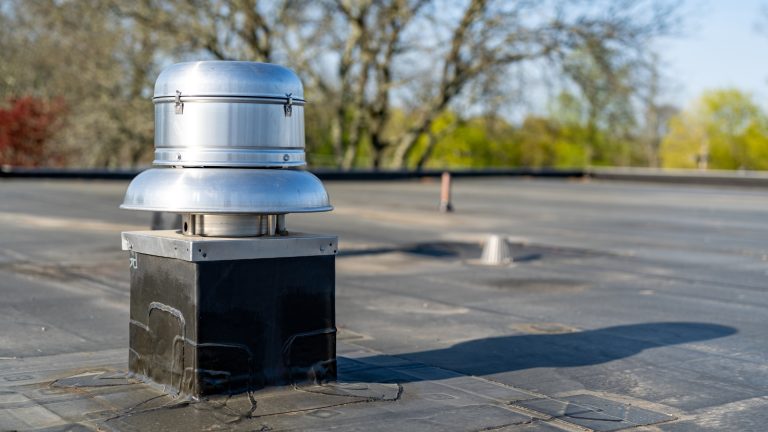
Natural exhaust ventilation is a passive system that removes stale indoor air without mechanical fans. It uses natural forces, such as wind and temperature differences, to move air through a building. This approach improves comfort while reducing energy use.
Key Takeaways
- Natural exhaust ventilation reduces energy use by leveraging passive airflow instead of mechanical systems, improving sustainability and lowering operational costs.
- Stack effect and cross-ventilation work best together, creating both vertical and horizontal airflow for consistent indoor comfort.
- Proper design is critical as incorrect opening placement, sizing, or airflow paths can significantly reduce system performance.
- Digital technologies enhance passive systems, enabling real-time monitoring, predictive optimisation, and long-term performance improvements.
Defining Natural Ventilation As Passive Airflow Using Pressure Differentials
Ventilation works because of a pressure differential between indoor and outdoor environments. Air naturally flows from high-pressure zones to low-pressure zones, creating movement without mechanical assistance.
This process forms the foundation of passive airflow systems.
In well-designed buildings, openings are carefully placed to guide air movement. This ensures fresh air enters while stale air exits efficiently.
Such systems reduce reliance on energy-intensive equipment while improving air circulation.
The Difference Between Wind-Driven And Buoyancy-Driven (Stack Effect) Systems
There are two primary natural ventilation mechanisms. The first is wind-driven ventilation, where air moves due to external wind pressure acting on building surfaces. Openings on opposite sides create airflow pathways.
The second relies on temperature differences, often referred to as stack effect ventilation. Warm air rises and escapes through higher openings, pulling cooler air inside from below.
The interesting fact is that both systems can work together to improve performance, especially in mixed climate conditions.
Why Natural Exhaust Saves Energy While Improving Indoor Air Quality
One of the biggest advantages of natural exhaust ventilation is reduced energy consumption.
Since it can minimise the need for mechanical cooling and fans, buildings can significantly lower operational costs.
At the same time, it enhances indoor air quality by removing pollutants, odours, and excess heat. This creates a healthier indoor environment.
Combined with strong energy efficiency outcomes, this approach supports both sustainability goals and occupant comfort.
How Does The Stack Effect Create Natural Exhaust Flow?
The stack effect is one of the most powerful drivers of passive airflow in buildings. It uses temperature differences to move air vertically, making it essential for effective ventilation design.
Understanding Thermal Buoyancy: Warm Air Rises Due To Density Differences
The movement of air in vertical spaces is driven by thermal buoyancy airflow. When air is heated, it becomes lighter and rises, while cooler air sinks. This natural behaviour creates upward airflow within a building.
This phenomenon is also influenced by thermal stratification, where layers of warm and cool air form at different heights.
Moreover, proper design ensures that rising warm air is captured and expelled through high-level openings.
The Physics Equation: Pressure Differential Driven By Height And Temperature
Did you know that the stack effect is governed by physics?
This indicates that the greater the temperature difference between indoor and outdoor air, the stronger the airflow. Height also plays a major role.
As warm air rises, it creates a vertical flow driven by temperature-induced flow. The concept of the neutral pressure level becomes important here. Why, because it is the point where indoor and outdoor pressures are equal.
Above this level, air exits; below it, air enters.
Greater Thermal Difference + Taller Building = Stronger Stack Effect
The strength of stack ventilation depends on two factors: temperature difference and building height. Larger temperature gaps increase airflow velocity.
Similarly, taller buildings amplify the effect because rising air has more vertical distance to travel. The resulting movement is driven by buoyancy force, making high-rise structures especially suitable for passive ventilation strategies.
Normal Stack Effect (Heated Building) Vs Reverse Stack Effect (Cooled Building)
In colder climates, warm indoor air rises and escapes through upper openings, and this is the normal stack effect. However, in hot climates, the process can reverse.
When indoor spaces are cooler than outside, warm external air may enter from the top, creating downward airflow.
Understanding this behaviour is critical to ensuring effective system design under varying environmental conditions.
What Are Australian BCA/NCC Requirements For Natural Ventilation?

Australian building codes set clear guidelines to ensure safe and effective ventilation. These rules help designers create buildings that meet health, safety, and performance standards.
1.Habitable Room Requirement: Openings Minimum 5% Of Floor Area
For habitable rooms, regulations require ventilation openings to be at least 5% of the total floor area percentage. This ensures sufficient airflow for occupant comfort.
These openings allow fresh air to enter and stale air to exit naturally. Meeting this requirement is essential for compliance and for maintaining indoor environmental quality.
2.Natural Light Requirement: Windows 10% Floor Area (Can Serve Dual Purpose)
In addition to ventilation, buildings must meet natural lighting standards. Windows must cover at least 10% of the floor area.
These windows can often serve a dual purpose, which is providing both light and ventilation. This approach supports efficient design while reducing the need for artificial systems.
3.Cross-Ventilation Mandate: Breeze Path ≤20 Metres, ≤2 Internal Walls
Effective airflow requires a clear path through the building. Regulations specify that airflow paths should not exceed 20 meters and should pass through no more than two internal walls.
This supports proper cross-ventilation design, ensuring that air can move freely from one side of a building to the other.
It also helps maintain a continuous airflow path for consistent ventilation.
4.AS 1668.4 Standard Providing Detailed Natural Ventilation Procedures
The AS 1668.4 standard outlines detailed methods for designing and assessing natural ventilation systems. It includes both simplified and advanced calculation approaches.
These guidelines help engineers determine airflow rates, opening sizes, and system performance.
Following this standard ensures that ventilation systems meet required benchmarks.
- State Variations: Adelaide And Territory-Specific Requirements
While national codes provide a framework, some states have additional requirements.
Cities like Adelaide may include climate-specific adjustments.
Designers must consider local regulations to ensure compliance. These variations often reflect regional weather patterns and environmental conditions.
How To Calculate Exhaust Opening Sizes For Adequate Ventilation?
Proper sizing of openings is critical for effective airflow. Incorrect sizing can lead to poor performance and discomfort.
AS 1668.4 ‘Simple’ Procedure For Standard Applications
For basic applications, the standard provides a simplified method for calculating opening sizes. This approach is suitable for straightforward building layouts.
It considers factors such as room size and expected airflow needs. This method ensures compliance without requiring complex analysis.
‘Detailed’ Calculation Accounting For Occupancy, Activity Levels, Climate
More complex buildings require detailed calculations. These consider occupancy levels, activity types, and local climate conditions.
This process ensures accurate exhaust opening calculation, helping designers create systems that perform effectively under real-world conditions.
Rule of Thumb: 5-10% Floor Area for Habitable Commercial/Industrial Spaces
A common guideline is to allocate 5–10% of floor area for ventilation openings.
This rule provides a quick reference for designers. However, this should be adjusted based on building use and environmental factors.
Proper opening sizing ensures balanced airflow and system efficiency.
Exhaust Openings Should Equal Or Exceed Inlet Opening Areas
For effective airflow, exhaust openings should be equal to or larger than inlet openings. This prevents bottlenecks in airflow.
Balanced design ensures smooth movement of air through the building. It also supports a consistent air change rate, improving indoor comfort.
Adjustments For Window Types: Louvres (90% Effective) Vs Sliding (40%)
Different window types affect airflow efficiency. For example, louvre systems allow up to 90% effective airflow due to adjustable angles. In contrast, sliding windows typically allow only about 40% airflow.
This is where designers must consider these differences when planning ventilation systems.
Where Should Exhaust Openings Be Located For Maximum Effectiveness?
The placement of exhaust openings directly affects how well air moves through a building. For best results, openings must support upward airflow and avoid obstructions. Proper placement ensures consistent removal of warm, stale air while drawing in cooler, fresh air.
High Placement Principle: Exhaust Openings Above Inlets To Maximise Stack Effect
For effective airflow, exhaust openings must always be placed higher than inlet openings. This vertical separation allows warm air to rise naturally and exit the building.
This principle supports efficient natural exhaust ventilation by using gravity and temperature differences. When high-level exhausts are correctly positioned, they create a steady upward pull.
This improves overall airflow performance and ensures that indoor spaces remain comfortable without relying on mechanical systems.
Ridge Vents At Roof Peak: Optimal Outlet For Both Buoyancy And Wind Ventilation
Installing ridge vents at the highest point of a roof is one of the most effective ways to release warm air. These vents allow accumulated heat to escape naturally.
Because they are exposed to both wind and rising warm air, ridge vents work well in multiple conditions. They enhance airflow efficiency by supporting both vertical and horizontal air movement.
The latter makes them ideal for large buildings and industrial spaces.
Clerestory Windows And High-Level Awning Windows For Passive Exhaust
High-level openings, such as clerestory windows, play a key role in passive ventilation.
These windows are positioned above eye level, allowing hot air to exit without affecting privacy or security.
They also allow natural light to enter, improving indoor comfort. When combined with lower inlet openings, clerestory windows create a strong vertical airflow pattern that supports continuous ventilation throughout the space.
Avoiding Obstructions: Clear Airflow Path From Inlet To Exhaust
For airflow to work effectively, there must be a clear and uninterrupted airflow path between the inlet and exhaust openings. Internal walls, furniture, or poorly placed partitions can block this movement.
Designers must ensure that air can travel freely across spaces. Even small obstructions can reduce airflow efficiency, leading to poor ventilation and uneven temperature distribution.
Fire And Smoke Code Considerations: Stairway Stack Restrictions
While stack ventilation is beneficial, it must be carefully managed in areas like stairwells.
These spaces can act as vertical shafts, potentially spreading smoke during a fire.
Building codes often include restrictions to control airflow in these zones. Designers must balance ventilation performance with safety requirements to prevent unintended risks.
How Does Cross-Ventilation Work With Natural Exhaust Systems?
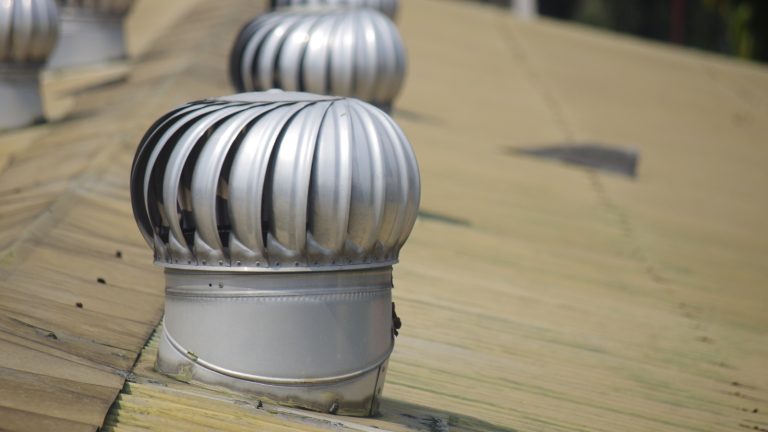
Cross-ventilation is another key component of passive airflow. It uses wind pressure differences to move air horizontally across a building, complementing vertical exhaust systems.
Wind Pressure Creating Positive (Windward) And Negative (Leeward) Zones
When wind hits a building, it creates high pressure on the windward side and low pressure on the opposite side. This pressure difference drives airflow through the building.
This mechanism supports effective ventilation by continuously replacing indoor air. It works best when openings are placed strategically to capture these pressure zones.
Inlet-Outlet Positioning: Across Room, Offset For Mixing (Not Directly Aligned)
To achieve proper air mixing, inlet and outlet openings should not be directly aligned. Instead, they should be offset across the space. This arrangement prevents short-circuiting and encourages air to circulate within the room.
Proper inlet exhaust placement improves ventilation quality and ensures that all areas receive fresh air.
Perpendicular Wall Placements Maximising Pressure Differential
Placing openings on perpendicular walls increases the pressure difference across the building. This enhances airflow speed and effectiveness.
Such layouts are especially useful in rectangular or elongated buildings. They maximise natural forces and improve overall ventilation performance.
Internal Door Louvres, Transoms, And Grills Completing Airflow Circuit
Internal elements like door grilles and transom openings help maintain airflow between rooms. They allow air to pass through even when doors are closed.
These features ensure that the entire building benefits from ventilation. They also help create a complete ventilation circuit that connects all spaces within the structure.
When Cross-Ventilation Alone Is Insufficient: Depth >20m, Internal Barriers
In large buildings, cross-ventilation may not reach deeper interior spaces. Structures with depths greater than 20 metres often require additional strategies.
Internal walls and partitions can also block airflow. In such cases, vertical ventilation methods must be combined with cross-ventilation to maintain effectiveness.
What Design Strategies Optimise Combined Stack And Cross-Ventilation?
Combining vertical and horizontal airflow strategies can significantly improve ventilation performance. These hybrid approaches are especially useful in complex buildings.
Cool Towers Delivering Evaporatively Cooled Air Low In Space
Cool towers are vertical structures that draw air downward after cooling it through evaporation. This creates a refreshing airflow at lower levels.
They are particularly effective in hot, dry climates. By supplying cooled air from below, they enhance overall ventilation performance and comfort.
Humidity-Induced Buoyancy Exhausting Through Stack Openings
Humidity differences can also drive airflow. Moist air behaves differently from dry air, influencing its movement within a building.
This effect can support upward airflow, enhancing exhaust performance. It works alongside temperature differences to improve ventilation efficiency.
Pressurised Cool Air Supply From Column Weight Above
In tall structures, the weight of air columns can create pressure differences. This can push cooler air into lower levels of a building.
This natural pressure helps distribute air evenly. It supports both cooling and ventilation without mechanical assistance.
Combining Downdraft Cooling With High Clerestory Exhaust (Zion NP Example)
A well-known example of passive design is seen in buildings at Zion National Park. These structures combine downdraft cooling with high exhaust openings.
Cool air is introduced at lower levels, while warm air exits through high openings. This creates a continuous airflow cycle, improving comfort and reducing energy use.
Architectural Fins Creating Positive/Negative Pressure For Single-Sided Rooms
In spaces with only one external wall, architectural fins can help create pressure differences. These elements direct airflow into and out of the building.
They improve ventilation even in challenging layouts. This approach ensures that single-sided rooms can still benefit from passive airflow strategies.
What Are Common Mistakes That Undermine Natural Exhaust Performance?
Even well-designed systems can fail if key mistakes are made. Understanding these issues helps prevent poor performance and ensures effective ventilation.
Direct Inlet-To-Outlet Alignment Causing Short-Circuiting Without Room Mixing
When openings are directly aligned, air may pass straight through without circulating. This reduces ventilation effectiveness.
Proper design should encourage mixing within the space. This ensures that stale air is fully replaced.
Partitions Perpendicular To Airflow Obstructing Ventilation Paths
Poorly placed partitions can block airflow. Walls positioned incorrectly disrupt natural air movement.
Designers must consider airflow when planning layouts. Clear pathways are essential for effective ventilation.
Insufficient High-Level Exhaust Openings Bottlenecking Stack Flow
If high-level openings are too small or limited, airflow becomes restricted. This creates a bottleneck effect.
Adequate exhaust sizing is critical. Without it, even strong temperature differences cannot drive effective airflow.
Sealed Rooms Without Transom Openings Or Undercut Doors
Rooms without internal airflow paths can become isolated. This prevents proper ventilation.
Features like door gaps or transoms are necessary. They allow air to move between spaces and maintain circulation.
Expectations Exceeding Reality: 3–5% Of Time Comfort May Not Be Achieved
Natural ventilation is not perfect. There may be times when conditions do not support ideal airflow.
Studies show that comfort levels may not be achieved for 3–5% of the time. Designers must account for this and consider backup solutions if needed.
How Can CFD Modelling Optimise Natural Ventilation Design?
Designing ventilation systems can be complex, especially in large or irregular buildings. Computational tools help simulate airflow before construction. These tools allow engineers to test scenarios, predict performance, and refine designs to ensure effective airflow under different environmental conditions.
Computational Fluid Dynamics Simulating Complex Airflow Behaviour
CFD modelling uses advanced simulations to visualise how air moves within and around buildings. It helps designers understand airflow patterns that are otherwise invisible. By modelling different layouts, engineers can identify weak airflow zones and improve ventilation strategies.
As you can see, this approach reduces design errors and ensures that systems perform as expected. It is especially useful for buildings with complex geometries where simple rules may not provide accurate results.
Modelling Stack Effect Combined With Wind, Thermal Mass, Solar Gain
You may know that ventilation performance is influenced by multiple factors working together.
CFD tools can simulate stack-driven airflow alongside wind effects, thermal mass behaviour, and solar heat gain. This provides a complete picture of building performance. By understanding how these elements interact, designers can optimise airflow strategies.
The result is improved comfort, reduced overheating, and better system efficiency across different seasons and environmental conditions.
Local Weather Data Integration For Climate-Specific Design
Climate plays a major role in ventilation effectiveness. CFD models can incorporate local weather data such as wind direction, temperature variations, and seasonal changes. This allows designers to create solutions tailored to specific regions.
By using real environmental data, buildings can achieve more reliable performance. This approach ensures that ventilation systems remain effective throughout the year, even under changing climate conditions.
Wind Tunnel Testing For Large Or Complex Building Geometries
For large-scale or unique structures, physical wind tunnel testing is often used alongside digital simulations. These tests replicate real-world wind conditions to study airflow behaviour. Engineers can observe how air interacts with building surfaces and openings.
This helps validate design decisions and improve accuracy. Combining physical testing with digital models ensures that ventilation systems perform reliably in real-world conditions.
When Rule-Of-Thumb Sizing Is Insufficient For Design Confidence
Simple design rules are helpful, but they may not always provide accurate results. Complex buildings require more detailed analysis to ensure effective ventilation.
This is when CFD modelling offers a higher level of confidence by providing data-driven insights. It helps designers avoid underperforming systems and ensures that airflow meets required standards. This approach is essential for projects where precision and reliability are critical.
How Does Digital Technology Enhance Natural Exhaust Systems?

- Automated Window Actuators Responding To Temperature And CO₂ Sensors
Sensors monitor temperature and carbon dioxide levels to determine when ventilation is needed. This improves airflow without manual intervention.
Such systems enhance comfort while maintaining efficiency. By adjusting openings dynamically, buildings can respond to changing conditions throughout the day, ensuring consistent indoor environments.
- Smart Louvre Systems Adjusting Opening Angles Based On Conditions
This flexibility allows buildings to adapt to changing weather conditions. It also helps maintain indoor comfort while reducing energy consumption.
- GIS Mapping Prevailing Wind Patterns For Site-Specific Design
By mapping prevailing wind patterns, buildings can be oriented to maximise airflow. This approach supports better design decisions and improves ventilation efficiency. It ensures that openings are placed where they can capture the most airflow.
GIS tools are especially useful for large developments or urban environments where wind patterns are complex.
- Digital Twin Simulating Ventilation Performance Scenarios
By testing various conditions, designers can optimise airflow strategies before implementation. This reduces risk and improves system reliability. Digital twins also allow ongoing monitoring and adjustments after construction.
- IoT Sensors Monitoring Indoor Air Quality And System Effectiveness
Real-time data helps facility managers identify issues and optimise ventilation. This ensures that buildings maintain healthy environments while operating efficiently.
What Health And Productivity Benefits Does Natural Exhaust Deliver?
Good ventilation has a direct impact on health, comfort, and productivity. By improving air quality, buildings can support better performance and well-being.
30% Reduction in Sick Leave with Efficient Natural Ventilation
Studies have shown that effective ventilation can reduce sick leave by up to 30%. Fresh air helps remove harmful pollutants and improves overall health.
This leads to fewer illnesses and higher productivity. Organisations benefit from reduced absenteeism and improved workforce performance.
Preventing Sick Building Syndrome: Eye, Nose, Throat Problems
Poor ventilation can lead to sick building syndrome, causing symptoms like headaches and irritation. Proper airflow helps eliminate these issues.
By maintaining clean air, buildings create healthier environments. This improves comfort and reduces health risks for occupants.
Moisture Control: Preventing Mould, Water Damage, and Structural Issues
Effective moisture control is essential for preventing mould growth and structural damage. Excess humidity can lead to serious problems over time.
Natural ventilation helps regulate moisture levels. This protects building materials and ensures long-term durability.
Pollutant Removal Improving Concentration And Cognitive Performance
Removing indoor pollutants improves focus and mental performance. Clean air supports better decision-making and productivity.
Ventilation systems help maintain a healthy indoor environment. This benefits both individuals and organisations.
Thermal Comfort Enhancing Occupant Satisfaction And Wellbeing
Maintaining comfortable indoor temperatures is essential for occupant satisfaction. Proper airflow helps regulate heat and improve comfort.
This leads to better well-being and overall satisfaction. Comfortable environments also support productivity and engagement.
How To Transition From Planning To Implementation?
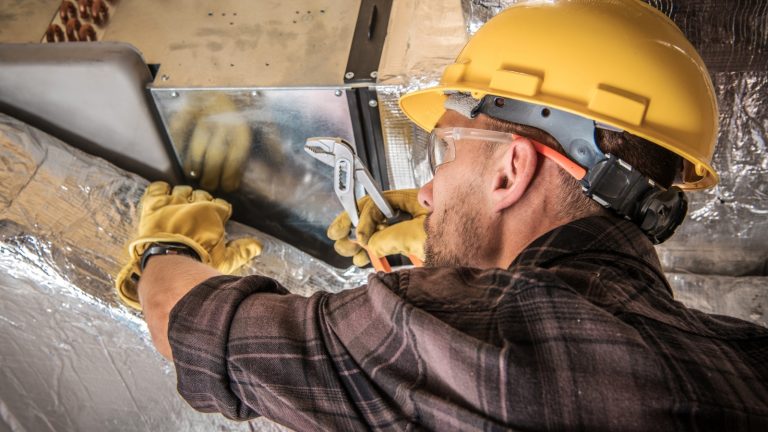
Moving from design to execution is where many ventilation strategies succeed or fail. A well-planned system must be carefully implemented to ensure it performs as expected. This stage includes design alignment, compliance checks, construction accuracy, and proper testing to validate performance.
Early Design Phase Integration: Orientation, Window Placement, Internal Layout
Successful ventilation begins at the earliest design stage. Building orientation should align with prevailing winds, while window placement must support airflow movement.
Internal layouts should avoid blocking air circulation. Integrating these elements early on ensures a strong foundation for natural-exhaust ventilation performance. This proactive approach reduces costly changes later and improves system efficiency.
It also supports long-term sustainability by aligning design decisions with environmental conditions from the start.
Compliance Verification: BCA/NCC Requirements And AS 1668.4 Calculations
Ensuring compliance with BCA NCC ventilation requirements is critical before construction begins.
Designers must verify that opening sizes, airflow paths, and ventilation rates meet standards. Calculations based on the AS 1668.4 standard help confirm system performance. This step reduces legal risks and ensures occupant safety.
It also guarantees that ventilation systems meet both regulatory and functional expectations, providing confidence that the design will perform effectively under real conditions.
Construction Supervision Ensuring Proper Opening Sizes And Sealing
During construction, careful supervision is essential to ensure that design specifications are followed. Openings must match planned dimensions, and sealing must be done correctly to avoid unintended airflow loss.
Even small deviations can affect performance. Monitoring construction quality ensures that the ventilation system functions as intended. This stage is critical for maintaining design integrity and preventing future operational issues arising from poor installation practices.
Commissioning: Testing Airflow Under Various Conditions
Commissioning involves testing the ventilation system under different environmental conditions. This helps confirm that airflow meets design expectations.
Engineers may measure airflow rates and observe system behaviour at different times of the day. Testing ensures that the system performs reliably.
It also helps identify any adjustments needed before occupancy, ensuring optimal performance from the start.
Occupant Education: Understanding System Operation And Window Management
Even the best-designed systems require proper user interaction. Occupants must understand how to operate windows and ventilation openings effectively.
Simple actions, such as opening or closing windows at the right time, can significantly impact performance. Educating users ensures that the system works as intended.
It also empowers occupants to maintain comfort and air quality through informed decisions.
Why Choose Tigernix For Building Performance Monitoring?
Modern buildings benefit from advanced monitoring systems that enhance ventilation performance. Tigernix provides digital solutions that help optimise airflow, improve efficiency, and support long-term building performance.
Smart Sensor Networks Monitoring Temperature, Humidity, CO₂, Airflow
Tigernix systems use advanced sensors to monitor environmental conditions in real time. These sensors track temperature, humidity, and airflow patterns. This data helps identify performance issues and optimise ventilation.
Continuous monitoring ensures that buildings maintain healthy indoor environments. It also allows your facility managers to make informed decisions based on accurate data, improving overall system efficiency.
Digital Twin Technology Simulating Ventilation Performance Optimisation
Digital twin technology creates a virtual representation of a building. This model allows engineers to simulate ventilation scenarios and predict outcomes. By testing different conditions, designers can refine airflow strategies.
This approach supports digital optimisation, ensuring that systems perform efficiently. It also reduces risks by allowing adjustments before implementing changes in the real environment.
AI Analytics Identifying Patterns And Predicting Ventilation Needs
Artificial intelligence can analyse large volumes of data to identify patterns in airflow and environmental conditions. These insights help predict ventilation needs and optimise system performance. AI-driven solutions improve efficiency by automating decision-making processes.
This reduces manual intervention and enhances system reliability. Over time, these systems learn and adapt, providing continuous improvement.
GIS Integration Mapping Building Orientation And Wind Exposure
GIS tools help map building orientation and wind exposure. This information is critical for optimising airflow strategies. By understanding environmental conditions, designers can improve system performance.
GIS integration ensures that buildings are designed to maximise natural airflow. It also supports better decision-making during both design and operation phases.
Real-Time Dashboards For Facility Managers Optimising Passive Systems
Real-time dashboards provide facility managers with clear insights into system performance. These tools display key metrics such as airflow, temperature, and air quality. This allows quick decision-making and system adjustments.
Dashboards improve operational efficiency and ensure that ventilation systems perform optimally. They also support proactive maintenance and long-term performance management.
Tigernix-A Fusion Of Technologies Together.
Ready To Optimise Your Building’s Natural Ventilation Performance?
Optimising ventilation is about continuous improvement and smart implementation. With the right strategies and tools, buildings can achieve better comfort, efficiency, and sustainability.
Schedule Consultation With Tigernix Building Technology Specialists
Working with experts can help you design and implement effective ventilation systems. Tigernix specialists provide tailored solutions based on building needs. They guide projects from planning to execution, ensuring optimal results.
Call for a free demo today.
Implement Digital Systems Maximising Passive Ventilation Effectiveness
Digital technologies play a key role in maximising ventilation performance. By integrating sensors, analytics, and automation, buildings can achieve higher efficiency. These systems support building airflow optimisation and improve overall comfort.
Implementing digital solutions ensures that passive ventilation systems operate at their full potential. It also prepares buildings for future advancements in smart technology.
FAQs About Natural Exhaust Ventilation
Natural exhaust ventilation is a passive system that removes indoor air using temperature differences and wind pressure. Warm air rises and exits through high-level openings, while cooler air enters from lower openings, creating continuous airflow without mechanical systems. This improves indoor comfort and energy efficiency.
Natural exhaust ventilation can significantly improve air quality and reduce energy use in modern buildings. When properly designed, it can lower cooling costs and enhance occupant comfort. However, performance depends on climate, building layout, and proper opening placement to ensure consistent airflow throughout the space.
Key design principles include proper opening sizing, correct placement of inlets and exhausts, and maintaining a clear airflow path. Combining vertical stack effect with horizontal cross-ventilation improves performance. Early design integration and compliance with standards ensure effective and reliable ventilation in buildings.
CFD modelling should be used for complex buildings where simple design rules are insufficient. It helps simulate airflow patterns, evaluate different scenarios, and improve system accuracy. This ensures that ventilation systems perform effectively under real-world conditions and reduces the risk of design errors.
Natural ventilation can reduce reliance on mechanical systems but may not fully replace them in all conditions. Factors such as climate, building size, and occupancy levels affect performance. Hybrid systems are often used to ensure comfort during extreme weather or when natural airflow is insufficient.