
Green building practices have been on the construction picture with the sole purpose of reformulating its entire context with pillars such as eco-friendly design, energy efficiency, and the elimination of greenhouse gas emissions. Today’s world is leaning towards net-zero carbon goals; this is where sustainable building solutions have become the best answer to dependence on fossil fuels and energy usage. Modern developers tend to employ innovative construction methods combined with renewable energy sources and smarter construction techniques in order to enhance natural lighting, indoor air quality, and ultimately boost human health.
In this article, we reveal 10 top sustainable green building practices that have revolutionised the modern construction sector.
What are Green Building Practices?
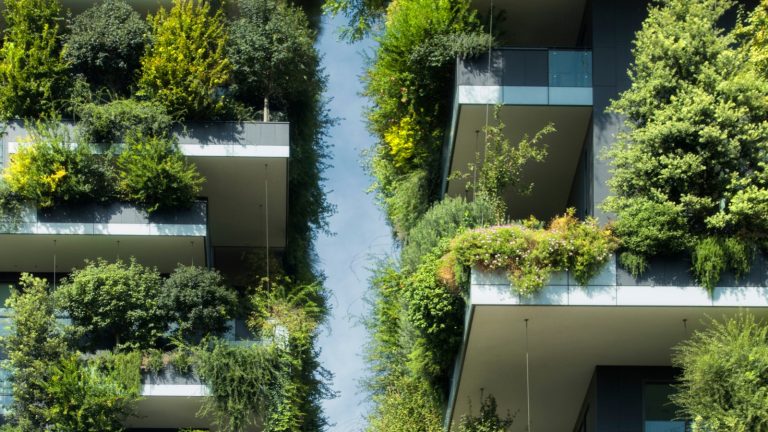
Green building techniques refer to taking the environment into account from the very beginning of the development process, even before any designs are created. This makes it possible to shape the designs and techniques in a way that minimises the building’s environmental impact.
If we look into Australia’s green building scenario, we can see that numerous government and independent rating systems come together to evaluate and rank Australian green buildings.
This framework is governed by the Green Building Council of Australia, known as GBCA, and they have formed a green building standard known as Green Star. The very first Green Star rating in Australia was awarded to the ‘8 Brindabella Circuit at Canberra Airport back in 2004.
Today, an increasing number of construction businesses are gradually making carbon accounting mandatory. As a result, it makes sense to plan ahead and incorporate green building techniques into any new developments.
For example, when it comes to Carbon Accounting (CA), employing energy-efficient systems, low-carbon designs, and sustainable materials can save thousands of pounds and months of work. In order to pinpoint the main carbon hotspots to address, carbon accounting measures the precise quantity of emissions your company produces across all operations.
As is visible, a lot of future trouble, money, and effort might have been avoided if green building techniques had been adopted right away.
Key Takeaways
- Sustainable green building practices help reduce environmental impact while improving energy and resource efficiency.
- Using eco-friendly materials, efficient systems, and sustainable designs can lower operating costs and waste.
- Green construction practices support healthier buildings, long-term performance, and more sustainable development.
10 Sustainable Green Building Practices in Construction
In the section below, we are going to present you with the 10 commonly employed sustainable green building practices that many constructors lean toward.
1. Automation and Smart Building Technologies
In order to save waste and maintain efficiency, smart building systems automatically alter lighting, ventilation, heating, and cooling based on sensor data:
Heating is turned on when the temperature inside drops and turned off when the temperature naturally rises.
For example, when contaminants or CO2 are detected, ventilation is turned on; when the quality of the air improves, it is turned off.
Likewise, when someone enters a dark area, the lights switch on; when no one is present, they turn off.
These real-time, automatic changes provide a constant level of comfort while consuming the least amount of energy.
2. Effective Systems for Heating, Ventilation, and Cooling
Heat pumps, MVHR, smart thermostats, and other smart technologies are all part of HVAC (Heating, Ventilation, and Cooling) systems.
With heat pumps bringing in hot or cold air from outside, MVHR bringing in fresh air, or smart sensors automatically regulating temperatures, their only goal is to consume less energy while maintaining pleasant interiors.
Efficient HVAC systems are moving from premium features to normal practice as energy regulations become more stringent.
3. Employing Sustainable Materials
With the strengthening and implementation of carbon policies in many nations, sustainable materials are becoming more widely available.
This can take several forms, including building with recycled steel, LCC, and CLT.
Cross-Laminated Timber, or CLT, replaces carbon-intensive steel or concrete with extremely low carbon emissions and carbon storage. Although its higher initial cost saves labour and time, its flammability prevents it from being used for big buildings at this time.
By using fly ash or GBBS to substitute regular concrete, LCC (Low-Carbon Concrete) can cut carbon emissions in half. It costs about the same as regular concrete, yet regular concrete continues to be used because of familiarity, trust, and convenience of use.
In contemporary construction, recycled steel is frequently utilised for reinforcing, frames, and beams. It is produced mostly in electric arc furnaces, which drastically cut emissions as compared to the manufacturing of virgin steel.
4. Green Roofs and Walls
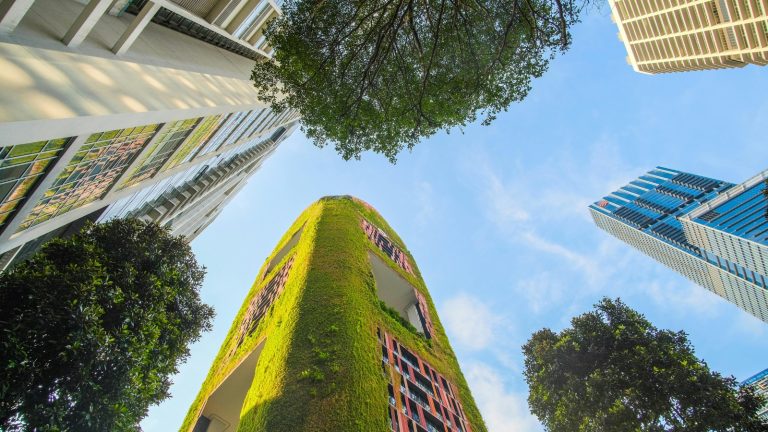
Architectural planning will incorporate innovative environmental factors like green roofs.
With native plant species supporting pollinators and local fauna like birds, they can provide a unique haven for nature in urban areas. By absorbing and holding onto the rain, they lessen the likelihood of stormwater erosion and flooding.
5. Insulation and High-Performance Windows
Simply said, high-performance windows feature two or three panes of glass rather than just one, and they may have low-emissivity coatings that strategically reflect heat. This reduces heat loss significantly by making your windows work harder and smarter.
This efficiency is combined with insulation in walls, floors and roofs to prevent thermal leakage, according to green building logic.
Since the effects are so powerful, these are now included in the majority of new builds. Older buildings are being retrofitted to help them catch up and lower their energy bills.
6. Integration of Renewable Energy
Green building approaches take integration into account from the beginning rather than only putting solar panels at the end.
This could include electrical systems connected to batteries and renewable energy sources, roofs oriented for optimal solar exposure, and on-site renewable heat sources like biomass boilers and heat pumps.
Buildings become crucial instruments in the battle against climate change when they are equipped with effective technologies that allow them to produce their own clean energy.
7. Opting for Energy-Efficient Design
New possibilities for energy-efficient design arise as technology advances.
Although many new designs are emerging, the most well-known ones worldwide include:
High-performance glass and insulation for windows, roofs, and walls. It keeps the inside temperature constant and stops heat loss. These are already commonplace in the majority of new buildings and are reasonably priced.
Heat pumps are heating and cooling systems that use electricity rather than fuel to transport heat, reducing emissions by up to 70%. They are expensive initially but are becoming more widely available.
Smart energy management systems reduce ambient spending by automatically adjusting a building’s energy use based on where it is needed and where it is not.
8. Passive Solar Architecture
Passive solar architecture is the construction of homes that take advantage of the sun, the most powerful heat source available.
Windows in homes are oriented to capture sunlight during the winter but not during the summer. Concrete and stone, which are used to construct buildings, store thermal energy that is gradually released at night.
This approach is as environmentally friendly as they come, demonstrating how early project planning may result in significant time and effort savings over time.
9. Recycling and Waste Reduction in Construction
Waste recovery does prevent waste from ending up in landfills, but it consumes a lot of energy and lowers the quality of the material.
Green building techniques address the issue at its root by, for example it can be using as few materials as feasible while designing effectively, using modular or prefabricated parts (built like big Lego pieces, with far less waste or emissions), adaptive building reuse (repurposing rather than demolition) , or Digital modelling, design optimisation to avoid mistakes and rework (identify conflicts early, use shared models, compute accurately).
We get construction closer to the circular economy by including green concerns from the start.
10. Water Conservation Systems
In order to address the growing urban demand for water, water conservation technologies were initially implemented. Originally used mostly for outdoor activities in rural areas, these early models were simple rain barrels or tanks for collecting rainwater.
Nowadays, the majority of environmentally conscious developers in the world employ water-saving measures, albeit typically more basic ones like dual-flush toilets, low-flow faucets, and showers.
Since then, technology has developed into fully integrated systems that include smart meters, automated controls, pumps, and UV filters.
They are more costly and complicated, but as prices decline and water efficiency becomes a more important planning need, they are becoming more widely available.
How Tigernix Solutions Empower Sustainability to Protect the Environment
Tigernix offers a broad spectrum of software solutions powered by Industry 4.0 digital capabilities to empower the construction industry to achieve sustainability with ease. Our exclusive software sub-modules help you reduce waste, improve resource efficiency, and support data-driven decision-making.
Tigernix solutions are developed to serve smart monitoring and asset management, and by using them, your construction company can decrease environmental impact, optimise water and energy consumption, and improve operational efficiency all on a single screen now.
Call for a free demo now.
Tigernix- Eco-Friendliness Is Our Priority
Development with the Promise of Protecting the Environment
Gone are the days when you lose the environment when you focus on development. The time has changed, and today these two aspects can be achieved together without friction.
With the right technologies, smart resource and waste management grids, and responsible water and energy management, the construction industry can strike the right balance between economic growth and minimising environmental impact.
FAQs About Green Building Practices
Green building practices refer to an approach of designing, constructing, and operating buildings with the objective of conserving water and energy, avoiding negative environmental impact, enhancing resource efficiency, and ultimately building healthier spaces.
Green building practices are important in today’s world because they help with smart water utilisation, optimising energy consumption, emissions, and waste control while building sustainable and environmentally sustainable infrastructure with the lowest operating costs.
Common green building practices range from using energy-efficient systems, opting for renewable energy, employing sustainable materials, using natural lighting and water-saving fixtures, to embracing effective waste management with smart building technologies.
Buildings can become greener by selecting renewable energy systems, boosting energy efficiency, bringing down water consumption levels, managing waste mindfully, choosing sustainable materials, and monitoring resource usage.