

As cities around the globe increase in size and road systems age, all governments are under increasing pressure to provide for safety, mobility and financial responsibility. With increased deterioration (a typical 1.5-2.5% annual decline), environmental loading, traffic volume and load-carrying requirements, the traditional manual maintenance practices for infrastructure asset management are no longer sufficient.
This has driven rapid implementation of digital, data-based solutions that are revolutionising the monitoring, assessment and maintenance of road infrastructure. Road Asset Management System enters the transportation picture to transform imperfections into perfection.
This article covers everything you need to know about the road asset management system, its applications, benefits, and features comprehensively.
We will explore
- What Is a Road Asset Management System?
- Key Stakeholders Who Benefit from Road Asset Management Systems
- Essential Features of a Robust Road Asset Management System
- Technologies Powering Modern Road Asset Management Systems
- Benefits of Implementing a Road Asset Management System
- The Road Asset Management Life-Cycle Explained
- Common Challenges in Road Asset Management
- Best Practices for Successful Road Asset Management
- How to Choose the Right Road Asset Management System
- FAQ about Road Asset Management System
What Is a Road Asset Management System?
Definition and Core Purpose
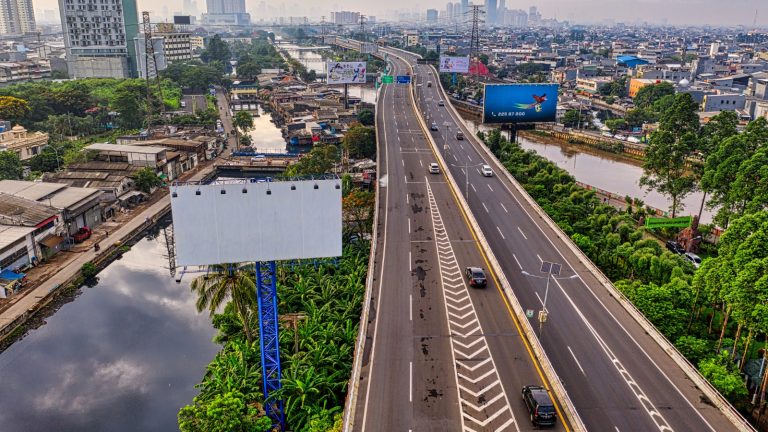
Road asset management system, as the term suggests, is a systematic data-driven technique used for evaluating the current condition of the road network and planning for the renovation or maintenance.
It provides a single record for road conditions, materials, traffic loads and lifecycle performance to assist authorities in making better decisions. Its primary objective is to minimise future maintenance expenditures and enhance road safety and service level.
Key Components of a Modern Road Asset Management System
The system features data collection, analysis, condition scoring and maintenance scheduling tools for various transportation purposes. In addition to that, making budget and lifecycle prediction functions available.
It is an all-in-one platform with mapping, inspection, performance model and cost analysis built into it.
These pieces help to guarantee that all interested parties, from engineers to administrators, are seeing correct and timely data.
How It Differs from Traditional Maintenance Methods
Unlike intuition-based, reactive strategies, this approach employs predictive, scenario-based techniques to plan maintenance prior to failure. Conventional techniques depend on regular inspection, but digital approaches enable continuous monitoring.
The change curtails emergency repairs, extends the life of roads and encourages sounder funding plans.
Key Takeaways
- Using a road assets management system, authorities can monitor, prioritise and repair any road network in an efficient manner, which translates into extended pavement life and cost-efficient budgeting.
- Technology continues to be a driving force for this change, with connected solutions such as AI road analytics, GIS road mapping and digital twin asset management turning traditional maintenance-based mechanisms into evidence-based predictions.
- Efficient management of road assets addresses safety, smart city road networks and sustainable cost-effective infrastructure for future urban mobility.
Key Stakeholders Who Benefit from Road Asset Management Systems

Government and Municipal Authorities
Local councils profit from optimised maintenance planning, open financial expressions and up-to-date compliance with infrastructure standards. They could better prioritise, based on data rather than mere assumptions, where to spend their money and keep the public more satisfied with their service.
Transportation and Highway Departments
Highway management teams gain centralised data access, faster inspections, and clearer visibility of road deterioration patterns. They can plan interventions with less disruption and maintain smoother, safer transport corridors for daily commuters and freight operations.
Road management teams and asset managers see access to centralised data, faster inspections and a clearer view of where roads are falling into decay.
They can anticipate interventions with less disturbance and keep better travel paths available for the daily users of their systems and cargo services.
Urban Planners and Smart City Developers
Urban planners apply these systems to the development of antifragile and future-proof road networks. They can simulate the effects of construction, predict future traffic increases and synchronise road development with cities’ broader mobility plans for the years ahead.
Private Contractors and Engineering Consultants
Contractors formulate cost-effective solutions based on precise condition assessments. Consultants also gain access to reliable performance data that supports the development of engineering strategies that reduce risk, enable optimised maintenance and comply with stringent legislation.
Essential Features of a Robust Road Asset Management System
Road Inventory and Asset Database Management
It centralises the full inventory of assets such as the roads, bridges, culverts, signs and pavements. This database guarantees that officials are aware of what is there and in what condition, and when it can be fixed. It underpins contemporary road asset management.
Condition Assessment Tools (PCI, IRI, Laser Scanning, etc.)
Assessment of condition depends on digital tools such as the pavement condition index, ride quality measurements and 3D laser scanning.
Such techniques return an objective performance value, allowing for a better assessment and less guesswork in the reinforcement of manual inspection.
GIS Mapping and Geo-Spatial Asset Visualisation
Contemporary road asset teams nowadays utilise the GIS road mapping features to display road assets on a geospatial dashboard with an interactive interface.
This assists teams in finding issues, investigating risks and observing how decay progresses geographically. Plus, decision-making and multiple agency cooperation are facilitated by GIS.
Predictive Analytics for Road Deterioration
Tools such as road deterioration modelling can predict when pavement sections should fail, based on traffic penetrations, material type and climate.
Predictive analytics has enabled you to make timely repairs as efficiently as possible, keeping everything in optimal condition for as long as possible.
Maintenance Planning and Prioritisation Modules
Systems involve prioritisation engines to evaluate the ‘quantifiable’ condition, risk, budget and safety impacts. They can also make recommendations as to the most effective way long-term to maintain each section of road, and in this way, authorities decrease unnecessary maintenance work and ultimately save money.
Budget Forecasting and Life-Cycle Costing
Financial tools help budget and plan costs accurately. Municipalities, road construction companies, and road authorities can use infrastructure budgeting tools to forecast costs, analyse long-term investment requirements, and support financing requests with solid information.
Mobile Inspection and Field Data Collection Apps
Your teams in the field can record conditions and upload photos from handheld devices to log instant defects. This cuts down on paperwork, speeds up inspections and helps keep central databases current with accurate information.
Real-Time Dashboards and Reporting Tools
Dashboards present operational KPIs, maintenance status, risk issues, as well as financial summaries for you.
Reporting solutions allow you to provide decision makers and the public with clear views of operations, promoting transparency while increasing accountability.
Technologies Powering Modern Road Asset Management Systems
Artificial Intelligence for Condition Prediction
AI improves decision-making by analysing trends of deterioration, risk predictions and recognising the best time for maintenance. AI road analytics enables your company to automate the complex analysis process and results in more precise long-term planning.
IoT Sensors for Real-Time Road Monitoring
Sensors connected to the structure gather data on temperature, vibration, surface cracks and water damage. This scheduled monitoring identifies the early indicators of road failures, which can be addressed quickly and at less cost.
Drones for Visual Inspection and Mapping
Drones imaging offers high-resolution visual data about cracks, potholes, deformation, as well as surface phenomena.
Drones are able to cover vast areas at a pace far faster than ground-based inspection, minimising the time spent on sites and minimising the risk to field teams.
Digital Twin Technology for Scenario Simulation
A digital twin asset management environment maps the entire road network in a digital form. You can simulate how your planning will play out in terms of climate impacts, traffic growth, building projects and repair plans to pick the best long-term plan.
Big Data Analytics for Performance-Based Planning
And large datasets drawn from sensors, traffic systems and inspection tools feed analytical models that have improved forecasting accuracy. ‘Big Data’ promotes planning in line with changing road use and the environment.
Benefits of Implementing a Road Asset Management System
Reduced Maintenance Costs Through Smarter Planning
As our experience in the field, we always see that predictive equipment reduces emergency interventions and allows resources to be used when they are most effective. This is critical as long-term cost savings are substantial, and available investment only goes to where it is most needed.
Improved Road Safety and Accessibility
Proficient monitoring and prompt repairs decrease the probability of traffic accidents due to abnormal road conditions.
Ease of accessibility increases thanks to pedestrian-friendly and freight-friendly, in addition to freight-friendly, emergency-service-friendly connections that are hassle-free.
Better Budget Allocation and Financial Transparency
Data-backed budgets enable information to be shared with decision-makers. The capacity to plan expenditure helps minimise shortfalls and encourages open and accountable administration.
Longer Road Lifespan Through Predictive Maintenance
Intervening before more severe failures develop means overall pavement life is extended, and there is less requirement for full reconstruction. Predictive tools such as predictive road maintenance enable assets to remain in a state of stabilisation for extended periods.
Stronger Compliance with National Infrastructure Standards
Governments must ensure that the product is compliant with sustainability, safety and reliability. For some time, DOTs have been providing performance-based reports to guarantee that road networks meet both national and regional levels of service standards throughout their lives using computerised systems.
Efficiency Gains for Field Teams and Inspectors
Mobile equipment and consolidated databases streamline the administration of work for you. Another is that inspectors have more time to attend to vital work on the ground rather than paperwork.
The Road Asset Management Life-Cycle Explained
Data Collection and Inventory Creation
It starts with producing a complete inventory of all road assets. Teams enter types of assets, material and dimension details, traffic information and structural information.
This now becomes the authoritative version on which all subsequent analysis and planning should be based.
Condition Evaluation and Risk Assessment
Condition surveys provide a score for every section of road, as well as occurring safety risks, structural weaknesses and service life. Risk assessment instruments point out high-priority locations requiring immediate actions to avoid collapses.
Maintenance Strategy Development
Maintenance alternatives, such as resurfacing, rehabilitation, sealing or reconstruction, are selected by your agency. These approaches are assigned according to a trade-off between costs, risk exposure, road significance and global network objectives.
Work Planning and Resource Allocation
Work plans list the types of maintenance, schedule for maintenance, personnel and equipment needs, and material requirements. This way, the proper resources can be effectively utilised without unnecessarily blocking busy traffic streams.
Monitoring Performance after Repairs
It is also important to examine results after repair to confirm that interventions have achieved the desired responses. Information gathered during this phase aids in the modification of future strategies and enhancement of long-term system performance.
Updating the Asset Management Plan Annually
It is a part of the process that you update the asset management plan (road/ transport) annually with new data, revisit priorities and re-calculate financial requirements. This is so that you can deal with the changing road conditions and any hazards.
Common Challenges in Road Asset Management

Lack of Accurate or Updated Road Condition Data
Some authorities have to make do with inspections that rely on obsolete records, partial databases or even manual counting. Without good data, prioritisation is difficult, and funding does not get to where it needs to be.
Budget Limitations and Funding Gaps
Lack of funds limits maintenance and speeds the deterioration of roads. Bad predictions also generate shortfalls that impose long-term financial pressure and safety hazards.
Difficulty Prioritising Road Maintenance Activities
What we notice in the industry is that, without the analytical tools, it is difficult to find which roads are in desperate need of repair. Mistakes in prioritisation lead to an increase in long-term costs and a decrease in transportation efficiency.
Integration Issues Between Multiple Software Tools
Inefficiency results from separate tools for inspection, mapping and budgeting. If you do not integrate, decision makers can never see the whole picture right there in one view.
Skills Gaps and Limited Technical Expertise
Other organisations may not have staff trained to use digital systems. This hinders the transformation and weakens the role of digital tools for road management.
Best Practices for Successful Road Asset Management
Use Standardised Condition Indices (PCI/IRI)
The use of standardised indices allows for uniform measurement, comparison of values between results and better precision. PCI and IRI enable planners to compare performance between regions, consequently prioritising intervention even more.
Adopt a Long-Term, Life-Cycle Costing Mindset
It is one thing to look at the cost of routine maintenance this year or next, but what about after ten years? A vision for long-term maintenance planning means seeing the whole picture – and from an operational standpoint.
By prioritising the savings throughout a building’s lifecycle rather than short-term wins, local leaders can begin whittling away at significant reconstruction needs.
Leverage Real-Time GIS Dashboards
GIS dashboards provide instant visibility of road conditions, ongoing works, and urgent issues. They support collaboration and allow decision-makers to respond quickly to emerging problems.
Conduct Regular Road Inspections and Updates
Regular maintenance enhances data reliability and prevents unnoticed degradation from occurring. The system would also help to make pavement surveys more accurate and less labour-intensive by incorporating road inspection technology that is available today.
Align Asset Management with National Transport Policies
The management of roads in the best possible manner supports national objectives for mobility, sustainability and accessibility. Complacency enables more favourable funding opportunities as well as easier inclusion into larger transportation programs.
How to Choose the Right Road Asset Management System

Key Features to Look For
Look for tools that centralise data, automate reporting, integrate mapping, and offer predictive analysis. Systems should support multi-agency management and provide easy-to-use dashboards for decision-makers.
Questions to Ask Vendors Before Purchasing
- What data does the tool provide?
- How does it go together?
- What training is provided?
- Will the system grow with my expansion plans?
- What are ongoing licensing costs?
Integration Needs with Existing Systems
It is a must that your systems connect with GIS, inspection hardware, budget systems and other transportation software. So integration is essential, since you reduce uncertainty and improve efficiency.
Cost Considerations and ROI Expectations
You need to justify each of your investments on both less emergency repair, longer asset life and fewer downtimes. High-performance systems provide superior returns with data-supported maintenance.
The Future of Road Asset Management
AI-Driven Predictive Maintenance as the New Standard
AI models will be at the core of decision-making in maintenance. You can virtually anticipate all failure risks much earlier than legacy approaches, resulting in safer and more-efficient networks.
Autonomous Vehicle Data Feeding Road Condition Models
Soon, autonomous vehicles will take surface data in passing and feed that real-time analysis into road management systems. This improves the accuracy, eliminating any manual checks as well.
Climate-Resilient Road Asset Management Strategies
In the face of climbing temperatures, floods and storms, planning must be adapted to the climate. Road authorities will employ advanced tools to devise, build and repair roads that can tolerate severe weather.
Standardisation and Global Infrastructure Governance Trends
Soon, we will see that international reporting standards and performance benchmarks consolidate in global frameworks. This will enhance cross-border cooperation and increase the resilience of global road infrastructure.
Why Road Asset Management Systems Are No Longer Optional
The Shift from Reactive to Predictive Maintenance
Now that predictive systems are in the picture, you will be able to save money, reduce risks, and improve long-term network stability. It is a shift that is going to ensure faster intervention and smarter maintenance allocation for your city, company or government.
Long-Term Economic and Social Value
As an industry insider, we witness that reliable roads strengthen economies. They also support emergency services and improve daily commute experiences. This is where you need to opt for effective management, as it ensures sustained public value.
Preparing Cities for Smarter, Safer Road Networks
As your cities evolve, modern systems, including smart city road networks, are essential for mobility and sustainability. They enable you, the authorities, to future-proof transport systems and meet rising infrastructure demands.
How Tigernix Smart Transportation Asset Software Acts as the Best Road Asset Management System in the AI Age
Tigernix Smart Transportation Asset Software is a powerful software solution suite for cities and government agencies to bring together real-time street data, predictive analytics, and dashboard technology. It consolidates road asset management system services to provide cost-effective and well-informed control and lifecycle benefits for all road assets.
AI-Powered Analytics for Smarter, Predictive Maintenance
Using AI-based road analytics and digital twinning asset management, Tigernix Smart Transportation Asset Software forecasts road decay, schedules maintenance effectively and cuts related costs. It changes old practices into new ways of thinking, building and maintaining roads that are safer, longer lasting and far more efficient.
Call for a free demo today.
Tigernix-Smarter Solutions for Smarter Tomorrow!
FAQ about Road Asset Management System
A road asset management system is a digital framework which maintains information on road network condition and damage, as well as repairs, and data for road user cost. It brings asset data into one place, monitors road conditions and allows for predictive maintenance, enabling authorities to allocate resources efficiently and increase the life span of roads.
Effective road asset management enhances safety, decreases maintenance expense, and lengthens road lifespan. It helps to enable governments and towns to prioritise repairs and allocate resources, whilst being able to have confidence in data-driven decisions for sustainable infrastructure that will not let you down.
Modern systems integrate GIS road mapping, AI road analytics, drones and sensors as well as digital twin asset management. Real-time data collection, deterioration prediction and maintenance optimal scheduling with these technologies for safer and more cost-efficient road infrastructures.
Predictive road maintenance relies on data about traffic, weather and pavement conditions to predict possible failures. Authorities save on expensive repair bills, prevent accidents and improve road reliability by planning timely interventions while making the most out of your maintenance budget and resources.
Municipal authorities, transport departments, urban planners, and contractors benefit. It accelerates decision-making processes and reduces road accidents, and is an aid for infrastructure budgeting tools as well as long-term planning of smart city road networks and public infrastructure management.