

Have you noticed that people around the world are now paying so much more attention to the electricity that they use at home and its sources? Well, it is a promising sign, indeed. In addition, recent developments have brought about an even more focused acceleration of the work for global energy independence through renewable sources.
As per international sources, global renewable power capacity is going to increase by almost 4600 GW between 2025 and 2030. In 2025, experts state that renewable energy production has been accelerating significantly all around the world.
In this article, let us discuss a few kinds of power plants using renewable energy and their key aspects in generating the energy, along with the key characteristics.
Main Types of Renewable Energy Power Plants
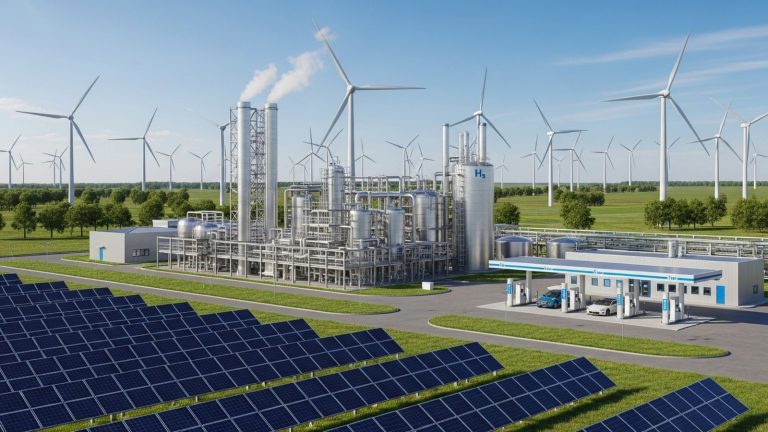
Renewable power stations tend to be cleaner and less polluting than power plants, but they produce just as much energy (if not more). They come in a great variety of models that allow it to be the most adaptable for any place.
Key Takeaways
- Renewable energy power plants produce energy, using natural resources that will not run out – such as wind, sun, water (rivers), plants (biomass), and heat from deep underground, to make clean electricity without affecting the environment.
- Each of the renewable plant types, wind, solar, hydroelectricity, biomass, geothermal, ocean and thermal uses different methods and technologies for converting natural energy into electrical power effectively.
- Renewable power stations are of great significance to national energy security, low-carbon emission reduction, as well as the shift towards a more sustainable and robust global energy regime.
Wind Farms
This wind farm needs a considerable land area, and it is commonly developed on sparsely populated locations having adequate wind resources. They have a 100-meter tower, blades exceeding 50 meters, and they transfer the wind’s kinetic energy onto the wind turbine. The blades can turn between 13 to 22 revolutions per minute.
It is able to transmit a speed of around 1,500 revolutions per minute to the wind turbine by means of a multiplier element.
What does generating the electricity involve?
The electrical energy is produced in direct current, which, before descending through the tower cable towards the transformer installed at the wind farm’s substation, is converted into alternating current.
Photovoltaic Solar Plants
This form of an installation is one that concerns the sun’s radiation to produce electricity.
The photovoltaic module is composed of a semiconducting material which, when exposed to sunlight, will cause the release of electrons from the atoms. Common semiconductors include crystalline silicon (C-Si).
These negatively charged electrons are attracted to the positive side of the doped cell, forming an electric current. Another key piece of these parks is the inverter, which converts the direct current generated by the panels into alternating current that can be raised in voltage and transported.
Hydroelectric Power Plants
Classic hydroelectric power plants are most economically exploited, and they use a dam and reservoir to retain water. Upon release, water rushes through penstocks (large pipes) and drives a turbine that transforms the water’s kinetic energy into mechanical energy.
This mechanical energy turns into electrical energy through an alternator, which turns when the impeller turns.
The electricity production is a function of the flow rate and hydraulic head. High-head plants can generate more electricity, while low-head plants are good for smaller rivers or streams.
However, it is an advancement in the industry that new hydroelectric plants are equipped with control gates, spillways, and other such mechanisms that help manage the flow of water in a safe way so as to minimise the risk of flooding.
These reservoir levels and discharges excess or holds back water as needed, and have transformers to adjust voltage for the grid. Some more advanced plants feature pumped storage, in which water is pumped back into the reservoir during times when demand is relatively low, effectively acting as a giant battery for matching supply with demand.
Hydroelectric power stations are some of the most efficient in existence, generating more than 90% of the energy from water effectively into renewable electricity and are key in global clean energy production.
Thermal Power Stations
These plants work by heating a fluid through a heat exchanger with another thermal source (fuel) to produce phase change.
The gaseous or working fluid is forced towards a turbine and makes it rotate. Turbines are made up of high, medium and low-pressure shafts that maximise the conversion of heat to work.
The turbines, in their turn, link to alternators and these machines convert the mechanical energy from the turbine into electric energy through a principle called electromagnetic induction.
It is then possible to increase the voltage of the electricity in a substation to a level which is convenient to inject it into an electricity grid, thereby reducing losses during transportation.
Biomass
This is where the exothermic reaction from organic materials (e.g. forestry, agricultural waste, crops, etc.) during combustion comes into play to heat the working fluid. The solid turns into a gaseous state when the temperature increases, and this leads to the rotation of a turbine.
An alternator converts the turbine’s kinetic energy to electricity, which is then pumped into the National Grid.
Biomass power plants also generate biogas by the breakdown of organic matter in an anaerobic environment in an anaerobic digester. The gas can be useful to provide direct fuel to turbines or engines which drive an alternator.
Sophisticated systems recover any remaining heat for use in heating or industrial applications, further increasing energy efficiency while contributing to the sustainability of power generation.
Solar Thermal
This type of power plant consists of solar concentrators, mirrors on the ground whose task is to collect all the solar radiation possible and launch it to a receiver.
In some plants, these may include a thermal storage system, which also allows power to be produced for several hours after the sun sets.
After it heats working fluid with the passage of a gaseous phase by concentrating sunlight, the gaseous fluid flows through a turbine attached to an alternator for producing power.
Geothermal
This is where the heat comes from within the Earth, which means it takes the Earth’s internal energy to use. This signifies that you can use energy gathered from underground heat, still it is not equally diffusive for all countries.
You may have heard that the geothermal gradient is higher at tectonically active regions, like Chile or Indonesia. So you can take tails tows and get more energy per square meter. There are more than one kind of geothermal power plants.
The most common, however, are open-cycle and closed-cycle, which work through pipes that mine a mixture of steam and water from below the ground.
In other cases, the operators have to utilise a second fluid because the water is rich in Sulphur and accordingly very corrosive to the piping system. Then they extract fluid and the dry steam goes through a turbine, which produces electricity, and returns the water to the ground with a combination of pumps, where it is converted again into steam.
In the end, the turbine is coupled to an alternator to produce electrical energy.
Marine Power Plants
These are renewable energy power plants that generate power by deploying the force of the sea. If you search Google, you will notice that the largest marine power plant in the world is the Sihwa Lake Tidal Power Station in South Korea, with a capacity of 254 megawatts (MW).
The most common maritime power plants are:
Marine Current Power Plants
They use the kinetic energy from the flow of ocean currents to spin a turbine and produce electricity. They have less of an environmental impact in comparison to the building of hydroelectric power stations, as they do not involve dam walls.
Wave Power Plants
They work by capturing the power of waves. Water is introduced into a chamber, with its pressure helping to compress the air inside; that compressed air exists through an orifice and flows into a turbine.
As the tide retreats, it releases the air in a reverse flow cycle to produce electricity once more.
How Tigernix Smart Software Solutions Accelerates Renewable Energy Power Plant Operations
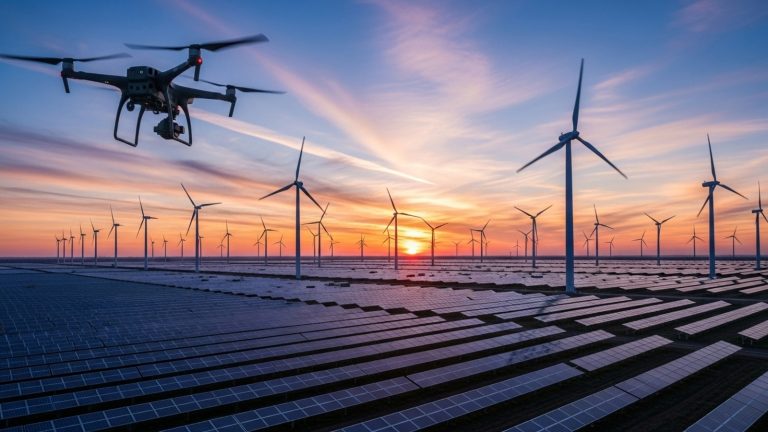
Tigernix’s Industry 4.0-enabled software solutions are all-in-one solutions for not just the water and wastewater industry, but for renewable energy power plants to have a unified platform. Through its plant-wide monitoring, control and optimisation can be realised in real-time.
Industry 4.0 Power for Maximum Optimisation
Using AI algorithms, our solutions can interpret massive amounts of operational data from IIoT sensors attached to turbines, solar panels or hydroelectric equipment to drive intelligent decision-making. This enables your renewable energy plant managers to optimise real-time energy production, minimise downtime and optimise the consumption of resources across wind, solar, biomass and hydroelectric facilities.
Preventive and Predictive Maintenance to the Rescue
Also, preventive maintenance is one that predicts the failure of any equipment in order to avoid it. Tigernix also features predictive maintenance with software to prevent future equipment breakdowns. Leveraging sensor data, analysing vibrations and environmental conditions allows the platform to predict when components like turbines, alternators or inverters need maintenance, as well as to reduce unplanned outages and prolong the lifecycle of valuable assets.
Call for a free demo today.
Tigernix-For All Your Asset Management Needs
FAQ about Renewable Energy Power Plants
A renewable power plant is a station that produces electricity from renewables that are constantly replenished, such as the sun, wind or water, without any greenhouse gas emissions. They have less environmental impact compared to coal-fired power plants.
The renewable energy power plants work by converting natural energy into electrical power. Wind turbines use wind, solar panels capture sunlight, and hydroelectric dams use water flow, for example. Power is transported through turbines and alternators to an electrical grid.
The main types of renewable energy power plants include wind farms, photovoltaic solar plants, hydroelectric power plants, biomass plants, solar thermal plants, geothermal power plants, and marine (wave or tidal) power plants, each harnessing different natural resources.
Renewable power plants are important as they cut carbon pollution, fight climate change and promote the country’s energy independence. They generate renewable electricity, reduce fossil fuel dependence and help create a cleaner, safer world, which are key in global energy transition objectives.
Efficiency varies by type: hydroelectric plants convert over 90% of energy, wind turbines around 35–45%, and solar panels 15–22%. Advanced technologies, AI monitoring, and predictive maintenance help maximise electricity generation and optimise performance across all renewable power plants.