
Making sure there are enough resources for present and future generations is the goal of sustainability. Through energy and water loss, non-revenue water (NRW) poses a threat to sustainability.
Nevertheless, there are many things the authorities can do to achieve NRW reduction. This article examines the best strategies and potential methods for lowering NRW.
The article covers
What is NRW?
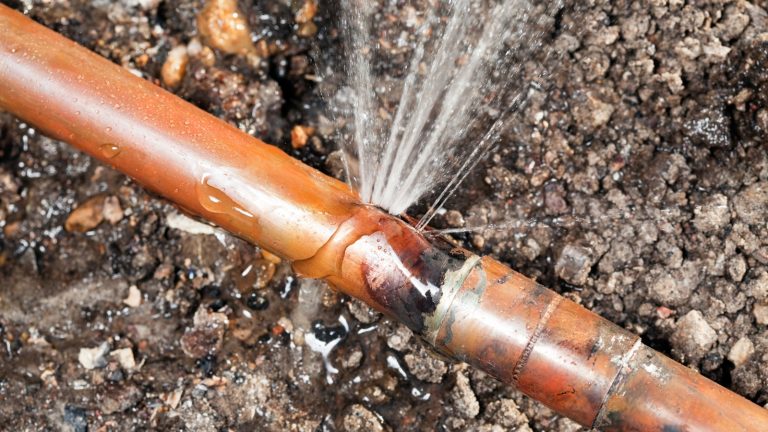
NRW is regarded as one of the main elements influencing utilities in Australia. Due to population growth and the corresponding increase in water consumption, a significant and growing amount of water is lost.
One of the difficulties in handling NRW is that, in certain situations, its components are unknown. As a result, it can be difficult to determine the optimal remedy for particular issues. The difficulty of determining and putting NRW reduction measures into practice is another major obstacle to solving the NRW problem.
It is clear that steps to lower NRW must be taken in order to avoid significant financial losses, particularly in developing nations.
Key Takeaways
- Reducing non-revenue water losses helps water utilities minimise leakage, improve billing accuracy, and recover lost revenue.
- Effective leak detection, regular infrastructure maintenance, and smart water metering can improve distribution efficiency and reduce water waste.
- Data-driven monitoring and proactive asset management support better water conservation, lower operational costs, and long-term network reliability.
NRW Reduction Strategies
Non-revenue water is certainly a problem for water boards and municipalities. This is why we have discovered some proven strategies to reduce NRW for your city.
Boosting Water Metering Infrastructure
Customers’ consumption of supplied water is measured via water meters. Issues with water metering can result in substantial water loss.
Furthermore, metering errors exceeding 50% are common, which exacerbates water metering issues. Miscalculations of the entire registered volume and the lack of water meters are other reasons for metering errors.
This is where utilities must take proper action to replace and repair them.
Any NRW reduction scheme should include a smart and sustainable built environment along with water meters. As we mentioned before, water meter accuracy should be routinely checked, and inaccurate meters should be changed, since water meterage is correlated with both the volume of water registered and the meter’s accuracy.
The best time to replace meters can be found by installing automated meter readers (AMRs) or a calibrated ‘check’ meter downstream of the meter.
Resolving metering problems can enhance water billing and increase the effectiveness of city revenue collection.
Tracking the Performance of the Network
Numerous operational, physical, and environmental elements affect a WDN’s performance, necessitating ongoing observation.
Predictive maintenance and database integration can be used in tandem to monitor WDN performance. Ensuring that the network flow, volume, pressure levels, and pumps are functioning as intended is the primary goal of WDN monitoring.
A collection of hydraulic sensors that gauge water pressure and flow can be used for monitoring.
Monitoring network performance helps to detect excessive flows and water consumption due to network failures or theft. Moreover, continuous monitoring reduces leakage from WDNs, thus limiting the WL and the overall NRW.
Stopping Water Leaks
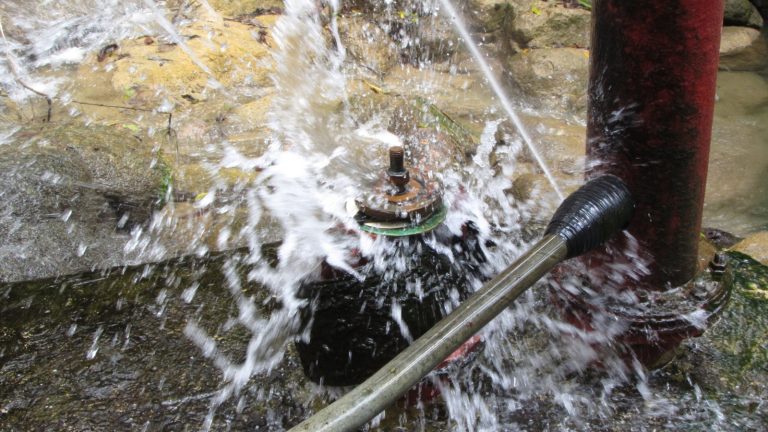
One of the most important causes of NRW is leakage. Leaks can happen in a number of WDN components, including gearbox pipes, distribution pipes, joints, valves and fire hydrants. They squander money and natural resources and put the public’s health at risk.
The size of the issue is demonstrated by the fact that high leakage levels account for about 25% of the energy wasted in WDNs on average. Estimating the overall leakage inside a specific WDN is the first step in leakage management.
The total integrated flow and total nite flow approaches are popular techniques for evaluating leaks.AI techniques can also anticipate leaks before they happen. In order to find concealed and undetected leaks within a WDN, leak-detection tools can be crucial.
Noise loggers, leak noise correlators, ground microphones, sounding stick-based acoustic correlation, the Sahara approach, aerial surveys, thermal imaging, and helium tracing are just a few of the numerous methods used to find leaks.
Rehabilitating Old Pipes
Old pipes that have outlived their useful lives are more likely to fail, which leads to more breaks and leaks as well as poor service.
Pipe rehabilitation, which entails replacing or repairing pipes inside a WDN, primarily addresses physical losses to address these issues. As a result, it offers an additional approach to NRW issue resolution. An assessment tool called the resilience index (Ir) is used to determine which pipes require replacement the most urgently.
In a similar vein, the pipes are prioritised for rehabilitation using the unitary power of pipes (PUTi). Additionally, pipes for restoration can be located and prioritised using geographic information systems (GIS).
There are several advantages to rehabilitating WDNs. For instance, drastically lowering the failure rate can minimise pipe leakage. Also, by increasing water and energy savings, enhancing system performance and dependability, boosting hydraulic performance, and preserving optimal pressure, WDN rehabilitation lowers NRW in systems.
How Tigernix Water Distribution Asset Solution Tackles Non-Revenue Water Challenges
Now it is possible to reduce non-revenue water challenges with Tigernix Water Distribution Asset Solution, which is built to help water utilities improve network visibility and distribution efficiency. Powered by Industry 4.0 capabilities, the Tigernix platform simply enables real-time asset monitoring, IoT connectivity, predictive maintenance, automation, and intelligent analytics all under one digital canopy.
With our software solution, utilities can spot potential inefficiencies, decrease water losses, improve maintenance, boost infrastructure reliability, control operational costs, and make data-driven decisions for smarter water distribution management.
Call for a free demo.
Tigernix-The Best Answer to Reduce NRW Loss
FAQs About Non-Revenue Water
Non-revenue water is treated water that is lost due to leaks, theft, inaccurate metering, or unbilled use, which lowers utility income and wastes precious water resources.
Common causes include outdated pipelines, unnoticed leaks, erroneous meters, unauthorised connections, billing mistakes, poor pressure control, and insufficient upkeep of the water distribution system.
Water utilities can lower losses by using smart metering, pressure control, pipeline repair, precise billing, leak detection, and real-time distribution network monitoring.
Technologies such as IoT sensors, GIS mapping, smart meters, AI analytics, and automated monitoring assist utilities in finding abnormalities, detecting leaks, and increasing the effectiveness of water delivery.