

Cities do not just rise into the air; they sprawl across the land, transforming terrain and societies in powerful ways. Suburbanisation is one of the most powerful drivers of urban change today, particularly in Australia’s sprawling city regions. It holds out the prospect of space and value, but it faces its own complex environmental and infrastructure pressures.
This article unpacks how expansion into the suburbs affects land, air, and community systems, and looks at smart planning strategies driven by technology to help balance growth with sustainability.
We will discover
- What Is Suburbanisation and How Does It Differ from Urbanisation?
- What Are the Main Drivers of Suburban Growth in Australia?
- How Does Suburbanisation Impact Natural Environments?
- What Are the Air Quality and Pollution Consequences?
- How Does Suburban Sprawl Affect Infrastructure and Resources?
- What Social Challenges Emerge From Suburbanisation?
- How Does Suburbanisation Contribute to Climate Change?
- What Are Transit-Oriented Development Solutions?
- How Can Smart Planning Mitigate Suburbanisation Impacts?
- What Role Does Technology Play in Sustainable Suburban Planning?
- How to Measure and Monitor Suburbanisation Effects?
- What Are Best Practices for Sustainable Suburban Development?
- Real-World Examples: Australian Cities Addressing Suburbanisation
- FAQs About Suburbanisation
What Is Suburbanisation and How Does It Differ from Urbanisation?

Suburbanisation or population deconcentration refers to population movement from urban areas into suburbs or resettlement of people from city centers to suburban regions.
This section explains how suburbanisation reshapes cities differently from traditional urban growth and why understanding this distinction matters for long-term planning.
Key Takeaways
- Suburban growth reshapes cities far beyond housing, influencing infrastructure, environment, and social life.
- Low-density expansion increases long-term costs and environmental pressures if not carefully planned.
- Transport integration and compact design are critical to reducing suburban impacts.
- Technology-enabled planning helps cities balance growth with sustainability and resilience.
Defining Suburbanisation as Outward Metropolitan Expansion
Suburbanisation refers to the outward spread of cities beyond established urban cores into surrounding metropolitan areas, driven by urban expansion and residential demand. It transforms peri-urban land into housing estates and commercial zones.
It also accelerates metropolitan expansion while fundamentally altering regional land use patterns.
Understanding the Shift from High-Density Urban Cores to Low-Density Suburbs
Unlike compact inner cities, suburban areas have characteristics such as low-density development, larger housing footprints, and car-oriented layouts. This shift redistributes population growth away from dense centres, increasing infrastructure demands.
It consumes more land per household compared to traditional urban environments.
Key Differences Between Urbanisation and Suburbanisation Processes
Urbanisation concentrates people and services within city centres, while suburbanisation disperses growth across outer zones.
The latter intensifies resource consumption, extends transportation networks, and often contributes to environmental degradation.
It poses a more complex challenge for modern spatial planning frameworks.
What Are the Main Drivers of Suburban Growth in Australia?
Population growth, housing demand, desire for larger living spaces, perceived quality of life, and some economic factors are the main drivers of suburban growth in Australia. Let’s break down how Australia’s suburban expansion is shaped by demographic, economic, and lifestyle forces that collectively redefine national urban growth patterns.
Population Growth and Housing Demand in Major Cities
Rapid population growth in Australian capitals places sustained pressure on housing supply, pushing development toward city fringes. Moreover, rising demand in metropolitan areas encourages greenfield subdivisions.
It simply reinforces outward growth as planners struggle to balance density, availability, and long-term housing affordability.
Desire for Larger Living Spaces and Perceived Quality of Life
It is evident that many households associate suburban living with privacy, safety, and access to green spaces. Larger lots and detached homes are viewed as enhancing community wellbeing, even though this preference often increases commuting distances.
Another thing is that it reduces daily access to urban amenities and employment hubs.
Economic Factors Influencing Suburban Development Patterns
We know that lower land prices on city outskirts attract developers seeking cost-effective projects. These economics drive development strategies that prioritise scale over density.
The result is that it reinforces outward growth while increasing long-term public expenditure on roads, utilities, and social services to support dispersed communities.
How Does Suburbanisation Impact Natural Environments?
Environmental systems are often the first to absorb the hidden costs of expanding suburbs.
- Habitat Destruction and Biodiversity Loss From Land Clearing
- Disruption of Ecosystem Services Like Water Filtration and Carbon Storage
- Soil Compaction and Increased Stormwater Runoff Challenges
Also, it overwhelms drainage infrastructure and transports pollutants into waterways, further degrading downstream ecosystems and suburban environmental quality.
What Are the Air Quality and Pollution Consequences?

Loss of tree canopy, reducing air purification capacity, increased vehicle emissions, and spreading of suburban pollution are the consequences of poor air quality and pollution. Let’s explore how air quality degradation is a less visible but significant outcome of suburban expansion.
Loss of Tree Canopy Reducing Air Purification Capacity
Tree removal reduces natural air filtration, allowing pollution levels to rise. Without adequate canopy coverage, suburbs lose cooling benefits, carbon absorption capacity, and protection against particulate matter.
What would be the result? It directly affects respiratory health and long-term environmental performance.
Increased Vehicle Emissions From Car-Dependent Lifestyles
It is common that low-density suburbs often lack viable public transport, increasing reliance on private vehicles. This dependency drives higher carbon emissions, fuel consumption, and household transport costs.
Not to say that the latter reinforces unsustainable travel behaviours across expanding suburban regions.
Suburban Pollution Spreading to Urban Centres
Air pollutants generated in outer suburbs do not remain localised. Then what happens to them?
Wind patterns and commuter flows transport emissions toward inner cities, amplifying regional air quality challenges and linking suburban development decisions directly to broader metropolitan health outcomes.
How Does Suburban Sprawl Affect Infrastructure and Resources?
As suburbs stretch outward, our cities face rising pressure to extend services efficiently while controlling long-term costs and environmental strain.
Extended Utility Networks Increasing Maintenance Costs
Suburban expansion requires longer roads, power lines, and pipelines to serve fewer people per kilometre. These extended infrastructure demands raise maintenance expenses for councils and utilities in Australia.
This matter often diverts public funds from upgrading existing urban systems and essential community services.
Higher Per-Capita Infrastructure Investment Requirements
Low-density suburbs require significantly more investment per resident for schools, hospitals, and transport. This uneven allocation strains public budgets and challenges equitable resource allocation, particularly as outer suburbs grow faster than infrastructure can be delivered.
Strain on Water Supply and Wastewater Treatment Systems
Expanding suburbs increase pressure on water extraction and treatment facilities. Without careful water management, higher demand can exceed system capacity.
They can raise operational costs and reduce resilience during droughts or population surges across rapidly growing metropolitan fringes.
What Social Challenges Emerge From Suburbanisation?
Beyond physical infrastructure, we see that suburban growth reshapes daily life, access to opportunity, and social connectivity.
Traffic Congestion and Longer Commuting Distances
Dispersed housing increases travel distances between homes, jobs, and services. Not to mention this worsens traffic congestion. Longer commutes reduce personal time, increase transport costs, and place added pressure on already stretched road networks during peak travel periods.
Reduced Access to Public Services and Employment Centres
Outer suburbs often lag behind inner cities in access to healthcare, education, and jobs. Limited proximity to employment hubs weakens economic participation.
It can deepen inequality across metropolitan areas, especially for households without reliable transport options.
Social Isolation in Low-Density Neighbourhoods
Did you know that separated land uses and limited walkability reduce casual social interaction? This isolation can impact mental health and weaken neighbourhood bonds.
This is where it highlights the importance of designing suburbs that support inclusion, connectivity, and long-term community wellbeing.
How Does Suburbanisation Contribute to Climate Change?

Suburbanisation contributes to climate change via increased greenhouse gas emissions from transportation, loss of carbon-sequestering vegetation and green spaces, and urban heat island effects, etc. In this section, we explore how suburban growth plays a measurable role in accelerating climate-related pressures at both local and national scales.
Increased Greenhouse Gas Emissions From Transportation
Car-dependent suburbs generate higher fuel use and emissions per household. This is where daily commuting patterns significantly increase carbon emissions.
Further, this makes transport one of the largest contributors to suburban climate footprints across expanding urban regions.
Loss of Carbon-Sequestering Vegetation and Green Spaces
It is obvious that vegetation removal eliminates natural carbon sinks. The reduction of trees and open landscapes limits climate regulation capacity while accelerating environmental degradation, especially when greenfield development replaces ecologically valuable land.
Urban Heat Island Effects in Developed Suburban Areas
Hard surfaces absorb and retain heat, raising local temperatures. This urban heat island effect increases cooling demand, energy use, and heat-related health risks.
This is visible particularly in suburbs with limited tree canopy and poor climate-sensitive design.
What Are Transit-Oriented Development Solutions?
Transit-oriented developments are land-use and transport planning integrated solutions aiming to build dense, mixed-use communities surrounding public transport based around public transport to decouple car dependency, improve access, lower emissions, and promote sustainable urban growth.
With our experience, we have seen that strategic land use around transport corridors offers a proven alternative to unchecked suburban sprawl.
Creating Mixed-Use Communities Around Public Transport Hubs
Transit-oriented development clusters housing, jobs, and services near stations, reducing travel distances. These compact, mixed-use centres improve accessibility.
Furthermore, they support economic activity and encourage more efficient land use across growing metropolitan regions.
Reducing Car Dependency Through Integrated Planning
By aligning zoning, density, and transport investment, planners can prioritise walking, cycling, and public transport. Integrated planning lowers emissions, improves mobility equity, and reduces long-term infrastructure costs linked to road expansion.
Australian TOD Examples and Implementation Challenges
Australian cities face challenges in implementing TOD due to fragmented governance and community resistance. However, targeted investments and stronger sustainable planning frameworks are gradually improving outcomes near rail corridors and strategic activity centres.
How Can Smart Planning Mitigate Suburbanisation Impacts?
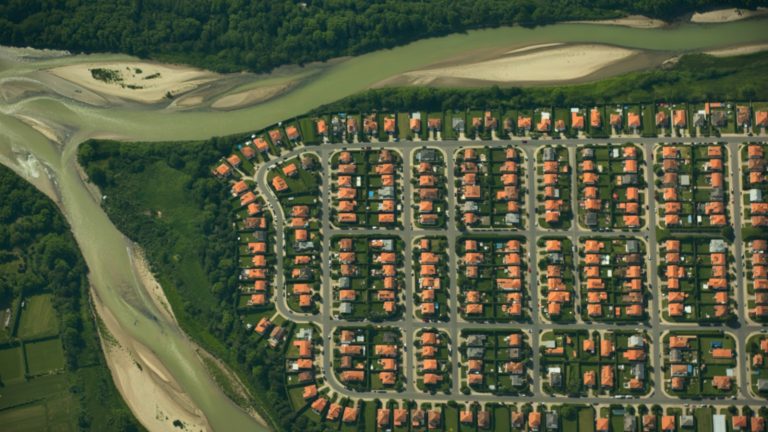
Smart planning can reduce the impacts of suburbanisation by establishing urban growth boundaries and plans for densification, regulations for green infrastructure and tree canopy coverage, and standards for sustainable subdivisions, including their water and energy use.
Urban Growth Boundaries and Densification Strategies
Urban growth boundaries limit outward expansion while encouraging compact development within existing areas. Combined with targeted densification, these tools reduce urban sprawl consequences, protect agricultural land, and improve service efficiency without compromising liveability in established neighbourhoods.
Green Infrastructure and Tree Canopy Requirements
The best part of green infrastructure is that it integrates vegetation into urban form through parks, green roofs, and street trees. Maintaining healthy green spaces supports cooling, stormwater control, and biodiversity while preserving urban amenity as suburbs continue to evolve.
Sustainable Subdivision Standards for Water and Energy
Modern subdivision standards prioritise efficiency through water-sensitive design, renewable energy readiness, and reduced waste. These measures lower operational costs and support sustainable urban development.
It helps communities adapt to future environmental and economic pressures.
What Role Does Technology Play in Sustainable Suburban Planning?
Advanced digital tools now allow Australian planners to anticipate impacts before development begins. Let’s explore this further.
GIS Mapping for Environmental Impact Assessment
Did you know that GIS mapping enables planners to visualise land constraints? Yes, it also enables visualising ecological values and infrastructure capacity in one system.
This spatial intelligence supports accurate environmental impact analysis, allowing informed decisions that balance growth with environmental protection.
Digital Twin Technology for Development Scenario Modelling
Digital twin technology creates real-time virtual replicas of urban systems, enabling planners to test development scenarios safely. These models support digital twin city planning, revealing how design choices affect traffic, utilities, and environmental performance over time.
AI-Powered Growth Pattern Prediction and Optimisation
AI-driven analytics assess historical data to forecast growth trends and infrastructure needs. When the authorities optimise zoning and transport alignment, these tools strengthen smart city planning and help cities respond proactively to future development pressures.
How to Measure and Monitor Suburbanisation Effects?
Using key environmental indicators, sustainability metrics, population density, land use change tracking, infrastructure capacity, and service level assessments, we can measure suburbanisation effects. Measuring impacts consistently is important as it ensures suburban growth remains aligned with sustainability goals.
Key Environmental Indicators and Sustainability Metrics
Tracking indicators such as air quality, water use, and habitat condition helps quantify environmental degradation. These metrics provide early warnings, allowing authorities to adjust policies before irreversible damage occurs across expanding suburban landscapes.
Population Density and Land Use Change Tracking
Monitoring density shifts and land use change reveals how efficiently space is being consumed. These insights help planners manage urban expansion while preserving ecological assets and improving long-term development efficiency.
Infrastructure Capacity and Service Level Assessments
Assessing infrastructure performance ensures roads, utilities, and social services keep pace with growth. Regular reviews reduce service shortfalls, manage resource consumption, and support resilient suburban communities.
What Are Best Practices for Sustainable Suburban Development?
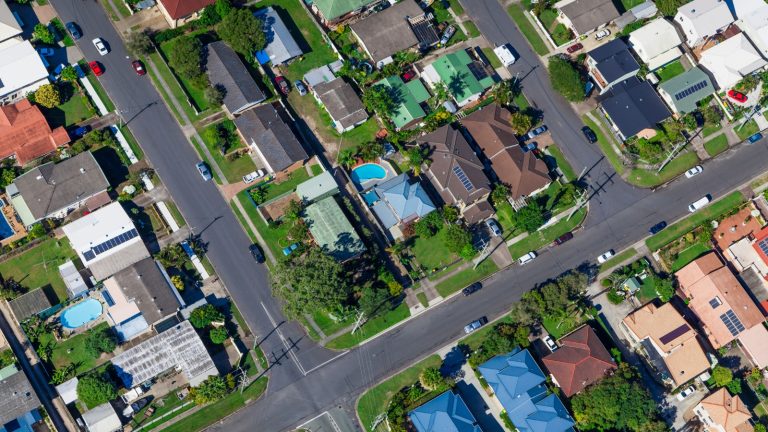
The best practices for sustainable suburban development are implementing renewable energy micro-grids, battery storage systems, water recycling, greywater reuse infrastructure, active transport networks, and walkability standards. Following leading practices focuses on resilience, efficiency, and quality of life rather than unchecked expansion.
Renewable Energy Micro-Grids and Battery Storage Systems
Local renewable micro-grids reduce reliance on central power systems and improve energy security. These systems lower emissions, stabilise supply during disruptions, and support long-term climate resilience in growing suburban areas.
Water Recycling and Greywater Reuse Infrastructure
Recycling water for irrigation and non-potable uses reduces strain on freshwater supplies. Integrated systems improve drought resilience, lower operating costs, and enhance sustainability across suburban developments.
Active Transport Networks and Walkability Standards
Well-connected footpaths and cycling routes reduce car dependency and support healthier lifestyles. Prioritising active travel improves accessibility, lowers emissions, and strengthens local neighbourhood interaction.
Real-World Examples: Australian Cities Addressing Suburbanisation
- Greater Sydney’s Urban Planning Challenges and Responses
- Perth’s Smart Suburbanisation Strategies for WA 2050
- Melbourne’s Metropolitan Planning Framework Evolution
Why Choose Tigernix for Smart Urban Planning Solutions?
Tigernix Smart Transportation Asset Software is a robust digital solution that supports data-driven planning in Australia, which requires consolidated platforms that combine environmental insight with operational intelligence.
AI-Enhanced GIS Mapping and Digital Twin Platforms
Tigernix Smart Transportation Asset Software integrates advanced analytics with spatial modelling to support evidence-based planning. These tools help authorities visualise impacts, optimise transportation networks, and guide sustainable decision-making across complex urban environments.
Environmental Impact Prediction and Infrastructure Optimisation
Our predictive models assess development impacts before construction begins. This capability reduces risks to ecosystem services, improves infrastructure efficiency, and supports long-term resilience across growing suburban regions.
Comprehensive Urban Development Scenario Modelling Capabilities
Tigernix software solution’s scenario modelling module enables planners to compare growth pathways and outcomes. These insights support balanced city planning, ensuring environmental, social, and economic priorities align over time.
Ready to Transform Your Urban Planning Approach?
You can see that sustainable suburban growth begins with informed, technology-enabled decisions.
Consult With Tigernix Smart City Planning Experts
Tigernix specialists work with planners to design future-ready suburbs. By aligning data, policy, and technology, cities can improve outcomes while protecting long-term environmental and social value.
Call for a free demo.
Discover How Technology Can Reduce Suburban Environmental Impact by 40%
Advanced modelling and analytics reveal opportunities to reduce pollution levels, emissions, and inefficiencies. Technology-driven planning empowers cities to achieve measurable sustainability improvements without compromising growth objectives.
Tigernix-Data-Driven Solution for Sustainable Metropolitan Growth
FAQs About Suburbanisation
Suburbanisation is the process by which people and development move from city centres to outer residential areas. It usually involves lower-density housing, longer travel distances, and expanded infrastructure, changing how cities function socially, economically, and environmentally over time.
Urbanisation focuses on growth within dense city centres, while suburbanisation spreads development outward. Urbanisation concentrates services and jobs, whereas suburbanisation disperses them, often increasing land use, infrastructure costs, and reliance on private vehicles.
Australia’s suburban growth is driven by population increases, housing demand, lifestyle preferences, and relatively affordable fringe land. Many households value space and home ownership, making suburban living attractive despite longer commutes and infrastructure challenges.
Suburban expansion can lead to land clearing, habitat fragmentation, higher emissions, and increased water and energy use. These impacts accumulate over time, affecting air quality, biodiversity, climate resilience, and the efficiency of natural systems supporting cities.
Yes. Sustainable outcomes are possible through compact design, integration of public transport, green infrastructure, and data-driven planning. When growth is carefully managed, suburbs can support liveability while reducing environmental pressure and long-term infrastructure costs.