

Did you know that the pH of drinking water in Australia should be between 6.5 and 8.5? Wastewater appears clear well before it is actually clean. However, the truth is that ecosystems, public health, and reuse potential are all affected by many invisible hazardous chemicals. This is where the importance of a carbon filter for wastewater treatment comes to life to address this little-known issue.
It takes away dissolved impurities that normal treatment processes cannot remove. This process is common practice in order to polish treated water quality and meet stringent discharge regulations. In other words, a carbon filter for wastewater treatment traps pollutants through adsorption in addition to the removal of particles due to screening.
In this article, we explore how the carbon filter for wastewater treatment is now indispensable in the current systems of wastewater treatment everywhere.
We look into
- What Is a Carbon Filter in Wastewater Treatment?
- How Carbon Filters Work in Wastewater Treatment Systems
- Benefits and Limitations of Carbon Filters for Wastewater Treatment
- Operational Performance, Maintenance, and Lifecycle Considerations
- Digital Monitoring and Smart Control in Filtration Operations
- FAQs About Carbon Filter for Wastewater Treatment
What Is a Carbon Filter in Wastewater Treatment?
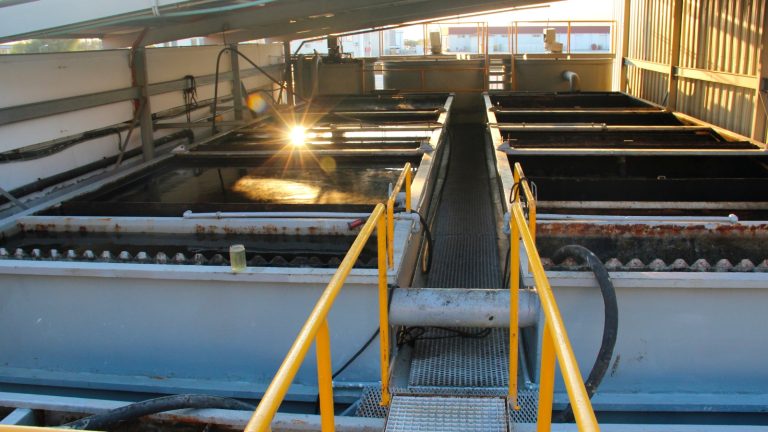
A carbon filter for wastewater treatment is a filter that uses activated carbon to remove dissolved organic and chemical substances from treated or partially treated water. How is it different?
Unlike filters that block particles, as mechanical filtrers do, this system traps pollutants on carbon beds. That makes it particularly effective for compounds that are difficult to break down biologically.
In the real approach, a carbon filter for wastewater treatment is applied once solids and biodegradable materials have already been removed by the primary and secondary processes. At this point, water can still have chemical residue, odours, or other suspect substances. Carbon filtration has the capacity to intercept the remaining contaminants, which increases water clarity and safety.
You may have seen that an activated carbon filter is widely utilised in public works plants, factories, and reuse plants. It is of special significance when high-quality effluent is demanded.
Wastewater carbon filtration protects receiving waters and downstream users in many utilities.
Moreover, a high-quality carbon filtration system also contributes to environmental goals. It assists with facilities’ compliance with discharge permits and minimises ecological risks. Carbon filters are frequently used for feedwater and process water treatment to remove organic byproducts, as well as to condition the water so that it can easily be further treated.
Key Takeaways
- A carbon filter system for water purification removes dissolved pollutants that biological processes cannot.
- Activated carbon filters enhance effluent quality and water reuse while adhering to regulations.
- Correct design, maintenance, and validation increase filter life and ensure steady performance.
- Industry 4.0-based tools can optimise efficiency, predictive maintenance, and operational control at the click of a thumb.
How Carbon Filters Work in Wastewater Treatment Systems
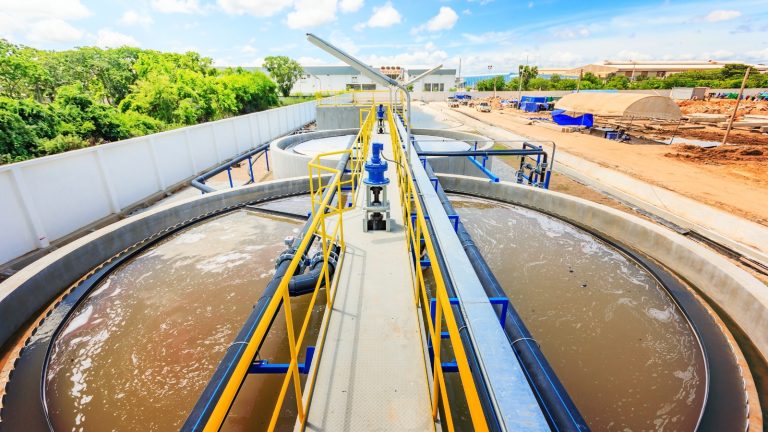
Carbon filtration works through an activated carbon filter and absorption mechanisms. Let’s explore them deeply in the sections below.
Activated Carbon and Adsorption Explained
Carbon filters work through an adsorption process. This indicates that contaminants stick to the carbon surface rather than travelling through it.
The activated carbon filter is a fine granule processed to have an ultra-high surface area of activated carbon, which enables it to adsorb various dissolved substances. Such a process allows for effective organic contaminant removal down to low concentrations.
Types of Carbon Used in Wastewater Filters
The two primary carbon types used for a wastewater environment are activated carbon (GAC) and powdered activated carbon (PAC). They each have varying performance characteristics under different system designs and contaminant types.
The appropriate choice of the carbon media selection determines an optimum efficiency, life span, and operation cost of the filtration device.
Carbon Filter System Design and Components
A carbon filter assembly has a filter vessel for retaining the carbon bed and guiding water flow uniformly. The higher the contact time between water and carbon media, the better the system works.
In such a context, engineers also regulate the hydraulic loading rate to minimise channeling and to maintain even adsorption across the bed.
Contaminants Removed by Carbon Filters
Organic pollutants that cause colour, odour, and toxicity are effectively filtered from water through carbon filtration. It is commonly applied for chlorine removal of treated effluent streams.
Carbon filters also trap pharmaceuticals in wastewater and some taste and odour compounds that impact reuse.
Integration With Other Wastewater Treatment Processes
Carbon filtration is rarely used alone. It is commonly placed after biological wastewater treatment as one step of a full treatment train.
In most schemes, it contributes to further advanced wastewater treatment goals through improving final water quality prior to discharge or reclamation.
Benefits and Limitations of Carbon Filters for Wastewater Treatment
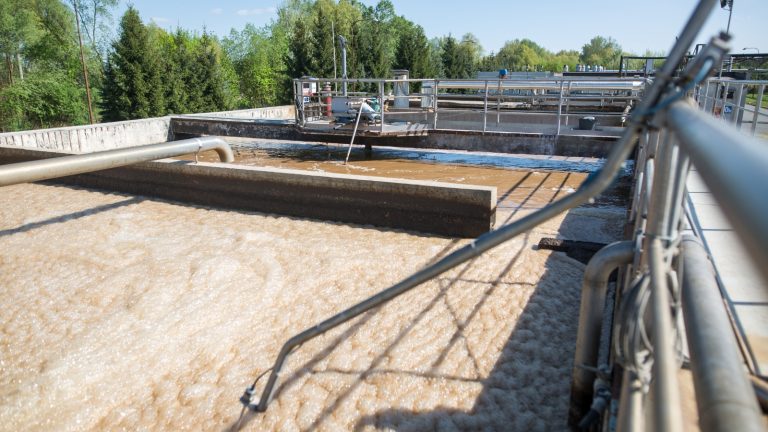
- One of the primary advantages of a carbon filter for wastewater treatment is its ability to rid contaminants that are not susceptible to biological decomposition. This makes it suitable for polishing applications and delicate discharge points. The adsorption capacity of an activated carbon filter can eliminate certain chemicals that are unhealthy or cause an unpleasant taste.
- In addition, effluent quality is improved with carbon filtration provided for colour, odour, and leftover chemical reduction. This is particularly relevant to industrial wastewater treatment, whose effluent composition can be significantly diverse. Many plant operations are now using activated carbon wastewater treatment as part of their process to meet regulatory compliance specifications.
- Another advantage is flexibility. Carbon filtration can be added to existing systems and customised for water conditions. These are typically employed for tertiary wastewater treatment in order to promote reuse and fulfil environmental restrictions. In water reuse treatment facility service, activated carbon filtration contributes to the public perception of reclaimed water.
Operational Performance, Maintenance, and Lifecycle Considerations

Good operational control and preventive maintenance are a prerequisite for uniform treatment, cost-effectiveness, and long-term predictability. In this section, we simply discuss how filter units work after they undergo repeated use, explain what type of care is necessary to manage them, and how long you should use them.
Day-to-Day Operational Stability
You need to keep the flows consistent and avoid dramatic load fluctuations for smooth operation. Non-uniform operating behaviour can result in uneven internal flow paths, which may compromise treatment efficiency.
Operators have to monitor key performance indicators on a daily basis in order to keep the system performing as planned during peak load and seasonality.
Maintenance Practices That Protect Performance
Maintenance prevents you from being gradually slowed unnoticed. It is possible to use controlled backwashing, pressure checks, and visual inspections to detect these early warning signs.
Further, plants with planned maintenance programmes generally have fewer failures and maintain consistent product quality over extended periods of time.
Media Exhaustion and Replacement Planning
The media does not just collapse; it corrodes over time. That is where replacement should be scheduled after experience data rather than at regular intervals.
You are able to avoid downtime and the cost of emergency replacement work by planning to replace equipment as it approaches its wear life.
Lifecycle Cost and Long-Term Reliability
Operating discipline, maintenance quality, and loading continuity can have an impact on lifecycle performance. Likewise, you can receive better value with additional service life and continued efficiency.
Thoughtful lifecycle planning supports predictable budgeting and operational resilience.
Digital Monitoring and Smart Control in Filtration Operations
- Role of Sensors and Real-Time Visibility
- Automation and Predictive Insights
- Integration With Plant-Wide Management Systems
How Tigrenix Helps You Achieve Wastewater Perfection with Carbon Filtration
Tigernix Smart Wastewater Asset Software Suite is an end-to-end software platform that is driven by Industry 4.0 digital capabilities such as AI, IoT, Digital Twin, Predictive Analytics, GIS, etc.
Our software suite streamlines the operation of the carbon filter for wastewater treatment through real-time monitoring, predictive maintenance, and data-based performance analysis. Using the Tigernix solution, your operators can monitor filter saturation, maximise contact time, and avoid fouling.
Its built-in analytics allows for automated flow rates and treatment schedules, for a consistently high-quality effluent, longer media life,e and less operational costs.
Call for a free demo today.
Tigernix: No Errors in Wastewater Production.
Carbon Filters as the Essentials for Modern Wastewater Treatment
A carbon filter for wastewater treatment is a priority for producing high-quality treated water under today’s stringent control regulations. Specifically addressing the dissolved pollutants, it adds to biological and physical processes, which are not adequate by themselves.
As you can see, carbon filter for wastewater treatment have become the norm in most utilities as a means of protecting the ecosystem and complying with environmental discharge requirements.
The role of water reuse treatment becomes more and more important in times of increased scarcity of water. This transition is reinforced by carbon filtration to enhance safety and the appreciation of the public. As a polishing stage, a carbon filter for wastewater treatment allows utilities to take steps toward cleaner, safer, and more resilient water systems.
FAQs About Carbon Filter for Wastewater Treatment
A carbon filter removes dissolved organic chemicals, chlorine, odours, colour-causing compounds, and trace pollutants. It works through adsorption, capturing substances that remain after biological treatment and improving overall water quality.
Carbon filtration is typically used after secondary treatment. It is part of tertiary treatment or advanced systems designed to polish effluent before discharge or reuse.
Yes. activated carbon systems reduce harmful chemical discharges and protect aquatic life. They support sustainability goals by improving treated water quality without adding chemicals to the process.
Carbon life depends on contaminant levels and system design. Media is replaced or regenerated once the adsorption capacity is reached to maintain treatment efficiency.