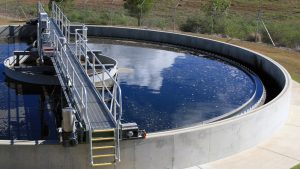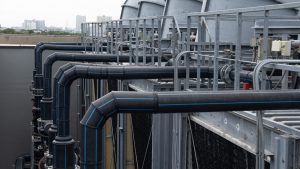

You may wonder why industrial water management is this much important in today’s world. There are many reasons for that. Obviously, the first one is that it can directly impact environmental sustainability. You know that the industrial world is one of the major consumers of water resources; this makes it carry the risk of greatly depleting the amount of water available as well as polluting the ecosystem with mismanagement in the areas of water pollution.
It has been a major conversation that raw water from industrial facilities becomes the top cause of pollution in rivers and lakes. The latter jeopardises aquatic life, and it can also potentially put human health at risk. This is where efficient water management comes under the spotlight, offering a framework to avoid these negative consequences. With the right management and alignment with the framework, it helps industries preserve natural resources while achieving their business goals.
In this article, we discover what steps need to be included in the industrial water management framework.
Effective Industrial Water Management Framework Step-by-Step
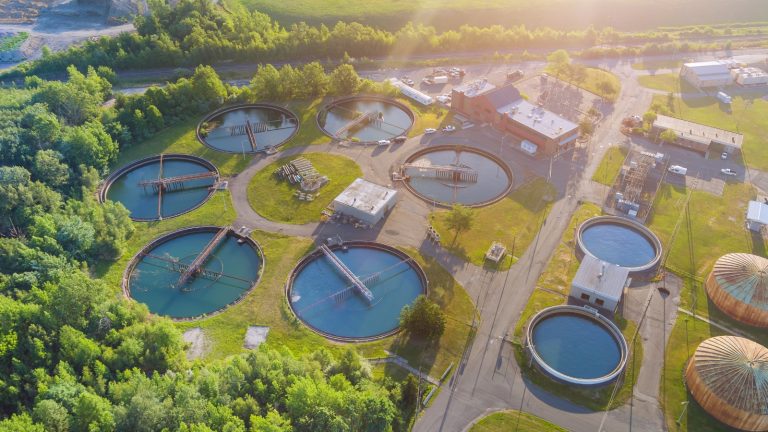
In the section below, we will explore the 10 most essential water management steps in the framework.
Key Takeaways
- An effective industrial water management framework presents a set of smart approaches to preserve natural resources while achieving business goals in the water industry.
- This framework is needed because it provides the right management approaches to maximise the quality of the water supply and reduce negative impacts.
- Combined with modern technology, such a framework can enhance the quality of the water supply.
Building a Water Management Team
The first step of any effective industrial water management framework simply starts with gathering a dedicated team.
However, you need to be careful, as the team must include people who have a thorough comprehension of your facility’s water systems, engineering mechanisms and needs, maintenance activities, current health and safety procedures, as well as its complex operational processes.
Planning Water Management Mechanism
In the second step, you map how water moves through the entire facility. This is where documentation using clear diagrams or schematics helps to spot where the hot and cold water distribution systems, boilers, storage tanks, cooling towers, process-water systems, emergency equipment, and other water-consuming assets are currently located.
You must pay attention to treatment points, water sources, circulation routes, low-flow areas, dead legs, and discharge points specifically when planning.
Go with System Diagrams to Spot Control Points
Since you have the water system map in place, you need to go through the diagrams carefully to spot control points and check whether there are potential risk areas.
These can be locations ranging from unsuitable temperature conditions, stagnant water, sedimentation, poor circulation, scaling, inadequate disinfection, corrosion, etc. These points might pave the way for harmful microorganisms to grow.
It is also needed to focus on storage tanks, low-use outlets, cooling systems, poor circulation points, and equipment that are intermittently in use.
Build Suitable Control Limits
For every significant control point, there must be measurable control limits. Your teams can establish them based on your facility’s water system design, risk assessment, applicable standards and regulations, professional advice, as well as industry guidance.
Control limits offer a tight grid of acceptable operating conditions to keep the system under control. This certainly varies from system to system. However, it includes disinfection concentration levels, temperature ranges, flow conditions, machine operating grids, water quality parameters, etc.
If your teams have properly documented limits, it is easier to identify when a system is out of control.
Employ Preventive Control
In this step, you need to establish some practical measures to guarantee that the water system remains within those limits. In the sense of controls, we focus on appropriate water treatment, routine cleaning and disinfection, temperature management, removal of sediment, flushing of infrequently used outlets, corrosion control, and proper management of cooling towers and other water-related equipment.
This is where preventive control measures enter the picture as the best solution. It identifies the risks associated with procedures and comes up with routine maintenance schedules in advance.
Track the Effectiveness of Established Control Measures
It is a must to keep monitoring procedures for their effectiveness in the real world. You need a specific checklist that specifies what needs to be checked, the responsible parties, how frequently measurements should be taken, and a proper result recording framework.
Depending on the system, monitoring can vary, yet this monitoring framework tracks disinfectant levels, temperatures, water quality, equipment performance, flow, cleaning activities, and other relevant indicators.
Regular Review and Continuous Improvement
As you review the developments of monitoring results, inspections, maintenance activities, incidents, corrective actions, and changes in the system, you need to keep accurate records with timestamps.
The water management team is responsible for reviewing the systems and records at least once a year and whenever significant changes are about to take place. As much as your teams can go for regular reviews, it will help you follow the protocols for control points, risk assessments, limits, responsibilities, etc.
Implement Immediate Corrective Mechanisms
If your team recognises that the control limit has not been met, don’t waste time. This is the point where you need a prompt response and go with your predefined corrective-action procedure. However, make sure your response actually addresses the immediate problem as well as its underlying cause.
Documenting the incident, when it occurred, actions taken, and whether the corrective action successfully restored control is a vital part of the mechanism.
Embed Water Management Framework into Daily Operations
It is important that an effective water management framework becomes a core part of the facility’s operational architecture.
This way, every responsible party, such as maintenance teams, operators, engineers, contractors, and asset managers, comprehends the level of their work that ultimately affects water-system performance and risk.
How Tigernix Smart Water Asset Software Can Help Build an Effective Water Management Framework for Your Water Plant
Tigernix Smart Water Asset Software is a cutting-edge software suite that helps water plants align their operations with effective management frameworks under one digital platform. Its IoT-based asset data centralisation, Digital Twin and Predictive Analytics-powered water infrastructure monitoring, and AI-driven risk identification offer your plant the benefits such as predictive maintenance, real-time visibility, cost savings, operational efficiency and informed decision-making.
Call for a free demo.
Tigernix-Digitally Water Management In Place
Making Industrial Water Management Effective for Uninterrupted Water Supply
There is no doubt that a water facility needs an effective industrial water management system because it is essential for everything, including controlling operational costs, ensuring an uninterrupted water supply, and sustainable water production. For that, you only need the right technologies and management strategies. Effective water management can improve water reliability while building more efficient and sustainable industrial operations.
FAQs About Effective Water Management Framework
An industrial water management framework refers to a structured set of protocols that are developed for industrial water operations, monitoring, controlling, conserving, treating, and reusing.
Industrial water management is important because it helps industries keep track of their water consumption, identify water waste and downtime of equipment, reduce water consumption, control operational costs, ensure regulatory compliance, and maintain reliable water supplies.
Key components of industrial water management are monitoring of water, assessing consumption, wastewater treatment, leak detection, water recycling and reuse, implementing conservation strategies, regulatory compliance, and performance optimisation.
Industries can improve water management using real-time monitoring of usage, detecting leaks, wastewater treatment, process optimisation, analysing performance data and strategic implementation of water conservation.