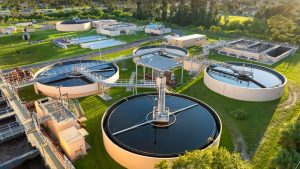

An industry report recently revealed that about 30% of utilities have a formal asset management plan in place, as deferred maintenance is a primary cause of expensive emergency repairs on water and wastewater networks. This is what the industrialists should care about: What are the 4 P’s of maintenance? This inquiry has become a priority for asset managers, reliability engineers, and utility directors, respectively.
The 4 P’s of maintenance- Planned, Preventive, Predictive, and Proactive give organisations a structured way to move from reactive firefighting to genuine reliability. For industrial operators, where a single unplanned outage can mean a compliance breach or public health risk, the case for these maintenance strategies is not optional anymore; it is all about operational survival.
This article will walk you through all 4 P s and outline the significance of the 4 Ps for enterprise asset maintenance. Further, you will get to see how the maintenance management software is changing the game for utilities across the world.
We will explore
- What Are the 4 P’s of Maintenance?
- Why the 4 P’s of Maintenance Matter in Modern Enterprise Asset Maintenance
- Understanding the Four Types of Maintenance Strategies
- Planned Maintenance: Building the Foundation for Long-Term Asset Performance
- Preventive Maintenance: Preventing Equipment Failures Before They Occur
- Predictive Maintenance: Using Data to Optimise Maintenance Decisions
- Proactive Maintenance: Eliminating the Root Causes of Equipment Failure
- Comparing the 4 P’s of Maintenance: Which Maintenance Strategy Is Right for Your Business?
- How Industry 4.0 Is Transforming Maintenance Management Strategies
- Best Practices for Implementing the 4 P’s of Maintenance Successfully
- FAQs About the 4 P’s of Maintenance
What Are the 4 P's of Maintenance?

Most organisations, including water treatment plants and wastewater facilities, do not trust a single method of maintenance. They use a mix of all four strategies to suit the asset criticality, budget, and risk appetite. Recognising that each P plays a unique role is the first step in understanding the 4 P’s of maintenance.
- Planned maintenance -A planned maintenance schedule is done in advance according to time, run, or manufacturer.
- Preventive maintenance– This is carried out at regular intervals before a fault develops.
- Predictive maintenance -Using sensor data and analytics, predictive maintenance can identify failure before it occurs.
- Proactive maintenance– This deals with the root cause so that it will not repeat.
Key Takeaways
- The 4 P’s — Planned, Preventive, Predictive, and Proactive maintenance — work best as a blended strategy, not standalone options.
- Most water and wastewater utilities combine all four, matching each approach to asset criticality, budget, and available data rather than relying on just one.
- With only around 30% of utilities having a fully implemented asset management plan, deferred maintenance remains one of the biggest drivers of emergency repairs, compliance breaches, and service interruptions.
- Industry 4.0 technology — IoT sensors, AI analytics, and digital twins — is what makes predictive and proactive maintenance genuinely achievable at scale.
Why the 4 P's of Maintenance Matter in Modern Enterprise Asset Maintenance
The 4 P’s of maintenance matter even more in water and wastewater operations where asset failure is not an option. In fact, they have a direct impact on reducing unplanned downtime, increasing the lifespan of the asset, and protecting compliance.
How the 4 P's Improve Equipment Reliability
Incompatible electrical and computer-based devices on different grounds would experience short circuits and misinforms, depending on their different RCD settings. The use of matching P to asset class helps to improve equipment maintenance in the application of correct efforts solely to the failure risk.
Predictive monitoring may be appropriate for critical lift stations, while low-risk assets remain on a simple, planned schedule to focus resources where they are needed.
The Role of the 4 P's in Enterprise Asset Maintenance
Enterprise asset maintenance does not just replace pumps or patch pipes. It analyses the entire lifecycle of each piece of equipment.
By using the 4 P’s, you give that lifecycle view a real structure and link asset lifecycle management decisions to day-to-day work orders.
For a wastewater utility which runs thousands of assets across their service area, this structure is what makes disorganised maintenance data a real strategic asset.
How Modern Maintenance Management Strategies Reduce Downtime
Downtime at a treatment works can lead to regulation breaches, overflow events, a nd reputational damage immediately. The 4 P maintenance management strategies seek to move resources away from emergency call-outs and towards scheduled interventions based on data.
Fewer catastrophic failures and smaller, less expensive repair windows will likely be encountered by utilities that combine planning and predictive insight.
Understanding the Four Types of Maintenance Strategies

There are four types of maintenance strategies, namely, Planned, Preventive, Predictive, and Proactive maintenance. All of them have different ratios of cost, effort, and failure prevention.
Before exploring each pillar in detail, it is useful to see how the four types of maintenance strategies are related to one another and where each type fits within a wider maintenance programme.
1. Planned Maintenance
Planned maintenance is a scheduled maintenance that consists of planned organised work at specified intervals, whether that is a monthly inspection of a pump or an annual overhaul of a clarifier.
It forms the admin backbone of any serious maintenance programme.
2. Preventive Maintenance
Preventive maintenance refers to work aimed at preventing a problem before it happens. For example, a worn seal could lead to a clog at a treatment facility.
3. Predictive Maintenance
To eliminate breakdowns, Predictive maintenance uses sensor data, vibration analysis, and analytics platforms to identify components that are not performing as expected.
This helps organisations to schedule repairs as and when required.
4. Proactive Maintenance
Proactive maintenance will not only fix symptoms. Proactive maintenance will investigate why a pump keeps tripping, or a valve keeps sticking. Therefore, the underlying cause is resolved, and the fault does not come back next quarter.
Planned Maintenance: Building the Foundation for Long-Term Asset Performance
Planned maintenance refers to the maintenance of assets done through scheduling, calendar, ar or usage technique that serves as the basis of an organisational Preventive, Predictive and Proactive Strategy.
What Is Planned Maintenance?
Any maintenance activity that is scheduled in advance based on a calendar date, run-time counter, or a manufacturer’s advisor. For example, an aeration blower service at a wastewater treatment plant or a quarterly inspection of a lift station may well be booked far in advance.
This is a plus for the organisation as it gives their teams and budget certainty, rather than a surprise event.
Benefits of Planned Maintenance for Asset Reliability
Since the work is scheduled and not reactive, spare parts can be ordered in advance, and labour planned. Furthermore, a breakdown outage can be scheduled with minimal disruption to plant operations.
Maintenance planning teams can plan work more accurately when they are aware of the actual range of maintenance (utilisation) of the assets—fewer emergency callouts—triggering less overtime payments.
Giving the utilities a documented history for assets with condition and performance data assists with regulatory and capital planning decisions.
Best Practices for Developing an Effective Planned Maintenance Programme
To efficiently plan extra maintenance scheduling, we require an accurate asset register and criticality ratings for each pump, valve, and treatment unit.
Utilities that follow maintenance best practices will generally conduct an annual review of schedules, use manufacturer recommendations, and schedule work order creation with a CMMS tool, not spreadsheets or memory.
Preventive Maintenance: Preventing Equipment Failures Before They Occur
Preventive maintenance is a scheduled service performed on an asset whether or not it needs service. Preventive maintenance is done to stop minor wear from developing into an equipment failure.
What Is Preventive Maintenance?
Preventive maintenance is performing a task at set intervals rather than waiting until something starts to go wrong (e.g., lubricating pump bearings or changing filter media).
In water treatment, wearing a wrench and light can help keep chemical dosing pumps, screens, and clarifiers in a safe range.
Advantages and Limitations of Preventive Maintenance
The clear plus point is that teams know exactly what to service and when. This assists with budgeting for steady equipment maintenance.
The drawback is that certain components are provided service before they actually require it, which seems to unnecessarily squander labour and materials. Consequently, many utilities ultimately build predictive maintenance upon this base.
Industries That Benefit Most from Preventive Maintenance
Water and wastewater utilities, manufacturing, health care, and food processing rely on preventive schedules because equipment failure will have a public health or safety consequence.
Most maintenance programmes in these sectors begin with preventive tasks and progress towards condition-based methods.
Predictive Maintenance: Using Data to Optimise Maintenance Decisions
Predictive maintenance uses real-time condition data to anticipate the moment when an asset will fail, and maintenance can be performed just-in-time. Vibration, temperature, and flow measurements, for example, can be fed into a predictive analytics model.
What Is Predictive Maintenance?
Predictive maintenance checks live data from equipment to spot early warnings of degeneration instead of servicing on a fixed calendar.
For example, by detecting bearing wear on a raw water pump weeks before actual failure, a vibration sensor gives operators a real planning window.
Technologies Powering Predictive Maintenance
The technologies of condition-based maintenance utilise IoT sensors and SCADA integration. They also utilise vibration and thermal analysis.
Moreover, they also make use of machine learning models that are trained on historical failure data. Maintenance management platforms directly utilise sensor readings, transforming these obscure inputs into a straightforward recommendation for field teams.
How Predictive Maintenance Reduces Maintenance Costs and Downtime
Utilities avoid part change-out of components and catastrophic failure because maintenance is done only when data indicates a real risk. More specifically, utilising predictive analytics can help teams only react when needed; as a result, the cost of equipment maintenance is generally reduced.
At the same time, the unplanned downtime of critical assets, such as influent pumps and disinfection systems, which have compliance consequences with any downtime, is greatly reduced.
Proactive Maintenance: Eliminating the Root Causes of Equipment Failure
Proactive maintenance removes the cause of failure, rather than the symptom, which allows symptoms or faults to recur. In this way, it is possible to avoid repairs to the same things over and over again.
What Is Proactive Maintenance?
The aim of this maintenance approach is to determine the reason why this fault keeps reoccurring instead of remedying it once more.
If, for example, a wastewater pump is overheating on a regular basis, an investigation into why this is the case will take place. Are the bearings misaligned? Is it deprived of lubrication? Is there a design flaw upstream that is causing this?
The answer we are looking for is not continuously fixing it.
Root Cause Analysis and Continuous Improvement
The basis of proactive work is root cause analysis. It draws on historical failure information, corrective maintenance and engineering review, as well as much more to trace back the cause of the problem.
The goal of continuous improvement is to diminish maintenance workload throughout the plant overall over time.
How Proactive Maintenance Supports Long-Term Asset Health
By resolving the basic design or operational problem, we extend useful asset life and decrease the requirement for reliability-centred maintenance interventions in the future.
There is a deterioration of water infrastructure throughout the nation, and it is often through proactive maintenance that one can end up extending the service life of an asset for years rather than incurring high costs and replacing it prematurely.
Comparing the 4 P's of Maintenance: Which Maintenance Strategy Is Right for Your Business?

Selection of Planned, Preventive, Predictive and Proactive often reflects asset criticality, budget and data level of failure maturity available to the utility. Almost all utilities use all four sometime in combination.
Choosing the Right Maintenance Management Strategy Based on Business Needs
A tiny rural water scheme with a very limited budget may depend largely on planned and preventive work. A major wastewater agency that oversees hundreds of lift stations may very well justify the investment of predictive sensors on its key assets.
Maintenance management strategies need to reflect risk, budget, and data maturity availability.
Can Organisations Combine Multiple Maintenance Strategies?
Indeed. As a matter of fact, most utilities do this in practice.
Always using a blend of maintenance strategies is better than the isolation of any strategy. Therefore, for a maintenance strategy blend, baseline strategy is planned scheduling; add preventive tasks for known spares/bearing wear, add predictive monitoring on critical assets plus add proactive root cause remedial work on chronic problems.
How Industry 4.0 Is Transforming Maintenance Management Strategies
The deployment of Industry 4.0 maintenance management strategies enables utilities to gain real-time visibility into the health of their assets across an entire network. These technologies enable water and wastewater operators to move from calendar-based servicing to genuine condition-driven decisions, reducing costs and downtime across aging infrastructure networks.
AI and Machine Learning in Maintenance
Machine learning models now examine years of failure history in combination with live sensor feeds to predict which pump or valve is most likely to fail next. By delegating limited maintenance crews towards assets that are at true risk, this intelligence layer strengthens Industry 4.0 maintenance programmes.
IoT Sensors and Real-Time Asset Monitoring
Nowadays, low-cost IoT sensors that measure vibration, pressure, and flow sit on pumps and valves at treatment plants and continuously stream data into enterprise asset management dashboards. Real-time insights change the periodic manual inspection to constant automated condition awareness.
Digital Twins and Enterprise Asset Maintenance
Engineers can model failure scenarios virtually to test them out before they happen at the treatment plant and network with the help of digital twins to ensure that enterprise asset maintenance doesn’t disrupt services—the ‘what if’ scenarios are tested virtually in a pump station.
Predictive Analytics for Smarter Maintenance Decisions
Predictive analytics software analyses past work orders, sensor trend data, weather data, and/or demand data to recommend optimal maintenance timing automatically. This data-driven layer easily integrates with CMMS software and converts raw operating data into prioritised, actionable maintenance decisions for utility teams.
Best Practices for Implementing the 4 P's of Maintenance Successfully

Effective application of the 4 P’s of maintenance requires valid asset data, clear KPIs, suitable CMMS and a culture committed to continuous improvement.
1. Build a Data-Driven Maintenance Culture
The successful adoption of the 4 P’s of maintenance starts with people and not software. Consistently training technicians to log accurate work order data; continuously encouraging engineers to trust sensor readings over gut instinct creates the cultural foundation that every advanced maintenance strategy ultimately hinges on.
2. Measure Maintenance KPIs and Asset Performance
Utilities can see the health of a programme clearly when monitoring such metrics as mean time between failures, percentage of planned maintenance, and asset downtime.
Derived from the maintenance planning and maintenance scheduling data, these KPIs reveal exactly where the four P’s are in place as well as where the gaps are.
3. Use CMMS and Enterprise Asset Management Software
CMMS software consolidates a facility’s work orders, spare parts inventory, and maintenance history in one central tool. This replaces multiple spreadsheets, paper logs, and other separate tools.
When combined with an enterprise asset management platform, it becomes the operational backbone that renders maintenance management strategies truly sustainable at scale.
4. Continuously Improve Maintenance Processes
Best practices for maintenance are not constant, but change with the new failure data and technology and regulation. Often reviewing schedules, root cause findings, and KPIs trends will help to ensure that the maintenance strategy framework of the utility remains aligned with the real-world performance of the asset rather than old assumptions of the assets.
How Tigernix’s Portfolio of Asset Management Software Helps Industrial Businesses Implement the 4 P's of Maintenance
Tigernix offers a portfolio of industrial asset management platforms such as Smart Water Asset Software, Smart Wastewater Asset Software, Smart Transportation Asset Software and Smart Mechanical Asset Software that help water and wastewater utilities implement the 4 P’s of maintenance by unifying planning, scheduling, predictive monitoring, and continuous improvement in one platform.
Plan, Schedule, and Automate Maintenance Activities
Tigernix technologies simply automate maintenance scheduling and work order generation based on asset criticality, usage data, and manufacturer intervals, removing the manual guesswork behind maintenance planning for busy utility teams managing hundreds of dispersed assets.
Enable Predictive Maintenance with AI and IoT
By integrating IoT sensor feeds and AI-driven analytics, Tigernix’s Industry 4.0-driven platforms support genuine predictive maintenance, flagging early warning signs on critical pumps and treatment equipment before failure disrupts service.
Improve Enterprise Asset Maintenance Through Real-Time Visibility
Our software solutions offer centralised dashboards to give utility managers real-time visibility across every site, turning fragmented enterprise asset maintenance data into a single, actionable view that supports faster, better-informed field decisions.
Drive Continuous Improvement with Industry 4.0 Capabilities
With built-in analytics and reporting, Tigernix helps utilities close the loop on root cause analysis, embedding Industry 4.0 maintenance capabilities that support long-term asset lifecycle management and continuous process improvement.
Call for a free demo.
Tigernix-Secure Your Assets With a Reliable Software Solution
Making the 4 P's of Maintenance Work for Your Utility
Understanding the true purpose of the 4 P’s of maintenance gives water and wastewater utilities a practical roadmap for moving beyond reactive repairs. By blending Planned, Preventive, Predictive, and Proactive approaches into a single maintenance management strategies framework, and supporting it with modern enterprise asset management tools, organisations can protect compliance, extend asset life, and keep critical infrastructure running reliably for the communities that depend on it.
FAQs About the 4 P's of Maintenance
They are Planned, Preventive, Predictive, and Proactive maintenance — four complementary strategies that together reduce downtime, extend asset life, and improve reliability across water and wastewater operations.
Preventive maintenance follows a fixed schedule regardless of asset condition, while predictive maintenance uses real-time sensor data to trigger repairs only when actual signs of wear appear, reducing unnecessary servicing.
Planned maintenance schedules routine work in advance, whereas proactive maintenance investigates and eliminates the root cause of recurring failures, aiming to prevent the same fault from ever returning.
Most manufacturing and industrial facilities, much like water utilities, benefit from a blended approach: planned maintenance for routine assets, predictive maintenance for critical, high-value equipment, and proactive maintenance for chronic failure points.
Yes. Small utilities and businesses can start with basic planned maintenance and preventive maintenance schedules using affordable CMMS tools, then gradually adopt predictive maintenance as budgets and sensor technology become more accessible.