

When water utilities grapple with soaring energy bills, unexpectedly failing equipment and public demands to keep the water flowing without interruption, the source of their troubles is often found underground — in pump stations. Knowing how to monitor pump station efficiency is now mandatory, as it seems. The interesting fact is that sewer systems need EPA Asset Management (condition assessment) every three years.
It is the way you safeguard assets, manage costs and future-proof your water infrastructure. But how do you go from reactive fixes to smart, data-driven control?
This guide explores the strategies, technology and performance considerations that can help you save millions while increasing reliability.
We will reveal
- Why Monitoring Pump Stations is Critical
- What Are the Common Challenges in Pump Station Efficiency?
- What Technologies Can Improve Pump Station Monitoring?
- How to Implement a Pump Station Efficiency Monitoring System?
- How to Ensure Data Accuracy and Reliability?
- How to Optimise Pump Operations for Energy Efficiency?
- How Can Organisations Respond to Pump Anomalies Early?
- How to Measure Pump Station Performance Effectively?
- FAQ About Pump Station Efficiency
Why Monitoring Pump Stations is Critical
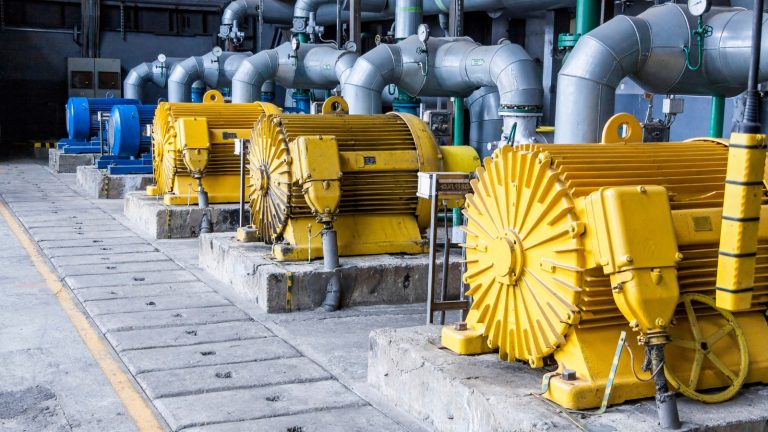
Impact on Water Supply Reliability
No need to emphasise that pump stations are the blood of water distribution. However, as it is noticeable, pump performance degradation occurs abruptly, and the fallout spreads quickly — low pressure, service stoppages and regulatory violations.
If you move forward with the best knowledge on how to monitor pump station efficiency, solutions offer you early warning when performance starts to drop, before customers feel anything has gone wrong. That way, you can have confidence that pumps are running at their optimal service range with excellent delivery even at maximum demand.
Moreover, you maintain consistent system hydraulics by tracking pump flow rate measurements and pump head pressure monitoring. Accurate data enables you to anticipate stress points created by population growth or demand variables induced by climate.
When you track reliability over time, you go from fighting fires and failures to delivering reliable water every day — something that earns trust with your customers and is expected by regulators.
Key Takeaways
- Real-time pump station performance monitoring lets you save energy, avoid breakdowns and enhance the stability of the water supply.
- You will be able to spot inefficiencies ahead of time and take action before any dips in performance cause operational or customer issues.
- Smart technologies, including IoT sensors and AI analytics, SCADA interconnectivity, and digital twinning, shift pump management from reactive to predictive.
Energy Consumption and Operational Costs
Did you realise that pumping is often a utility’s greatest electricity demander? Without sufficient oversight, waste can trickle out of a budget unnoticed.
This is why you need to have a thorough understanding of how to monitor pump station efficiency so you can spot early waste of energy and take appropriate action. If you dissect it down to pump power monitoring, you understand exactly where electricity is lost and why.
Figures such as ML/ML figure to pump from surface and kWh/kL represent how much energy you use to move a unit of water. With this knowledge, pumps can be optimised more intelligently to save energy and cut opex without impacting service.
When energy prices are down, the savings multiply year in and year out. Therefore, tracking becomes a strategic financial lever.
Maintenance and Downtime Reduction
We all know that unscheduled pump failures are costly, inconvenient , yet can often be avoided. Online monitoring will enable you to detect the drastic reduction in pump performance well before it reaches a failure.
You receive early warning alerts for pumps when wear in the mechanical components or hydraulic imbalances occur, using pump vibration analysis and thermal indications as thermodynamic pump measurements.
This information underpins pump maintenance scheduling in accordance with the actual condition of assets, and not assumptions. You do not respond to failures, but you intervene to extend the life of an asset.
Less downtime and fewer emergency callouts, lower spare-part costs and a more efficient workforce, all down to smarter efficiency monitoring.
What Are the Common Challenges in Pump Station Efficiency?
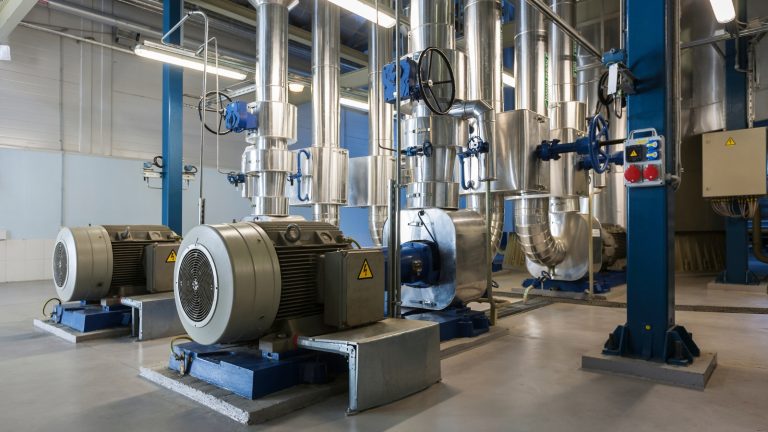
Ageing Pumps and Infrastructure
Many pump stations were constructed decades ago for demand profiles vastly different from today’s. Efficiency decreases with time, seals deteriorate, and hydraulic performance moves off the best efficiency point as components age.
In the absence of visibility, you could keep running pumps that no longer provide value.
For older assets, there is a need for a systematic pump condition assessment to determine if refurbishment, pump impeller trimming or replacement will return the pump to an acceptable level of efficiency. Moreover, monitoring can also assist in pump overhaul prioritisation, with finite capital budgets being focused on the assets which present the highest risk of failure.
Without it, ageing infrastructure silently erodes reliability and energy efficiency on a year-by-year basis.
Manual Monitoring Limitations
Inspections are not only manual but also mere snapshots, and frequently they fail to see critical warning signs. If operators are depending on their periodic reading, then failures develop unobserved between readings.
Here is where technology and monitoring must rise above the clipboard and spreadsheet.
Manual approaches are also incapable of encompassing time resolution in pump system curve analysis or transient hydraulic phenomena. They are also slow to respond to new crises.
That is how today’s utilities ditch time-consuming manual checks for real-time feedback via automated systems. By going with machine-based monitoring, you minimise the blind spots that lead to $50k failure points.
Fragmented or Delayed Data Reporting
Data stuck in silos is almost as bad as having no data at all. Electric, mechanical and hydraulic data are unavailable from a single system view. The delayed reporting prevents any proactive action.
The fragmentation of the devices makes it difficult to accurately determine pump efficiency or conduct any kind of benchmarking when comparing pumps between stations. Contemporary monitoring centralises data in one truth repository, which allows for rapid decision-making.
When you receive information in real time, chances are good that you stop responding late and start acting early, which is a crucial changing of gears, and one essential for operational resilience.
What Technologies Can Improve Pump Station Monitoring?
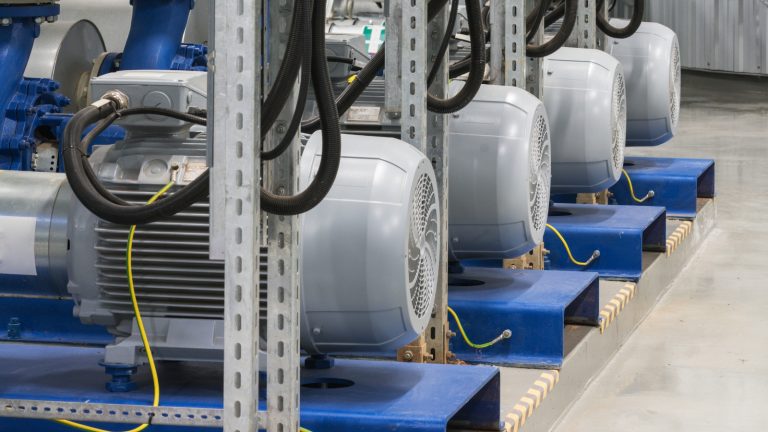
IoT Sensors for Flow, Pressure, and Vibration
This type of sensor technology is at the heart of current efficiency sensing. Pump sensors for the IoT monitor live hydraulic, mechanical and electrical signals. With IIoT pump sensors, you facilitate vibration monitoring of pumps, pressure and flow 24/7 without any manual input.
These sensors create smart pump sensor networks with detailed analytics about asset well-being. Paired with wireless pump telemetry, data flows safely from outlying sites to central locations.
With this visibility, you catch anomalous patterns before they become problems and keep all of your pumps as efficient as possible across your system.
SCADA Integration for Real-Time Visibility
Sensors alone are not enough. Visually, their incorporation in SCADA for water pumping stations directly provides an operational, real-time view to operators.
Due to seamless SCADA pump integration, you have instantaneous information about alarms, flow variation, and power-related issues.
What is more, real-time pump efficiency measurement is possible alongside controlling actions like speed changes or stops. When properly implemented, SCADA is actually more than a control system – it serves as an intelligence layer that binds operations, maintenance, and management into one unified workflow.
AI-Driven Anomaly Detection and Predictive Analytics
AI redefines monitoring from being descriptive to predictive. Algorithms identify patterns that are too subtle for humans to notice – vintage style meets modern technology with AI predictive pump maintenance and any kind of pump failure risk assessment.
AI helps predictive maintenance of pumps by detecting their health deviating from normal working and their remaining failure time. You see real-time pump analytics and act on any anomalies before they blow up.
This preemptive feature saves resources, stabilises production and substantially reduces pump lifecycle management costs.
Digital Twin Simulations for Operational Planning
A digital twin for pump systems establishes a virtual replica of your tangible assets. With the digital twin pump modelling, you can test operational alternatives without the danger of real-life incidents.
Pump capacity optimisation, control strategy testing and upgrade validation is enabled by digital twins. They teach you how performance pump specific energy kWh/kL use and reliability are affected by changes.
Further, when matched with real-time data, digital twins become potent planning tools, allowing authorities to make smarter decisions based on evidence, rather than guesses.
How to Implement a Pump Station Efficiency Monitoring System?
Step 1: Deploy Sensors Across All Critical Pumps
Begin with the tag and categorisation of critical assets via pump asset criticality tagging. Flow sensors, pressure transducers, vibration sensors and energy monitoring circuits should all be included to facilitate pump efficiency restoration.
Clever placement of sensing covers virtually all points of potential failure while minimising redundancy. Through sensor layout optimum, you get the most out of each data point and set a good basis for enhanced analytics.
Step 2: Integrate Sensor Data into a Central Analytics Platform
Until sensors are switched on, the collected data needs to be fed into one central entity. Cloud-based pump monitoring allows for the scaling of storage, analytics and remote access.
At the same time, centralised analytics enable remote pump diagnostics so that experts can evaluate problems without having to visit locations. Bringing all these different departments and their data together eliminates silos, promotes cross-departmental collaboration, and guarantees that one set of solid statistics is used in the decision-making process.
Step 3: Set Thresholds and Automated Alerts
When static alarms activate, it may be too late. Adaptive thresholds are set by intelligent systems in the context of operations. It makes monitoring easy, instead of watching the pumps performance until the still point is passed.
Warnings associated with pump automation make it possible to take fast countermeasures in terms of speed control through variable speed drives. This automation will minimise response time and keep those little queries from becoming big problems.
Step 4: Link Insights to Maintenance Schedules
Data is worthless unless you act on the data. This is when monitoring information should lead directly into maintenance planning and pump life management.
By integrating the analytics with work orders, you are making sure that interventions come at the right time, to lower wear and stretch asset life. This feedback methodology changes monitoring into actionable operational results.
How to Ensure Data Accuracy and Reliability?
Sensor Calibration and Routine Checks
As good as any sensor may be, sensors drift over time because of environmental conditions, operation and ageing. Periodic checking is necessary to guarantee that the readings remain accurate for pump efficiency computations and monitoring performance.
Apart from that, regular validation provides long-term confidence in your analytics, enabling you to make operational decisions and maintenance calls with trust in the data.
Handling Missing or Inconsistent Readings
Gaps and inconsistencies in the data can create biases and false inferences. Clever monitoring tools can automatically spot these anomalies, flag them as invalid numbers and apply some validation logics.
This procedure preserves the integrity of data sets, safeguards the pump system curve analysis and guarantees long-term trends will be meaningful and can be used.
Standardising Data for Operational Analysis
Standardised data formats ensure that you can compare performance on a regular basis across your pumps, stations and regions. This consistency enables comparison of pump performance and eases reporting and scaling of analytics as networks grow.
When your data speaks in one language, insights are easier to understand, acquire and act on.
How to Optimise Pump Operations for Energy Efficiency?
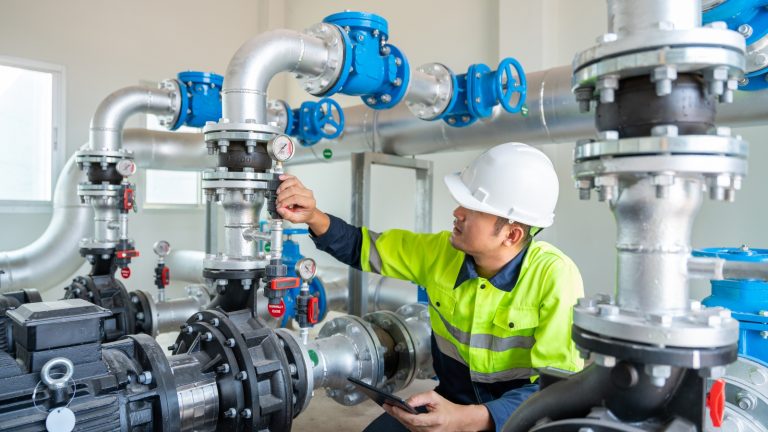
Analysing Pump Performance Trends
Trend analysis reveals opportunities for inefficiency that can be hidden within the daily operations of your building and are often overlooked by static readings, such as declining performance, overusage of energy and operational discrepancies.
Continuous monitoring can identify opportunities for pump energy cost savings without the need for initial capital investments or system improvements.
Adjusting Operational Schedules
You can go with intelligent scheduling of operations times pumping activities. That way, they match patterns in demand and electricity tariffs. By pumping during off-hours and peak shaving loads, you save energy and maintain system stability.
This method increases effectiveness, prevents undue stress on treatment facilities and maintains equal availability of water throughout service areas.
Reducing Energy Wastage without Compromising Water Delivery
An energy optimisation for pumps concept targeting the keeping of pumps in the best-efficiency range at various demand conditions. You minimise wasted power with precise control and operating strategies, without sacrificing pressure, flow or service reliability.
That is the right balance you must target.
How Can Organisations Respond to Pump Anomalies Early?
Automated Alert Systems
Automated alarm systems repeatedly check performance limits and report in case of violation during operation.
When an anomaly happens alert provides operators the means to quickly investigate and remediate. Early insight lowers the risk of escalation, it prevents secondary damage, and minimises the operational as well as financial impact caused by unplanned outages.
Operational Response Protocols
Well-defined response playbooks mean your teams are never unsure of what actions to take when alerts do come. This standardisation avoids misunderstandings, delays, and differing decisions by shift or facility.
Additionally, organised responses guide organisations to contain issues rapidly and under control, in pressured operations.
Coordination with Maintenance Teams
Operations and Maintenance sits as one of the pillars of delivering an effective anomaly response. Streamlined workflows guarantee that alerts are turned into inspections, repairs or adjustments when needed.
This alignment decreases downtime, increases the accuracy of repairs, and allows the problems to be rectified before they can impact system availability or asset integrity.
How to Measure Pump Station Performance Effectively?
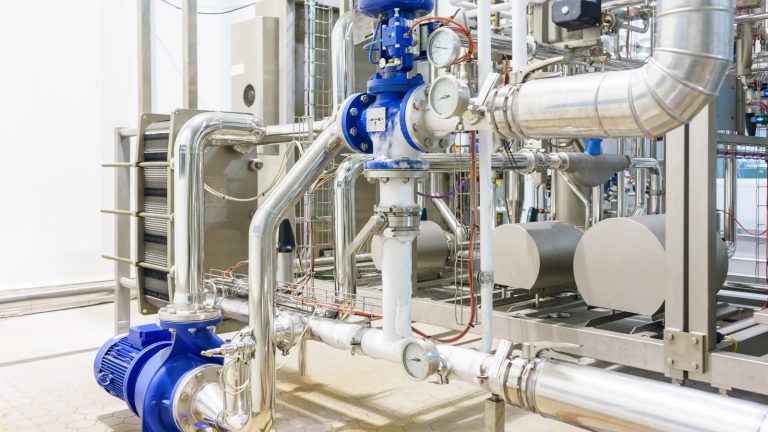
KPIs: Flow Rate, Energy Efficiency, Downtime, Maintenance Costs
Monitoring pump performance KPIs gives you an indication of health and efficiency. Use these measures to gauge output versus energy input, pinpoint reliability problems and manage maintenance expenditures.
The KPI-based performance monitoring ensures accountability, allows for pump performance benchmarking and facilitates the optimisation of performance at pump stations.
Dashboards for Managers and Operators
Visual dashboards make data easy to understand for the managers as well as the operators. With general asset management dashboards for utilities, teams can track trends and performance faster, while also taking quicker action against issues.
A clear visualisation of everything means that everyone making decisions works off the same data-driven view of the health of the system.
Continuous Improvement Using Historical Data
Historical performance whispers to you what assets do over time in varying circumstances. Reviewing historical performance fosters optimisation, confirms improvement plans and determines future investment.
Moreover, proactive learning from the past allows utilities to develop, enhance and extract maximum long-term value from their pump assets.
How Tigernix Smart Water Solution Helps Monitor Pump Station Efficiency
Tigernix Smart Water Asset Software is an all-in-one solution for water asset management that covers every aspect of water treatment, from catchment, treatment, distribution, to reticulation under one dashboard using Industry 4.0 digital capabilities.
Real-Time Pump Station Monitoring
Tigernix Smart Water Asset Software provides real-time pump performance to ensure you know how you view online station efficiency under actual running conditions. With its real-time visibility, inefficiencies can be detected in time, the surrounding parameters can be stabilised to work, and pumps will always operate within safe performance limits.
AI-Driven Predictive Analytics and Anomaly Detection
Sophisticated AI in our solution processes live data and historical data to detect emerging risks before failures happen. Predictive models can flag up anomalous behaviour, optimise maintenance requirements and minimise uncertainty.
This smart platform facilitates intelligent interventions, reduces life cycle costs and promotes the proactive management of assets in extensive pump networks.
Digital Twin Simulations and Scenario Planning
With its embedded digital twin technology, you can test how pumps will perform in all kinds of operating scenarios—without real-world consequences. You can test demand level changes, control strategies, or the efficacy of asset upgrades using virtual testing to make decisions based on evidence at a vastly lower cost than just assuming.
Tigernix Water Suite is for better performance, faster resilience and higher confidence over the long term.
Integrated Dashboards for Pump Operational Efficiency
Our unified dashboards combine sensor information, analytics, and operational feedback all in one location. These dashboards simplify complex information into clear actions and allow teams to respond more quickly, plan better, and perform optimally.
The result is the gain of quantifiable efficiencies and considerable cost savings throughout your pump operations.
Call to schedule a free demo with our experts.
Tigernix-Efficiency in Your Hands.
FAQ About Pump Station Efficiency
You monitor pump station efficiency by tracking flow, pressure, energy consumption, and vibration in real time. Using sensors, analytics platforms, and dashboards helps you detect inefficiencies early, optimise operations, and prevent costly failures before service disruptions occur.
Key indicators include flow rate, energy efficiency, downtime frequency, maintenance costs, and operating hours. Monitoring these metrics consistently allows you to assess pump health, compare performance over time, and identify when efficiency drops or maintenance is required.
Real-time monitoring reveals when pumps operate outside optimal efficiency ranges. This visibility allows operators to adjust speeds, schedules, or loads immediately, reducing unnecessary power consumption and lowering electricity bills without affecting water supply reliability.
Predictive maintenance uses performance data to identify early signs of wear or failure. It helps utilities schedule maintenance before breakdowns occur, reducing unplanned downtime, extending pump lifespan, and avoiding expensive emergency repairs or service interruptions.
Digital twin technology simulates real pump behaviour using live and historical data. It allows operators to test operational scenarios, predict performance under changing conditions, and make informed decisions that improve efficiency, reliability, and long-term asset planning.