

Did you know? In New South Wales alone in 2025, catastrophic flooding killed five people and brought chaos to large coastal areas, damaging over 10,000 properties. It is high time that Australia highlights the pressing need for better warning systems.
Understanding how to predict flood events is essential for safeguarding communities and infrastructure today! Floods do more than damage roads and buildings; they endanger public safety, knock out utilities and emergency services. But what if we could use technology to predict surging rivers and runoff days before water-filled roads?
In this smart water management guide, we will explain how predictive flood monitoring and intelligent analytics turn spotty data into foresight. From why the old ways do not work to how new tech predicts risk like never before, you will enter the fray ahead of the curve -protecting assets and people in equal measure.
This article will look into
- What Causes Floods and Makes Them Hard to Predict?
- How Do Traditional Flood Prediction Methods Fall Short?
- What Technologies Enable Accurate Flood Predictions?
- How to Implement a Predictive Flood Monitoring Framework?
- How to Ensure Data Quality for Accurate Flood Predictions
- How Can Organisations Prepare for Flood Events Using Predictions?
- How to Collaborate Across Teams for Effective Flood Prediction?
- How to Measure the Effectiveness of Flood Predictions?
- FAQ About Flood Event Prediction
What Causes Floods and Makes Them Hard to Predict?

There is not a single cause of floods. To appreciate the difficulty of prediction, one has to look at the interplay of natural forces, human activity, and the weaknesses of infrastructure.
Key Takeaways
- It is crucial to have an understanding of flood risk as floods depend on rainfall, rivers, soil, urbanisation and vulnerabilities in infrastructure.
- Lack of timely decision-making resulting from a lag in the data and a lack of multi-asset visibility.
- Conventional methods have weaknesses when manual oversight and historical models frequently prove inadequate in the face of severe conditions.
Common Factors Affecting Flood Risk
Flooding rarely has a single cause. We cannot assess flood risk by separately predicting rainfall intensity, river capacity, soil saturation, land slope, and drainage efficiency.
Heavy rainfall in excess of what rivers, canals and urban drains can lead to inundation; saturated soils increase runoff. Along coasts and rivers, the effects of tides complicate flood prediction.
We also depend on hydrological flood models and river height prediction models, but such models are at a disadvantage in rapidly changing circumstances.
Ever wondered why one area is flooded with the same rain while another is not? That is where such watershed response analysis, runoff modelling, and basin-scale hydrological simulation are so critical.
Understanding these elements brings us that much closer to more informed, data-based flood prediction, rather than this whole guessing thing.
Role of Climate Variability and Urbanisation
Now, climate change is rewriting the rules of flooding. Have you noticed it?
In brief, intense storms now pose flash-flood forecasting challenges that older systems were never intended to address. Simultaneously, urbanisation swaps absorbent earth for concrete and increases runoff, with water flowing more quickly into drains. This violates the conventional rainfall–runoff modelling hypotheses.
Urban flood forecasting has to consider stormwater systems, road networks, and subsurface infrastructure in the context of urban expansion. We are relying more and more on extreme rainfall event prediction (which causes floods), quantitative precipitation forecasting, and radar rainfall estimation to keep abreast.
However, it has been proven that integrating climate intelligence with AI for flood risk forecasting enables us to incorporate uncertainty into the adaptation process and develop dynamic, rather than reactive, stormwater management solutions.
Asset and Infrastructure Vulnerabilities
The damage from floods is magnified when water infrastructure is weak. Older pumps, clogged canals, and small drains also contribute to less efficient peak operation of the water assets.
System failures are frequently not detected in time to prevent flooding because pump stations are not continuously monitored. Utility operators lack clear visibility into underground assets, making it hard to predict flooding effectively.
Real-time river gauge networks, IoT and real-time water monitoring – here is where they are crucial. This means that when assets are digitally mapped and monitored, we can detect such stress early and simulate the outcome using a digital twin for water networks.
You need to keep in mind that powerful infrastructure intelligence changes passive maintenance into active flood readiness.
How Do Traditional Flood Prediction Methods Fall Short?
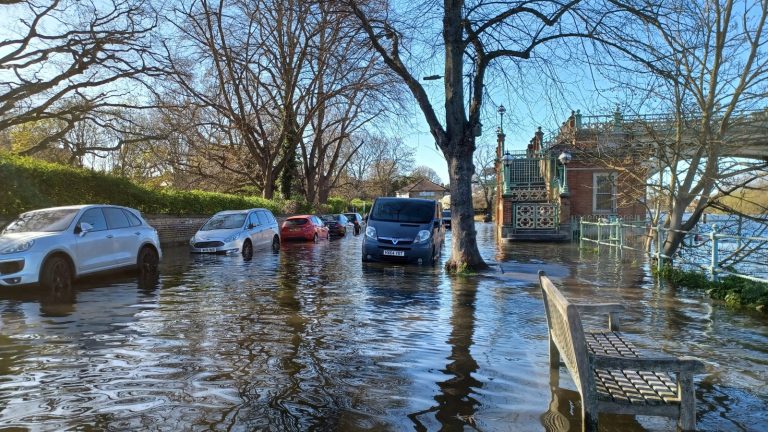
Several flood prediction methods are still based on the old historical data and manual processes. Although these were useful in the past, but these methods fail to keep up with climate volatility and urbanisation at a rapid pace. Appreciating their shortcomings is part of the reason that more intelligent, real-time solutions are now a must-have.
Limitations of Manual Monitoring and Historical Models
Conventional flood prediction techniques rely mainly on rain gauges and historical averages. These methods are valuable, but they do not continue to work effectively under anomalous weather conditions. The only ones who can capture the volatile climate and rapid urban growth of today are innovative technologies.
Manual observations are also rare and cover only a fraction of the area, so river flood forecasting is slow and partial. We have all witnessed floods arriving earlier than anticipated. It is a fact that static streamflow forecasting models do not account for real-time information.
In such scenarios, Australian policymakers are in the dark , without satellite-fueled flood predictions or sensor-led updates. Today, a deep-learning AI for flooding detection can help you identify new patterns on the fly, replacing more traditional notions of what is going on with adaptive intelligence.
Delays in Emergency Response Due to Slow Data Flow
You may know that low data speed is a significant challenge for performing flood early warning. Response times are also negatively affected when sensor readings, rainfall data, and river levels must be gathered manually.
The delay hampers the accuracy of near-term flood prediction and restricts evacuation planning. On the other hand, a real-time flood monitoring system can promptly produce alerts and automatically issue leakage warnings.
By integrating big-data analysis for flood governance into real-time information feeds, we minimise uncertainty and enhance synchronisation among stakeholders.
You prefer warning hours in advance rather than minutes, right? Reducing the flow of data will save lives, assets, and operational costs.
Challenges in Multi-Asset Monitoring
Not to mention that floods damage interconnected infrastructure such as pumps, canals and reservoirs, storm drains. Existing systems tend to treat them as isolated systems, making catchment-modelled flooding very challenging.
Without a single view, failures tend to compound unnoticed. Contemporary asset-based flood forecasting systems address this by consolidating data from assets.
With the SCADA integration, your plant operators gain a complete understanding of the situation. With years of experience in water management, such multi-asset visibility is vital for effective flood inundation modelling and crisis response planning.
What Technologies Enable Accurate Flood Predictions?
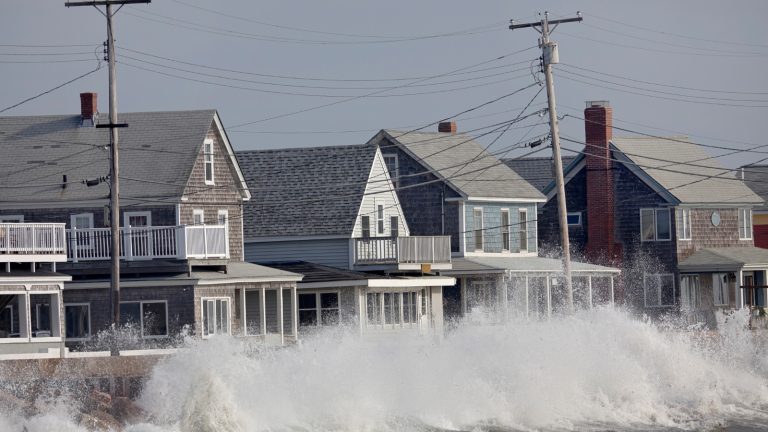
The technology has changed everything about the way we predict floods today. By integrating real-time data, advanced analytics and system integration, we can shift from reactive forecasting to proactive anticipation. These tech can collaborate to uncover patterns, model scenarios, and issue bold early warnings.
AI and Machine Learning for Pattern Detection
A flood forecasting system employs machine learning to model rainfall trends leading up to floods and the performance of assets (such as dams, reservoirs, levees, etc.) during these events. Rather than a single forecast, these models provide probabilistic flood forecasts that account for uncertainty.
AI Improves Short-Term Precision while perfecting long-range flood outlooks alongside streamflow prediction models. The good thing is that AI identifies anomalies in data that humans would miss, which is how smart tech advances from reactive to intelligent forecasting and predictive decision-making.
IoT Sensors for Real-Time River and Drainage Monitoring
Since the alarm is at risk of flooding, IoT flood sensors and IoT water level sensors will be the core of real-time water monitoring. These systems, installed over rivers, canals and drains, provide continuous data to real-time flood monitoring systems.
Its benefits include:
- Detecting water rise at an early stage
- Improved river height prediction models
- Faster emergency alerts
IoT drives connected technologies that remove blind spots by enhancing real-time river gauge networks and ensuring flood prediction across whole catchments becomes more robust.
GIS Mapping for Flood-Prone Area Visualisation
GIS flood mapping is visual intelligence from complex data. GIS uses digital elevation models to identify flooding, low-lying areas, flow paths, and communities at risk. Therefore, it certainly provides assistance in mapping flood risk, floodplain hydrodynamics, land-use planning, etc.
GIS provides near-real-time situational awareness when used in conjunction with remote sensing for flood monitoring. Now imagine you would respond to floods and see where the water would move next.
Likewise, GIS turns prediction into reality and into something we can act on.
Digital Twins for Scenario Simulation
- What happens if rainfall doubles?
- What if a pump fails?
SCADA Integration for Live Asset Monitoring
SCADA systems link operational assets to analytics platforms. Continuous water asset performance visibility is achieved by utilities through live pump station monitoring, valve status, and flow rates.
A real-world challenge, couched in AI SCADA data feeds, is to train AI to predict flooding risk, ensuring that models of real-world conditions are accurate. It connects operations and forecasting into a seamless, intelligent ecosystem.
How to Implement a Predictive Flood Monitoring Framework?
Technology, however, is not the only thing that contributes to effectively predicting floods; a structured approach is required to help make sense of all this information.
Step 1: Deploy Real-Time Sensor Networks
We will begin by deploying popular ‘IoT flood sensors’, rainfall gauges and river monitors. These sensors enable real-time flood monitoring and help ensure that river-flood forecasts are as accurate as possible.
Strategic siting across catchments enables catchment-scale flood modelling and mitigates potential blind spots.
Step 2: Integrate Data into Predictive Analytics Platform
Then you can integrate sensor data, weather feeds, and satellite data for flood prediction. Leveraging big data analytics for flood management, the platforms produce probabilistic flood forecasts and short-term flood prediction insights.
Data flows easily across all your teams through integration.
Step 3: Model Flood Scenarios Using Digital Twins
Using a digital twin for water networks, we can reproduce surface runoff modelling, asset failures and extreme rainfall. It enhances techniques for predicting inundation and supports preparedness with barometer-level response strategies.
Step 4: Set Up Automated Alerts and Emergency Workflows
In the final phase, flood alert notifications are sent to automate emergency procedures. Cutting-edge early warning systems for floods enable rapid evacuation, protection of a community’s assets, and a coordinated response.
How to Ensure Data Quality for Accurate Flood Predictions
Even the most sophisticated systems cannot overcome bad data. Being precise, consistent and coherent is pivotal when involving sensors and systems. This was a perfect example of the power of strong data quality practices that turn raw measures into reliable insights at crucial times.
Sensor Calibration and Maintenance
When it comes to flood prediction, being accurate begins at the source, which means your sensors.
Misleading results can be obtained even with the most sophisticated flood forecasting techniques when IoT water level sensors drift out of calibration. What we require is periodic calibration, testing under conditions, and validation of performance to build trustworthy real-time water monitoring technology.
A neglected sensor could underreport rising river levels, or even go down during an intense storm — just when you want to use it most. By treating sensors as potentially lethal, critical assets rather than passive devices, you can safeguard the reliability of early flood warning.
You should ask yourself: are your sensors really telling you the truth, or just data? The reality is that sound data are the cornerstone of any successful flood forecasting system.
Handling Missing or Noisy Data
Flood data is rarely perfect, and you know this, too. Sensors go bad, communication goes down, and extreme weather introduces noise. This is where AI in flood forecasting comes into play.
Applying streamflow prediction models and rainfall–runoff modelling, AI interpolates gaps, damps anomalies down and relinks continuity in data. Rather than throwing out less-than-perfect data, you can turn it into usable intelligence.
During extreme incidents, this capacity enhances short-term flood forecasting and increases confidence in the alerts.
You do not need perfect data — you need strong analytics. This is where rational data preprocessing comes in, ensuring reliable flood predictions under essentially uncontrolled conditions.
Standardising Datasets Across Multiple Assets
Let’s admit one thing: Flooding does not respect your asset boundaries.
This is why we need to ensure that your pumps, canals, rivers, and drains all speak the same data language. Standardised formats enable seamless predictive monitoring of floods across a range of infrastructure, enhancing the accuracy of flood risk predictions.
Engineering, operations, and IT teams work more quickly and with fewer mistakes when datasets can be moved between them. Standardisation also supports big data analytics in flood management by enabling models to compare different locations and time ranges.
Without it, insights remain siloed and response lags. Even if your properties do not consistently share data, a flood strategy does not have to look that way. It is consistency that transforms fragmented measurements into systemic foresight.
How Can Organisations Prepare for Flood Events Using Predictions?
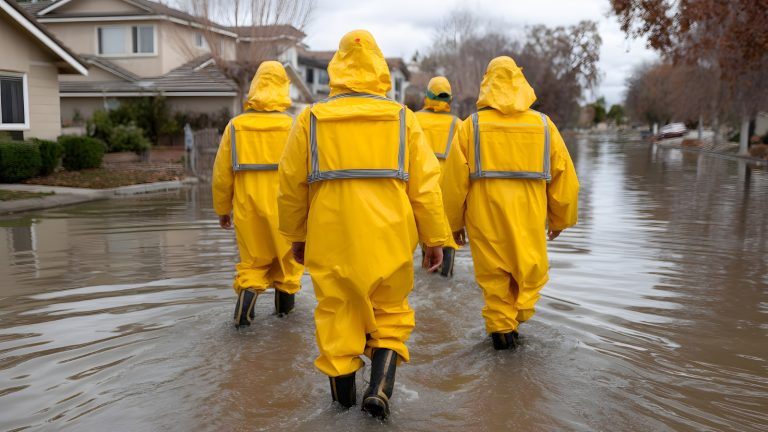
Prediction is valuable only when it drives action. With forecast knowledge, organisations can plan for responses, mobilise resources and alert the public in advance, minimising damage, confusion and danger when floods do hit.
Emergency Response Planning
Forecasts lift emergency response from the reactive realm into the prepared world. Solid flood early warning systems allow us to map escape routes, protect vital assets, and pre-position response forces ahead of the peak in river levels.
Rather than frantically scrambling, you move with clarity and confidence. Predictive warnings also aid coordination with emergency responders, utilities, and local officials. The result is faster decisions and reduced damage.
Would you prefer to engage after the streets are filled, or several hours before, when choices are still available? This way, flood forecasting buys you time, and time is invaluable in a crisis.
Resource Allocation and Personnel Readiness
An accurate prediction of potential flooding lets you position people and equipment where they can do the most good. Risk management teams can be prepositioned near high-risk areas, pumps can be tested, and stormwater management systems can be put on high alert.
This prepares the organisation and prevents downtime, misunderstandings, and safety risks during critical events, rather than thin-spread resources or focused resources. Predictive intelligence also reduces fatigue by intelligently distributing staff.
Prepared teams are then able to react much more quickly, safely, and with better control when flood threats hit — turning threat prediction into operational resilience.
Community Notification and Awareness
Trust is established by how you communicate and when. Your community gets timely, actionable, automated flood alert notifications when danger is on the rise. Predictive alerts help residents secure their homes, take safe routes, and evacuate earlier if necessary. Such proactive communication enhances public safety and reduces panic. People do better when they know what is coming — and why.
Flood forecasting is not only a matter of infrastructure; it’s about people. Informing communities, you build that resilience.
How to Collaborate Across Teams for Effective Flood Prediction?
Flood forecasting spreads across engineering, operations, IT and emergency management. Then insights do not stay locked down; they are the driver of coordinated decisions. Predictive systems make a difference in practice when teams come together around agreed data and goals.
Aligning Engineering, Operations, and IT Teams
Flood forecasting works only when teams act as one. Engineers develop models, operations control assets, and IT provides platforms — yet insights run aground without this common data.
It is imperative to allow everyone to use a unified, real-time flood monitoring system and dashboard from a single system. Such calibration will align the predictions with operational reality rather than theoretical abstractions.
Teams that work together have quicker response times and higher confidence. Is your team sharing insights or simply reports? Real flood resilience begins with organisational alignment.
Governance and Decision-Making for Predictive Insights
Smart AI for flood risk prediction is nothing without decision ownership. Governance determines who verifies predictions, who initiates an alarm, and who sanctions intervention.
Clear protocols reduce confusion during high-pressure periods. The predictions must inform decisions — not debates. You need to create governance frameworks to ensure accountability and enable you to respond more quickly and use predictive intelligence consistently.
Clarity of roles means technology is an enabler, not a bottleneck.
Training Staff on System Alerts and Dashboards
Users must have confidence in systems. Training is essential to ensure that your staff know which alerts they should not ignore when using dashboards in flood monitoring systems.
Simulations and drills help build confidence, so teams respond decisively during actual events. When people know what the data mean — and what to do next — prediction becomes action.
Technology does not supplant people; it enables people. Strong, well-trained teams are the last (and critically important) mile between predictive insight and real-world relevance.
How to Measure the Effectiveness of Flood Predictions?
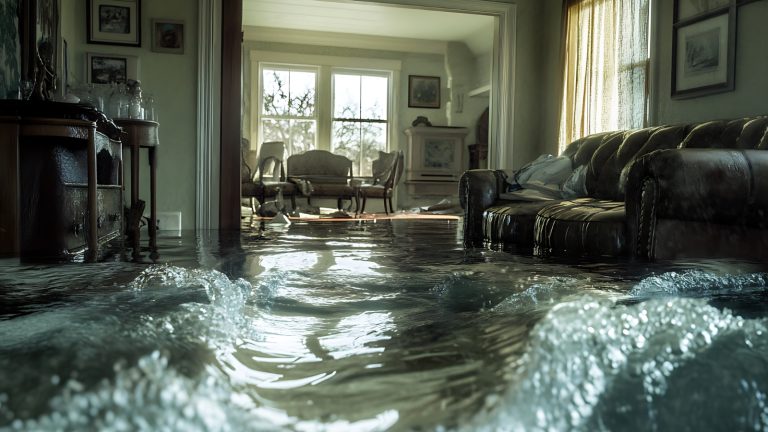
You must be able to measure success in order to get better. By keeping costs of failure low, observing and learning from past events, you can constantly refine models, reduce time to response and develop confidence in predictive flood management.
KPIs: Prediction Accuracy, Early Warning Lead Time, Incident Response Time
What gets measured gets improved. Important KPIs such as prediction accuracy, early warning lead time, and response time support flood prediction approaches.
These are indicators of whether the air is notified early enough and whether people act fast enough. Monitoring KPIs also helps you continuously optimise the model and workflow.
Without measurement, prediction remains theoretical. With it, managing floods becomes quantified, defensible, and of ever-higher quality. Do you agree?
Dashboards and Reporting for Decision-Makers
Executives need clarity, not complexity. This is where the easy-to-read dashboards turn flood risk modelling and analysis into actionable intelligence.
At a glance, visuals of risk by level, the asset’s statDashboards are the link between technical modelling and strategic decision-making—they transform data into confidence to lead.
Continuous Improvement Based on Historical Event Analysis
Post-event analysis allows for fine-tuning of flood forecast techniques, calibration of thresholds, and better future response. Through a continuous cycle of comparing predictions to outcomes, we refine our accuracy and trust.
Insight into history yields more innovative models, better planning, and stronger resilience.
Flood forecasting is not static; it changes with each event. The more you learn, the further ahead you are for the next flood, and not reacting to the last one.
How Tigernix Smart Water Solutions Help Predict Flood Events
One thing is to know your flood risk; another is what you do about it when the time comes. And that is exactly where Tigernix Smart Water Solutions comes in. We enable you to make the transition from reactive flood response to proactive flood prediction by bringing together real-time monitoring with mathematical models and decision-support tools. Tigernix integrates data coming from pumps, canals, rivers and the storm water network to a single operational view that gives context to dispersed measurements.
Real-Time Monitoring of Pumps, Canals, and Drains
Tigernix Smart Water Asset Solution provides continuous, real-time water monitoring across pumps, canals, and drainage networks to keep you informed of rising water levels and asset stress. Our software enables early detection of risks to avoid failures and to prevent escalation to a flooding crisis through reliable pump station monitoring, helping you respond beforehand.
AI-Driven Predictive Analytics for Early Warning
Using advanced AI for flood prediction, Tigernix Water Suite turns live and historical data into actionable foresight. Working to identify emerging threats, estimate the likelihood of impact, and generate early alerts, our predictive flood monitoring models are designed to provide pre-flood data to help you prepare and protect assets, communities, and critical infrastructure before floods occur.
GIS Mapping and Digital Twin Scenario Simulation
Tigernix provides an approach for visualising flood-prone areas and simulating real-world scenarios by merging GIS flood mapping with a digital twin of water networks. We transform complex flood risks into actionable spatial intelligence—testing responses, exploring flooding pathways, and proactively guiding action.
Full Integration into Water Utility Operations
Tigernix streamlines monitoring, analysis, and response to help serve water utilities every day. We bring you out of the reactive mishmash of flood management, where many data feeds, systems and teams end up working in parallel. The correct prediction leads to an actuated response on time and at the right place, which is actually the only time it matters.
Call for a free demo today.
Tigernix- Predictions at Your Doorstep.
FAQ About Flood Event Prediction
Floods are predicted using rainfall forecasts, river level data, and hydrological models. Today, AI, IoT sensors, and real-time monitoring systems continuously analyse patterns, enabling early warnings hours or days before flooding occurs.
Modern flood prediction systems are highly accurate when powered by real-time data, AI analytics, and continuous sensor monitoring. Accuracy improves further with digital twins and historical event analysis, helping utilities adjust predictions as conditions evolve.
AI identifies complex patterns in rainfall, river flows, and asset performance that humans may miss. It improves short-term forecasts, reduces false alarms, and supports probabilistic flood predictions for better emergency planning and decision-making.
Yes. Urban floods can be predicted using IoT drainage sensors, stormwater models, and GIS mapping. These tools track surface runoff, blocked drains, and rapid rainfall, enabling faster warnings in highly built-up environments.
Flood early warning systems provide timely alerts to authorities and residents before water levels become dangerous. This allows communities to evacuate safely, protect property, and reduce loss of life through informed, early action.